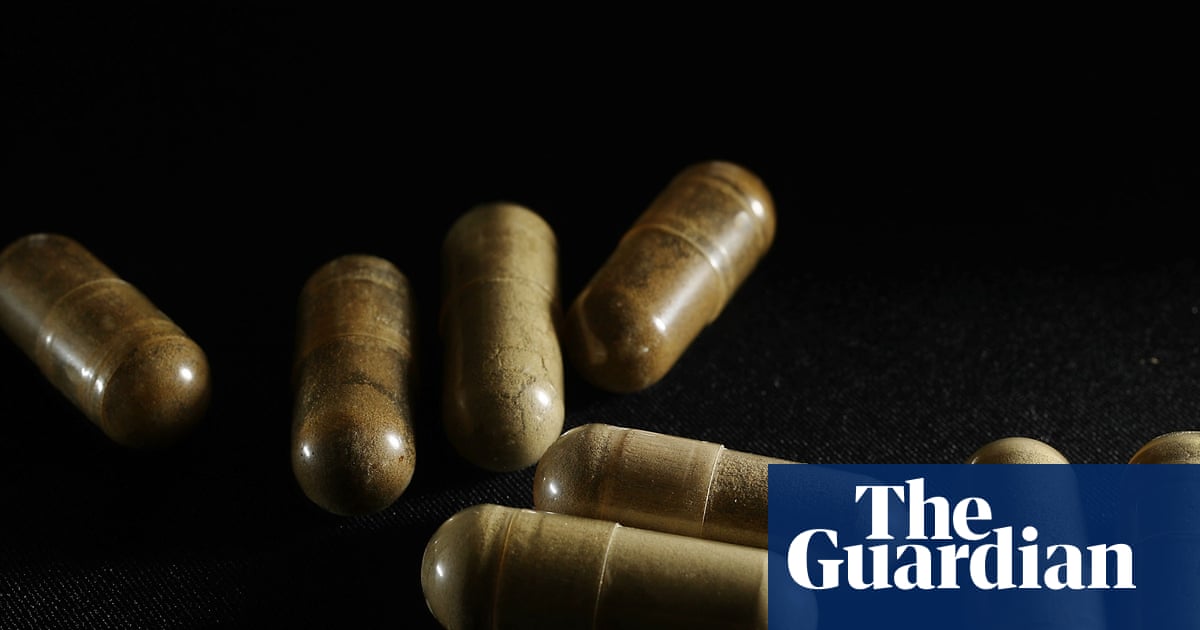
A recent CDC report found that kratom-related poisonings went up by about 1,200% over the last decade, with a marked surge in 2025. Illustration: Joe Raedle/Getty ImagesView image in fullscreenA recent CDC report found that kratom-related poisonings went up by about 1,200% over the last decade, with a marked surge in 2025. Illustration: Joe Raedle/Getty ImagesKratom poisonings soar in US as experts blame synthetic versions and caution against bansExperts say natural kratom may offer benefits and blame synthetic derivatives for surge in poisonings noted by CDC
A recent Centers for Disease Control and Prevention (CDC) report shows that kratom poisonings have soared in the US, but experts say this is probably due to synthetic derivatives like 7-OH, and that blanket kratom bans could harm people using natural kratom to aid pain management or addiction recovery.
Walter Prozialeck, a pharmacology professor at Midwestern University, said he was unsurprised by the report, which found that kratom-related poisonings went up by about 1,200% over the last decade, with a marked surge in 2025.
This recent surge is almost certainly due to the introduction of 7-hydroxymitragynine, commonly known as 7-OH, a largely synthesized compound that’s found in trace amounts in the kratom leaf.
Christopher McCurdy, a chemist and pharmacologist at the University of Florida, noted that 7-OH has been “marketed as kratom or as a superior kratom alkaloid”, since it first began appearing in energy drinks and other products around 2024. That’s meant that calls to poison control, like those in the CDC report, equate the two products. The report itself acknowledges the introduction of 7-OH.
The difference between the 7-OH natural kratom plant, AKA Mitragyna speciosa, a south-east Asian plant that has been used as a natural pain reliever for centuries, is “arguably the most important scientific distinction right now”, said Austin Zamarripa, a psychiatry professor at Johns Hopkins University, adding: “It is still severely underappreciated in public debate.”
The blurred distinction in marketing creates a “serious consumer safety issue” because 7-OH carries some of the dangers of opioids, including severe addiction, withdrawals and even the reduced breathing rate that can lead to opioid overdose.
Natural kratom, on the other hand, has been shown to be relatively safe across multiple animal and human studies. In 2018, Brett Giroir, then secretary of the Department of Health and Human Services, denied the Drug Enforcement Administration’s proposed criminalization of kratom, saying current evidence didn’t justify schedule I status. The next year, a Food and Drug Administration pilot study in humans, which McCurdy co-authored, showed no serious adverse effects from kratom – the main negative symptom was vomiting, an established side-effect.
Despite stark differences between 7-OH and natural kratom, many states have implemented or proposed blanket bans on all kratom products, distressing those who see it as vital medicine. A recent survey of kratom users showed about half struggled with chronic pain, and about 40% were in addiction recovery.
Many people have reported using kratom to aid their recovery from opioid, alcohol and stimulant addiction. Jeff Maslan, who is 68 and lives in California, suffers from severe osteoarthritis and has had to have surgery regularly since his 40s. In the past, he said he had become addicted to opioids after each procedure, which meant he would endure the added pain of opioid withdrawal. Now, Maslan says he uses kratom to counter those withdrawal symptoms.
Steven, a California resident in his late 40s who withheld his last name, is on permanent disability due to a painful heart condition. His prescription for oxycodone was revoked after eight years without warning due to new opioid restrictions. The withdrawal was unbearable, especially because of his heart condition.
“I was throwing up my heart pills. I was sweating profusely in extreme pain,” Steven said, adding he “would have done just about anything” to make it stop.
Desperate for solutions, Steven was able to buy some kratom. When he took it, “the withdrawal just went away. My whole body didn’t feel like it was on fire, my skin wasn’t crawling.” Unlike opioids, Steven said kratom doesn’t give him any “warm fuzzy feeling”, but simply makes him functional.
While many patients turned to kratom after becoming dependent on opioids they were taking as prescribed, others also use it to stop recreational addictions. Misty Brown, who has advocated for kratom before multiple state legislatures, said she began buying opioid pills on the street after her pain doctor “fired” her over suspected prescription misuse. She bought kratom hoping it would get her high.
“I came into my recovery completely by accident,” she said.
Kratom didn’t make her high, as others also found, but after she took it, Brown said she had no urge to call her dealers. Prozialeck confirmed that natural kratom alone is unlikely to produce a euphoric effect.
While FDA officials have previously referred to natural kratom as an opioid in the past, Zamarripa, McCurdy and Prozialeck all dispute this characterization. Classical opioids carry the risk of overdose through respiratory depression. Research in rats has shown that while 7-OH carries respiratory depression overdose risk, kratom’s main alkaloid does not. Additionally, kratom activates the adrenergic receptors and serotonin receptors in addition to opioid receptors, which they only bind to partially, according to McCurdy and Prozialeck.
This may be why natural kratom is less euphoric than opioids. Prozialeck theorizes that kratom’s interaction with multiple receptors allows it to function like “two drugs at once”: one is a partial opioid, the other is something akin to the SNRI class of antidepressants, which could also be why some users report higher energy with kratom compared to opioids.
Zamarripa said there are many reasons patients might prefer kratom over FDA-approved opioid use disorder treatment, including stigma and barriers to access. While kratom itself is relatively safe, Zamarripa warned there are risks to using it for recovery. In fatal poisonings involving kratom, other substances, like fentanyl, are almost universally present, which could suggest relapse.
“Some people who use kratom may also cycle between kratom and more potent opioids, which can increase overdose risk,” Zamarripa said, because periods of opioid abstinence reduce tolerance.
Kratom itself can be addictive, though less so than classic opioids, says Prozialeck. Heavy metals have been found in some kratom products, and Zamarripa said it was not yet clear whether these come from soil, contaminants or the manufacturing and storage process.
Still, Zamarripa thinks natural kratom should be available to purchase.
“These products may offer meaningful benefits to some individuals, and those benefits could be lost if access is restricted too broadly,” he said, adding that “concentrated 7-OH products”, should probably be regulated differently.
Steven, who said he now spends much less time in the hospital thanks to kratom, isn’t sure what he’ll do in case of a ban, but he thinks the blanket approach is illogical: “There’s corn on the cob, there’s high fructose corn syrup, there’s whiskey, they’re all made out of corn, but they’re all completely different.”