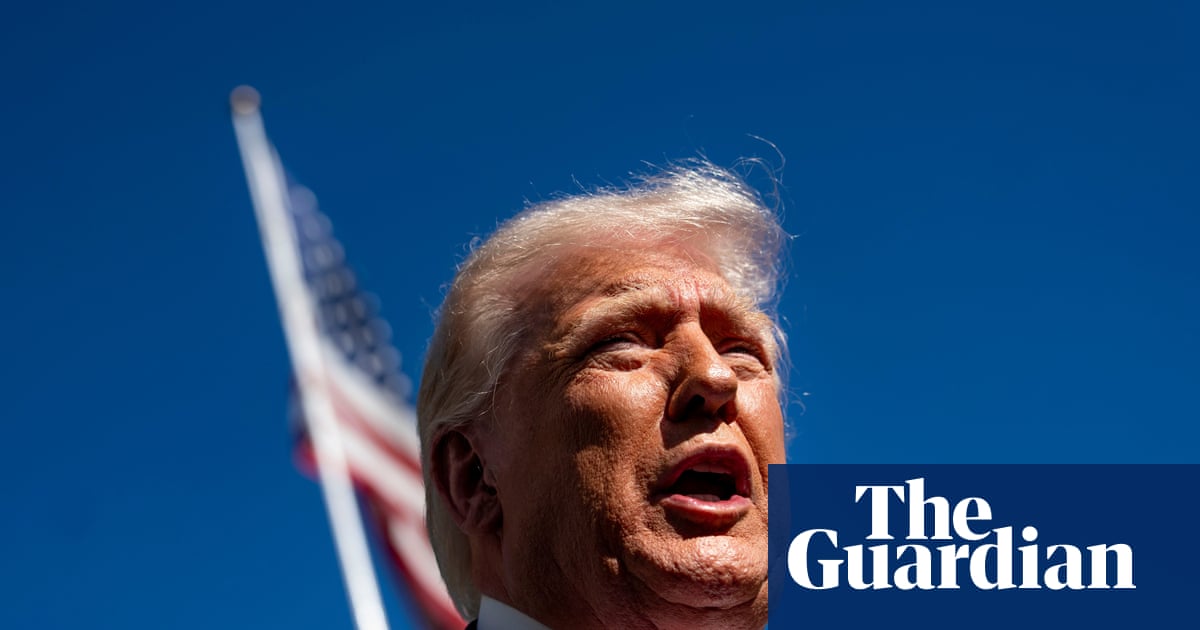
Donald Trump’s surprise announcement of a blockade came after 21 hours of face-to-face negotiations in Pakistan failed. Photograph: Bonnie Cash/Pool/Bonnie Cash - Pool/CNP/ShutterstockView image in fullscreenDonald Trump’s surprise announcement of a blockade came after 21 hours of face-to-face negotiations in Pakistan failed. Photograph: Bonnie Cash/Pool/Bonnie Cash - Pool/CNP/ShutterstockFirst Thing: Trump says US will blockade strait of Hormuz after Iran peace talks failTehran said the move would be a breach of the ceasefire. Plus, Viktor Orbán ousted in Hungarian election in blow to global far right
Donald Trump has said the US will begin blockading the strait of Hormuz in an attempt to wrest control of the vital waterway from Iran after peace negotiations between the countries failed.
The president also threatened to bomb Iran’s water treatment facilities, power plants and bridges if Tehran did not agree to abandon its nuclear weapons program, the key sticking point between the two sides. The in-person negotiations in Islamabad collapsed on Sunday morning.
In response, Iran’s Revolutionary Guards said that if any warships approached the strait to enforce a blockade it would be considered a breach of the current ceasefire and dealt with strongly.
When would the blockade start? US Central Command (Centcom) announced the blockade would begin on Monday at 10am ET. Experts have said it could risk further increasing oil prices.
Which vessels will the blockade affect? Centcom said it would be confined to ships transiting through Iranian ports – and that it would permit passage of ships headed to ports belonging to the US’s Gulf allies.
How could a blockade help the US reopen the strait? The strategy appears to be that the US hopes to eliminates Tehran’s greatest point of leverage – its chokehold of the strait – by stopping Iranian oil exports. Tehran has indicated that it would like to keep control of the strait after the war has ended, and to charge fees to ships.
View image in fullscreenViktor Orbán conceded defeat after a ‘painful’ election result. Photograph: Bernadett Szabó/ReutersHungary’s opposition Tisza party, led by Péter Magyar, has won the election, ending Viktor Orbán’s 16-year rule in a result that has thrilled EU leaders and is likely to rattle the White House.
EU leaders praised Magyar after his decisive election victory against Orbán, whom many saw as a direct threat to Europe’s peace and prosperity. Orbán has repeatedly vetoed support for Ukraine, and his far-right government recently outraged the EU when it admitted to providing a backchannel to Russia during summits.
View image in fullscreenPeople celebrate in the streets after the announcement of the partial results of the parliamentary election in Budapest. Photograph: Dénes Erdős/AP What does it mean for the far right globally? The election was watched closely as a test of the strength of the far-right movement that Donald Trump has worked to spread around the world. Last week the vice-president, JD Vance, traveled to Budapest, saying that he had come to “help” Orbán, while Trump has also endorsed the leader.
What kind of margin did Tisza win by? It has a super-majority. With 98.74% of the vote counted, Tisza was projected to have won 138 of the 199 seats in the country’s parliament.
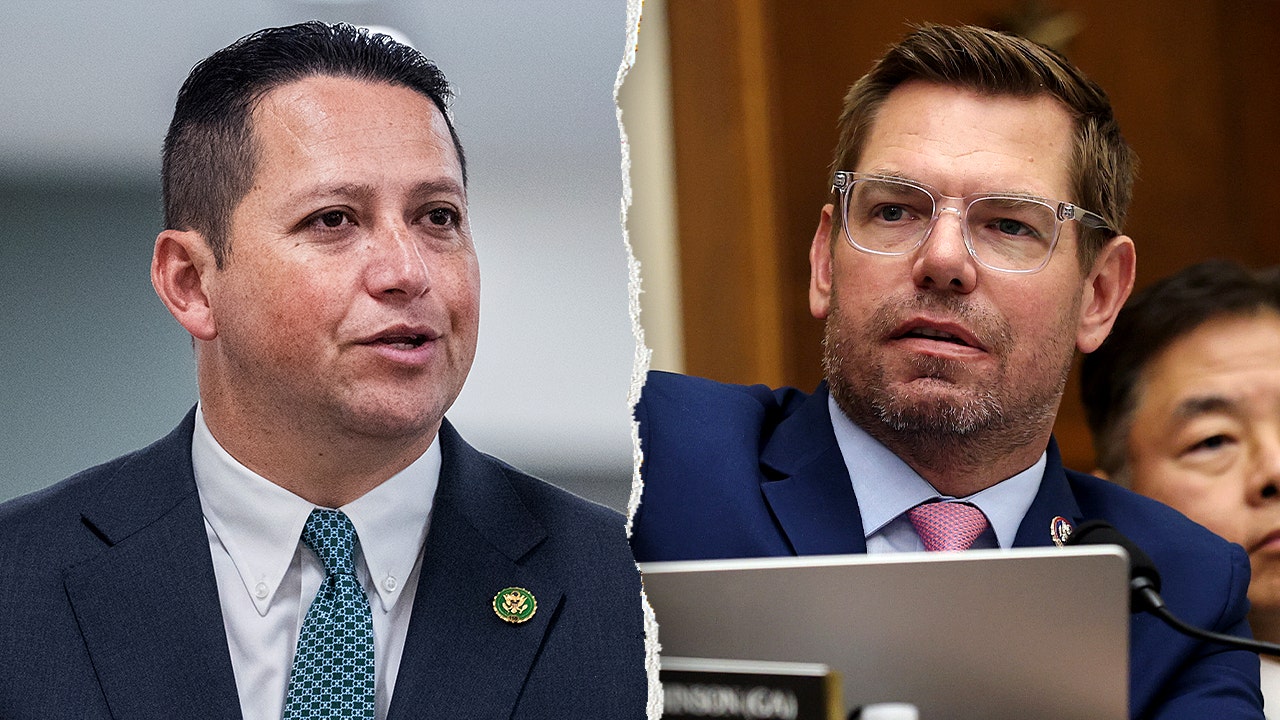
View image in fullscreenEric Swalwell on Capitol Hill last year. Photograph: Annabelle Gordon/ReutersRepresentative Eric Swalwell, the Democratic frontrunner in the crowded race to be governor of California, has quit after a series of sexual assault and misconduct allegations by a former staff member and at least three other women.
The woman who worked for the California congressman said he had sexually assaulted her twice when she was too inebriated to consent, according to a report by the San Francisco Chronicle. CNN reported that three other women accused Swalwell of sending them unsolicited nude photographs or explicit messages.
How has Swalwell responded? He said he would “fight the serious, false allegations that have been made – but that’s my fight, not a campaign’s”.
View image in fullscreenPope Leo XIV has been criticised by Donald Trump, who wrote that the pontiff should ‘stop catering to the Radical Left’. Photograph: Angelo Carconi/EPA Donald Trump has launched an extraordinary attack on Pope Leo calling him “weak” and “terrible”, while claiming that the pontiff is “catering to the Radical Left”. Trump also posted a photo of himself as an AI-generated Jesus.
Senator Bernie Sanders has warned “the worst is yet to come” unless workers overcome a “ruling class” of billionaires, as the New York City mayor, Zohran Mamdani, said AI was “coming for human jobs”.
One person was killed and six injured in a mass shooting at a Chick-fil-A in New Jersey on Saturday night, according to authorities, who said no arrests had been made yet.
A truce between Russia and Ukraine to mark the Orthodox Easter formally expired on Monday, with both sides having accused each other of breaches.
View image in fullscreenGraduates hold up their diplomas and caps. Photograph: Davidovich Mikhail/AlamyAmerican college graduates are facing a brutal entry-level job market, with underemployment – not having enough paid work or not doing work that makes full use of one’s skills and abilities, according to the Oxford dictionary – standing at 42.5%, its highest level since 2020. Graduates blame the rise of AI, internal hiring and high employer expectations, as many entry-level roles ask for candidates with three to five years of experience.
View image in fullscreenAn usual coalition argued that executing a 75-year-old man who didn’t pull the trigger was wrong. Composite: Rita Liu/The Guardian/Getty Images/Charles BurtonCharles “Sonny” Burton, who had been on death row since 1992 for the killing of Doug Battle during a robbery, was due to be executed by nitrogen gas on 12 March. But an unusual coalition, including faith leaders, the victim’s daughter and conservative advocacy groups, managed to pressure Alabama’s governor into commuting his sentence to life without parole. They made the case that executing a 75-year-old man who didn’t pull the trigger – while the man who did died in prison with a life sentence – was just wrong.
View image in fullscreenMalina Lee, a 31-year-old Texas baker, says a comment by a TikTok user with the username ‘PickleFart’ helped lead to her thyroid cancer diagnosis. Composite: Rita Liu/The Guardian/Getty Images/Malina LeeWhile health misinformation abounds on social media, amid the noise, TikTok users are also increasingly reporting that the algorithm has helped them detect medical issues before they were aware of them themselves. “It’s kind of funny, but it’s also kind of sad,” one TikTok user said. “It shows how broken the American healthcare system is that people are seeking out medical advice on social media apps.”
View image in fullscreenDemonstrators carry anti-war signs outside the White House in Washington DC on 7 April. Photograph: Probal Rashid/NurPhoto/ShutterstockThe Iran war has highlighted how entrenched the world’s dependency on oil and gas remains – but also the threat of nuclear war, argues former chief of the Australian defence force Chris Barrie. “The diplomatic architecture needed to address climate change is being corroded by a war conducted unilaterally and without mandate,” he wrote.
View image in fullscreenPanthère de Cartier set of three matchboxes, £235. Photograph: CartierWhat’s the most you would pay for a box of matches? I’d guess substantially less than £235 ($315), the price tag on a Cartier set of three tubes, decorated with panthers and containing 80 matches each.
First Thing is delivered to thousands of inboxes every weekday. If you’re not already signed up, subscribe now.
If you have any questions or comments about any of our newsletters please email newsletters@theguardian.com