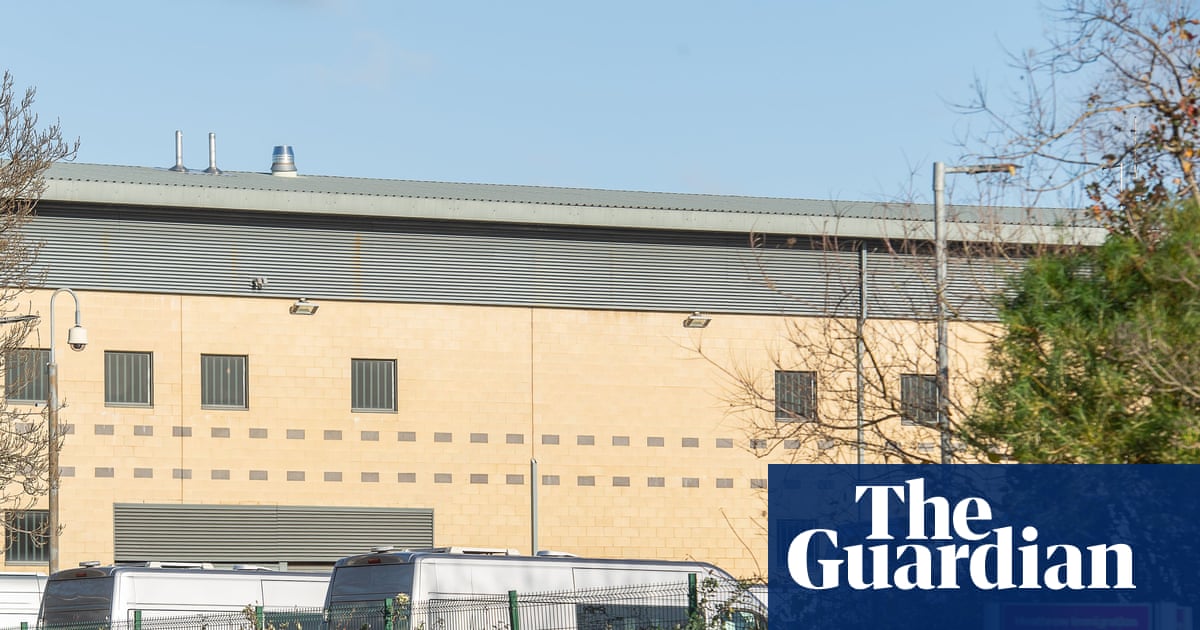
The report found no use of force on a later flight carrying 32 detainees who had been collected from three removal centres including Harmondsworth. Photograph: ShutterstockView image in fullscreenThe report found no use of force on a later flight carrying 32 detainees who had been collected from three removal centres including Harmondsworth. Photograph: ShutterstockAsylum seekers removed from UK in waist and leg restraints, report findsInspection reveals use of force after protest by detainees being deported under ‘one in, one out’ scheme
Asylum seekers who protested against being forcibly removed to France under the Home Office’s controversial “one in, one out” scheme, were transported out of the UK in waist and leg restraints, an inspection report has revealed.
The report by HM chief inspector of prisons, Charlie Taylor, inspected a flight to France that took place on 20-21 January this year and on which it found no force was used.
However, it also referenced a flight on 16 January where force was used after a detainees’ sit down protest on evening before. The protest was ended after the deployment of “specialist national resources”, said the report, which was published on Monday.
Thirty-two detainees on board the 20-21 January flight were small boat arrivals who were forcibly removed to France in exchange for a similar number in France brought to the UK legally. Many asylum seekers who arrive in the UK on small boats have experienced persecution including torture and trafficking.
Four use of force incidents were recorded in connection with the 16 January flight. Waist restraint belts were applied three times. In one case the belt was removed quickly just after takeoff.
In the remaining two cases, both detainees remained in the belts for the duration of their removal because they demonstrated “continuing resistance”, according to records reviewed by the inspection team.
These two detainees had leg restraints applied when one was moved on to the transporting vehicle to the plane and the other when being carried on to the aircraft. In the first case the leg restraints were removed quickly but in the second they remained on the detainee while they travelled.
After the protest on 15 January was put down, the detainees who were deported on a 21 January flight were fearful about force being used against them, according to the inspection report.
“Despite the concerns of some detainees about the potential use of force during this subsequent operation, inspectors observed that escort staff remained consistently professional and respectful in all interactions,” Taylor said.
In relation to the 16 January flight, he added: “We found that any past use of restraints or control techniques had been justified based on assessed risks.”
The report raised concerns about lack of interpreters and a lack of access to solicitors in detention, and found that asylum seekers were anxious about being left homeless in France or removed from there to other countries.
Emma Ginn, the director of Medical Justice, a charity which supports people in immigration detention in the UK, said: “Most people detained for UK-France scheme who our independent clinicians have assessed in immigration removal centres have shown clinical evidence of torture or trafficking.
“We are extremely concerned to learn that some taken to aircraft for removal to France have been subjected to the use of force and carried in waist and leg restraints. For torture survivors the use of force can be a terrifying re-enactment of past mistreatment.”