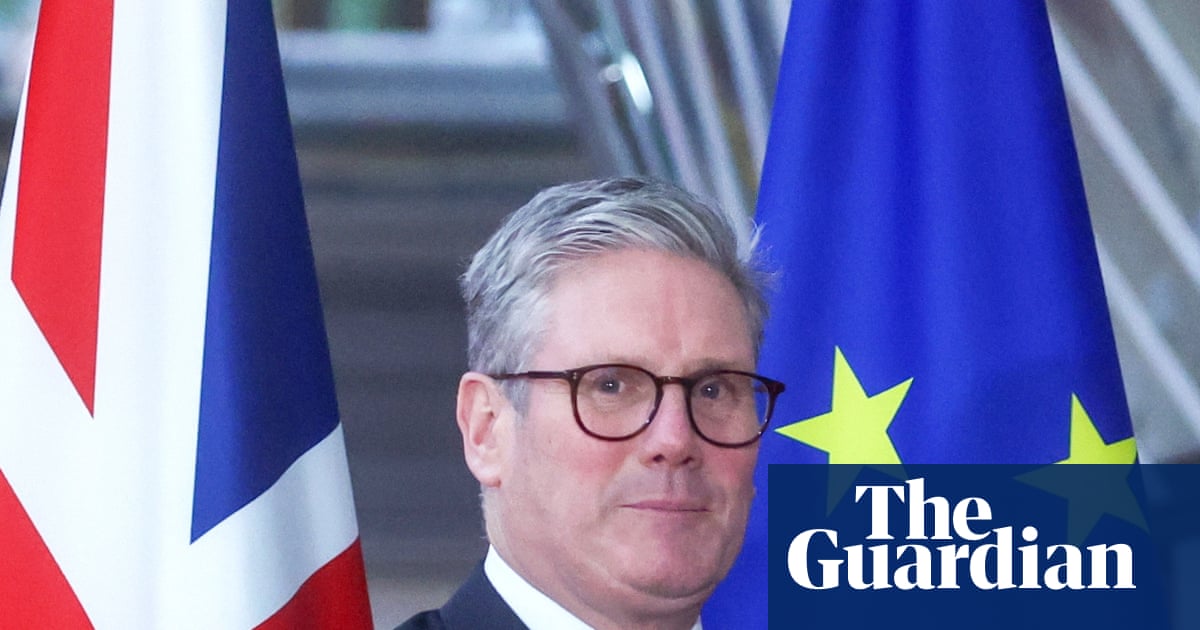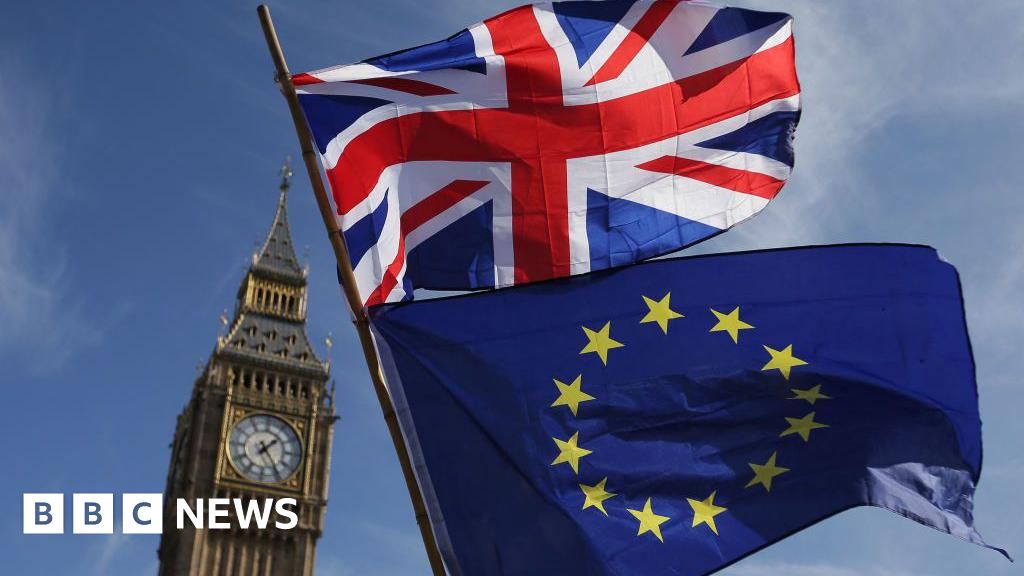
ShareSaveAdd as preferred on GoogleHenry ZeffmanChief political correspondentGetty ImagesWe already knew Sir Keir Starmer wanted a closer relationship with the EU. It was part of his 2024 general election platform, albeit in fairly unspecific terms.
We have also known since the first annual UK-EU summit 11 months ago that the UK is negotiating deals with the EU on food and drink standards, carbon emissions and electricity.
We knew, too, that the government wanted not only to follow EU rules as they stand now in those three areas, but to continue to follow them over time as they change.
There will be a vote on all this in Parliament when the government introduces legislation later this year.
But as the government updates UK rules to match European rules over time, there may not necessarily be further votes - that process is known as secondary legislation.
Secondary legislation was also used in various ways when Conservative governments pursued divergence from EU rules.
The government acknowledging today that this will be the parliamentary process has provoked anger from the Conservatives and Reform UK.
But the real meat of the disagreement here is not about parliamentary process. It is about much more profound questions of Britain's sovereignty, economy and place in the world which have been animating our politics for more than a decade now.
And what is so striking is the prime minister's relatively newfound enthusiasm for embracing this debate.
Andrew Griffith, the Conservatives' shadow business secretary, said the government's plans would mean "Parliament reduced to a spectator while Brussels sets the terms", and that this was "exactly what the country rejected" in 2016.
Reform UK's Nigel Farage made a similar argument. "Accepting their rules without a vote is a direct betrayal of the Brexit referendum," he said.
In other words, the UK accepting EU rules without being able to shape those rules as part of the bloc would be wrong.
Sir Keir does not directly put it in these terms, but the government's position in response is essentially: being a rule-taker in specific areas is worth it for the economic benefits.
The prime minister has been pursuing alignment with EU rules in these areas since well before his break with President Trump on Iran, but it is striking how global instability (in part a code for this unique and capricious president) now forms a plank of his argument for the policy.
Speaking to BBC Radio 5 Live earlier, he said: "We're in a world where there's massive conflict, great uncertainty, and I strongly believe the UK's best interests are in a stronger, closer relationship with Europe."
And in a press conference at the start of this month called to discuss the economic fallout of the war in Iran, Sir Keir concluded his opening statement by declaring that "our long-term national interest requires closer partnership with our allies in Europe".
Brexit, he said, did "deep damage to our economy", adding that the UK wanted to be "more ambitious" for "closer economic cooperation".
These are arguments that the prime minister - who made his political fortune in the Labour Party as Jeremy Corbyn's shadow Brexit secretary - had mostly shied away from making as leader until fairly recently.
The risk of antagonising Labour voters who either backed Leave a decade ago or backed Remain but did not want the issue relitigated weighed heavily on party strategists.
That political calculation has clearly shifted, partly because of polling indicating Brexit is increasingly unpopular, and partly because of growing awareness of the threat Labour faces on its progressive flank - especially since the Green victory in the Gorton and Denton by-election in February.
There is arguably a risk, though, that Sir Keir ends up drawing attention to UK-EU relations without going far enough to satisfy wavering progressives.
After all, he is still committed to the fundamental architecture of the UK's post-Brexit settlement as devised by Theresa May almost a decade ago - no membership of the single market (which would come with free movement of people) and no membership of the customs union (which would mean abandoning post-Brexit free trade deals).
There are plenty of signs that Sir Keir will come under pressure from within his own ranks to go further.
Sir Sadiq Khan, the mayor of London who appears increasingly likely to stand for a fourth term in 2028, has said the UK should rejoin the single market and customs union before the next general election and then go into that election with a promise to rejoin the EU altogether.
One risk that even some of those in government who want a closer relationship with the EU are alive to is that every time Sir Keir talks up how central it is to his plans, he makes it likelier that the EU demands a high price.
"We know from the Tory experience that the EU drives a hard bargain, especially if we're seen as wanting to cherrypick the best bits of the single market," a government source said.
The talks on regulations are not even the most controversial negotiation currently underway with Brussels.
Talks over a youth mobility scheme are at an impasse because Britain wants a cap on the number of young people who would be able to come to the EU each year.
Some EU member states also want Europeans to be charged the same tuition fees by universities in the UK as Britons are.
All this is meant to come to fruition at a second UK-EU summit in the next few months.
Ten years on from the referendum vote, Brexit is back at the heart of British politics.