Hungarian voters have chosen the pro-EU course of Peter Magyar, ending 16 years of rule by Russia-friendly Viktor Orban. Europe is now waiting to see if he can make good on his promises to repair ties with Brussels.
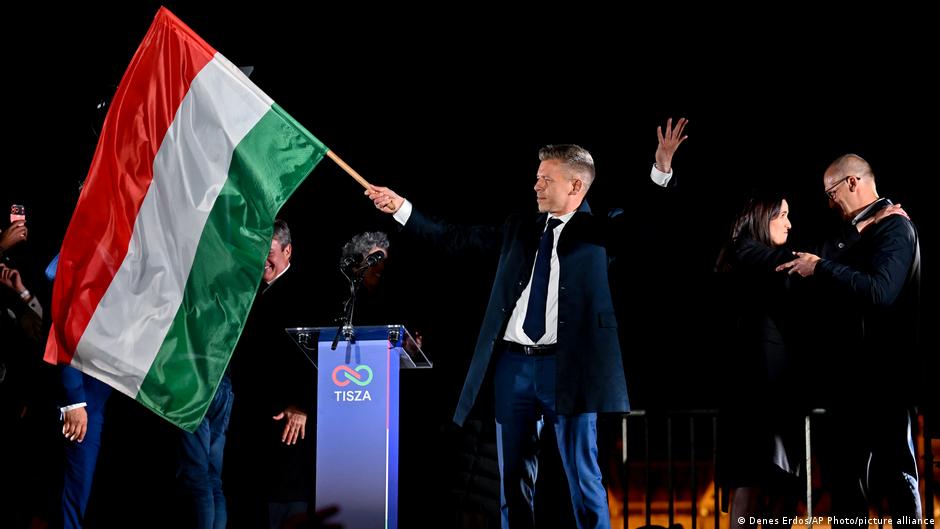
https://p.dw.com/p/5C4QbPeter Magyar (C) has won a landslide victory in Hungarian electionsImage: Denes Erdos/AP Photo/picture allianceAdvertisementHungarian voters turned out in force on Sunday to deliver a landslide victory to pro-European candidate Peter Magyar, who has pledged to turn the country away from its far-right, authoritarian course under Prime Minister Viktor Orban.
Magyar's center-right Tisza party is set to gain 138 seats in Hungary's 199-seat parliament, giving it five seats more than the two-thirds needed to push through the reforms the 45-year-old former Orban loyalist promised on the campaign trail.
The victory came despite Orban's control of Hungary's public media, gerrymandering of voting districts that required Tisza to gain an estimated 5% more votes than Orban's Fidesz party and efforts both by European far-right parties and the US to urge voters to retain the government in power.
Turnout reached almost 80%, according to the National Election Office — a record number in any vote in post-communist Hungary.
In a speech to supporters following his landslide victory, Magyar reiterated campaign promises to rebuild ties with Brussels and NATO, which were badly eroded during Orban's rule, and vigorously fight the corruption that also flourished under the populist leader.
"With the two-thirds majority allowing us to amend the constitution, we will restore the system of checks and balances," Magyar said.
"We will join the European Public Prosecutor's Office and guarantee the democratic functioning of our country. We will never again allow anyone to hold free Hungary captive or to abandon it," he said.
"Tonight, truth prevailed over lies. Today, we won because Hungarians didn't ask what their homeland could do for them — they asked what they could do for their homeland. You found the answer. And you followed through,” he said.
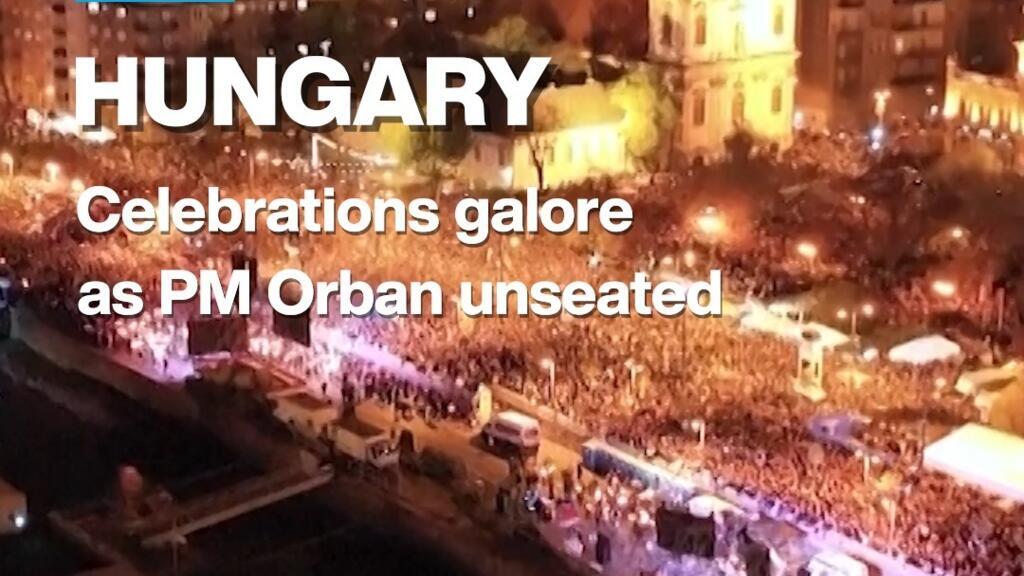
Many in the crowd chanted "Europe, Europe" during his speech.
Among other things, Magyar has pledged to carry out reforms that could potentially unlock billions in European Union funding, frozen over concerns in Brussels about Orban's dismantling of the rule of law and repression of media freedom. He has said he also wants Hungary to adopt the euro as currency.
Some diplomats and analysts say, however, that the new government must first demonstrate concrete results from its reform drive before the release of the funds, which would deliver a much-needed boost to the country's nearly stagnant economy.
Magyar's stance on LGBTQ+ rights, which were gravely undermined by Orban, is also unclear, as he said little about the issue during his campaign — a move observers said was aimed at keeping conservative voters on side. He has, however, said that he supports equality of all before the law.
Magyar's win has been hailed by many leaders in the EU and Europe who hope that the change in government will lead not only to internal reforms in Hungary but also a radical change in policy toward Ukraine.
Althought Magyar, like Orban, rejects sending arms to Ukraine and opposes the country's quick EU integration, he is unlikely to repeat his predecessor's vituperative rhetoric toward Kyiv.
Orban repeatedly used his veto to frustrate the EU's efforts to support Kyiv in its war against Russia's full-scale invasion and was one of the few leaders within the bloc to maintain close ties to Russian President Vladimir Putin. He also refused to end Hungary's dependence on Russian energy imports, which help finance Russia's illegal war.
This Moscow-friendly approach was also rejected by many in Hungary, and chants of "Ruszkik haza!” or "Russians go home!” — a phrase used widely during Hungary's 1956 anti-Soviet revolution — were widely heard in Budapest as Orban's defeat became clear.
European Commission President Ursula von der Leyen hailed Magyar's victory on X in English and Hungarian, saying "Europe's heart is beating stronger in Hungary tonight" as the results were announced.
German Chancellor Friedrich Merz addressed Magyar on social media, saying ""I am looking forward to working with you. "Let's join forces for a strong, secure and, above all, united Europe."
French President Emmanuel Macron posted on X that "France welcomes this victory for democratic participation, for the Hungarian people's commitment to the values of the European Union, and for Hungary in Europe."
"Today Europe wins and European values win," Prime Minister Pedro Sanchez said on X, congratulating Hungarian citizens on "historic elections".
Ukrainian President Volodymyr Zelenskyy also congratulated Magyar on his "resounding victory."
"We are ready for meetings and joint constructive work for the benefit of both nations, as well as peace, security, and stability in Europe," Zelenskyy said in a post on X.