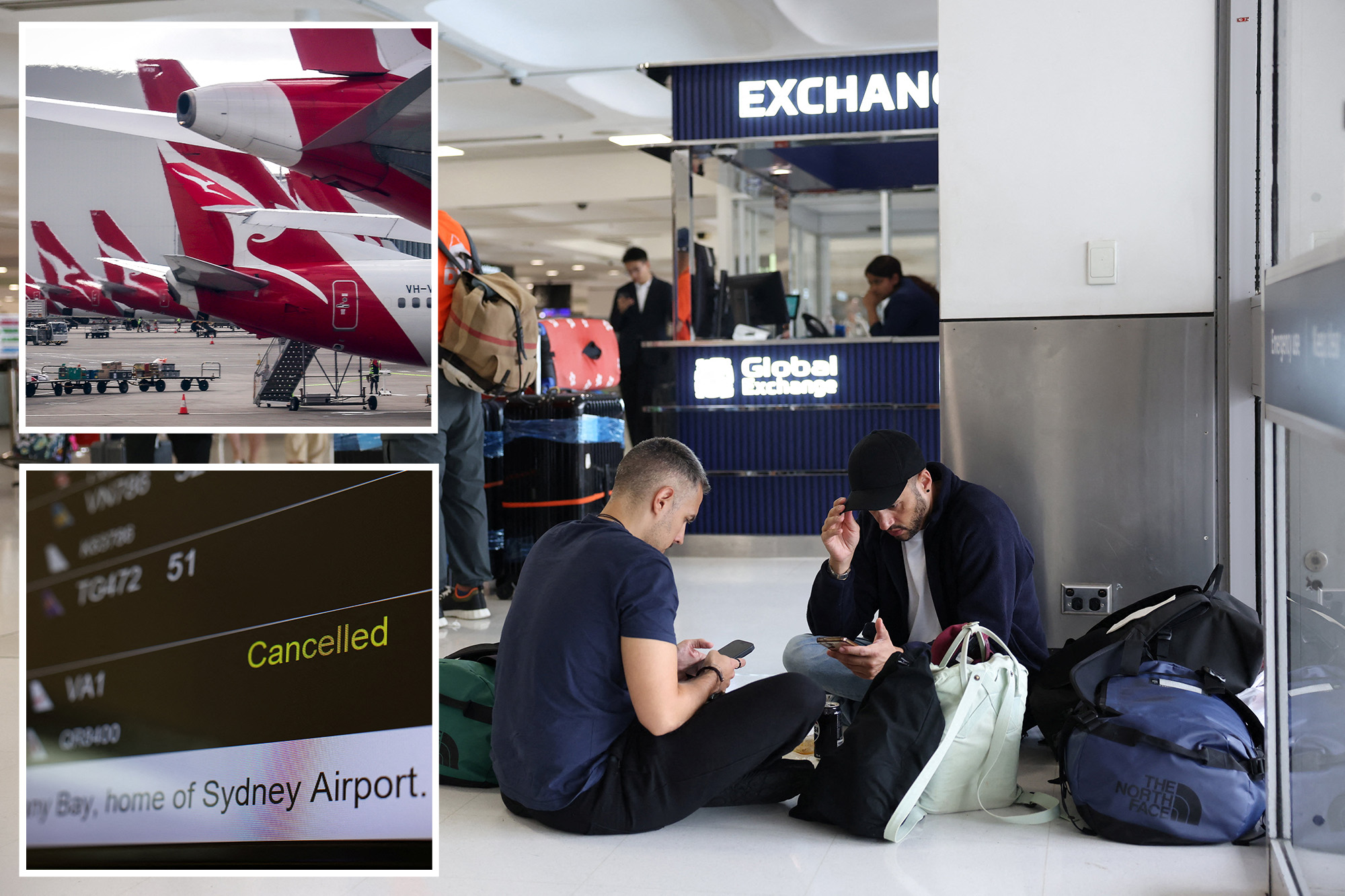
‘Our argument is not that migration should simply be cut, it is that Australia needs a better way to govern “temporariness”,’ say the authors of a new report that proposes Australia set immigration targets. Pictured: A plane landing at Sydney airport in October 2023. Photograph: Mike Bowers/The GuardianView image in fullscreen‘Our argument is not that migration should simply be cut, it is that Australia needs a better way to govern “temporariness”,’ say the authors of a new report that proposes Australia set immigration targets. Pictured: A plane landing at Sydney airport in October 2023. Photograph: Mike Bowers/The GuardianAustralia should set immigration targets to achieve a ‘stable temporary population’, report saysExperts say our preoccupation with net overseas migration figures has distracted from a more meaningful discussion on the ‘scale of temporariness’
Get our breaking news email, free app or daily news podcast
Australia should set immigration targets to achieve a “stable temporary population” to address the ballooning number of nonpermanent residents that has stretched the country’s public services and housing, a new report argues.
Temporary migrants as a share of the total population has more than doubled over the past 15 years, from 2.7% in 2010, to more than 6%.
In a new paper, Alan Gamlen, the director of the Australian National University’s migration hub, and emeritus professor Peter McDonald argue our preoccupation with net overseas migration figures has distracted from a more meaningful discussion on the “scale of temporariness”.
This failure to manage the stock of temporary migrants over recent decades has contributed to growing concerns around social cohesion, “mass migration”, and the role migration has played in adding to intense pressures on infrastructure and housing, Gamlen said.
A rebound in overseas migration after the end of pandemic border closures has triggered debates across a number of advanced economies about the capacity to accommodate the rapid increase in populations.
Canada in late 2024 began a radical migration reset, including a cap on the number of temporary arrivals into the country as part of a strategy to lower the share of temporary migrants from 7.6% to 5% of the population.
Canada’s population is now shrinking for the first time since the 1940s, and experts say that there is evidence that the policy has reduced pressure on housing costs.
Gamlen said there was an opportunity to learn from this experience, but that Australia should not take the same kneejerk response.
“Canada was right to focus on the stock [of temporary migrants] rather than net migration. That is the right policy target because there are levers to control that, and it’s the target that relates directly to the concerns that people actually have.”
Read moreBut Gamlen argued the Canadians did two things wrong: the 5% target was arbitrary; and “they’ve cut so fast that they’ve caused themselves economic harm”.
Gamlen and McDonald in their paper said Australia should also pursue a set number of temporary migrants, and manage long-term population by moving more or fewer temporary visa holders into the permanent program.
“That means that the number of people you’re accepting into the temporary program is linked to Australia’s capacity to support permanent settlement through the development of infrastructure, and you don’t have this kind of metastasised population of guest workers who are having all sorts of unintended consequences,” Gamlen said.
“Our argument is not that migration should simply be cut, it is that Australia needs a better way to govern ‘temporariness’. Our goal is a stable temporary population.
“The question is not what Nom [net overseas migration] number sounds politically attractive. The question is what scale of temporariness Australia is willing and able to sustain.”