Artefact was made of a particular blend of metal that would have been extremely difficult for the ancient people to create on Earth
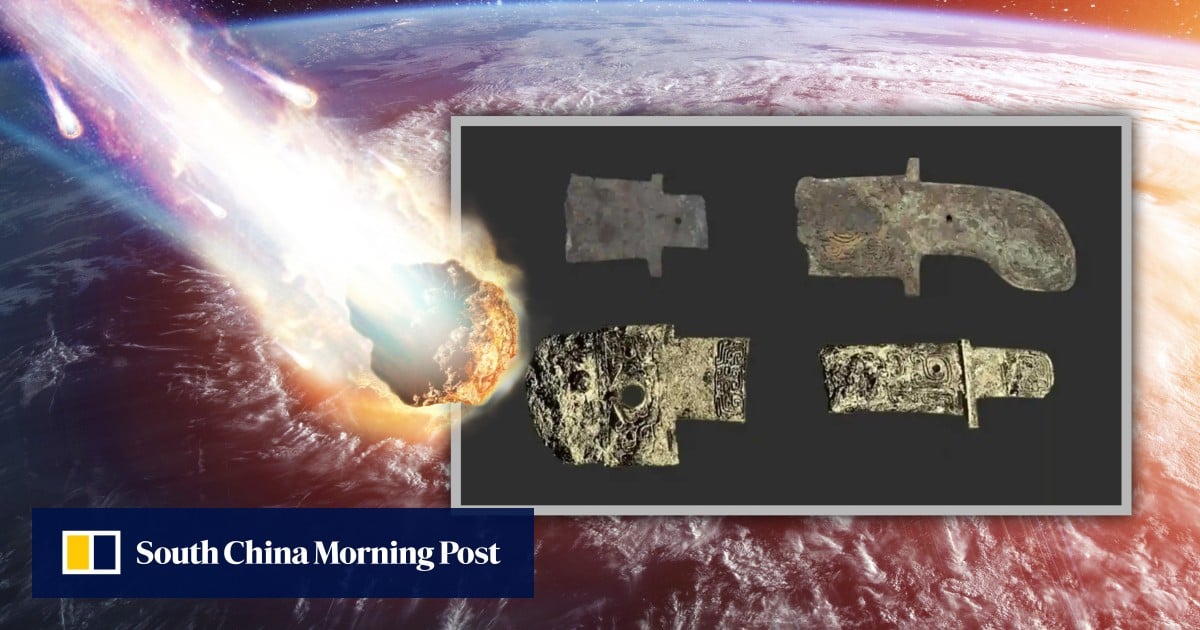
2-MIN READ2-MIN ListenKevin McSpaddenPublished: 6:00pm, 12 Apr 2026The archaeological site of Sanxingdui in southwest China’s Sichuan province has yielded remarkable discoveries, including insights recently revealed by Chinese researchers about how the inhabitants forged an axelike tool from a meteorite.
While meteorite artefacts are not entirely unheard of – China boasts 13 known meteorite objects – this discovery underscores that the people of Sanxingdui were part of a distinct regional culture, separate from their contemporaries further north.
“The presence of meteoritic iron at Sanxingdui further highlights the distinctive metallurgical practices in Southwest China, in contrast to contemporaneous practices in the Central Plains,” wrote the authors in a study published in Archaeological Research in Asia.
This axelike tool stands as the oldest meteoritic object discovered in Bronze Age southwest China, “reshaping our understanding of early iron use and cross-regional technologies.” Additionally, it represents the largest meteorite artefact found in China to date.
While researchers did not provide a specific dating for the axe, which was in a particularly fragile condition, the Sanxingdui culture is dated to around 1700–1050 BC.
The tool consists of a unique metal blend – 90 per cent iron and 7.41 per cent nickel – that would have been nearly impossible to replicate, given the limited evidence for such advanced technology during that era in China.
Diverging from other Chinese artefacts, the Sanxingdui tool was not combined with bronze, indicating it was forged directly from the meteorite with minimal alteration.
The high nickel content is a common hallmark of meteorites and has consistently indicated that an ancient object originated from outer space.