AMZN -1.87% NVDA -1.43% COST +1.13% Explore stocks on Coinbase Trading disclosure Trading disclosure The above button links to Coinbase. Yahoo Finance is not a broker-dealer or investment adviser and does not offer securities or cryptocurrencies for sale or facilitate trading. Coinbase pays us for certain activity generated through this link. Prices displayed are informational.
Thanksgiving is Nov. 26 this year, with Black Friday the day after.
For the largest retailers, the weeks that follow can do more for the year's results than any other stretch. Last year, Amazon (NASDAQ:AMZN) reported fourth-quarter sales around 18% higher than its third-quarter sales.
Missed AI's "Act 1"? Act 2 Could Be 14x Bigger. Most investors think they missed the AI boat because they didn't buy Nvidia in 2005. But according to our analysts, we're only at the end of "Act 1"—the R&D phase. "Act 2" is the global rollout. Continue »
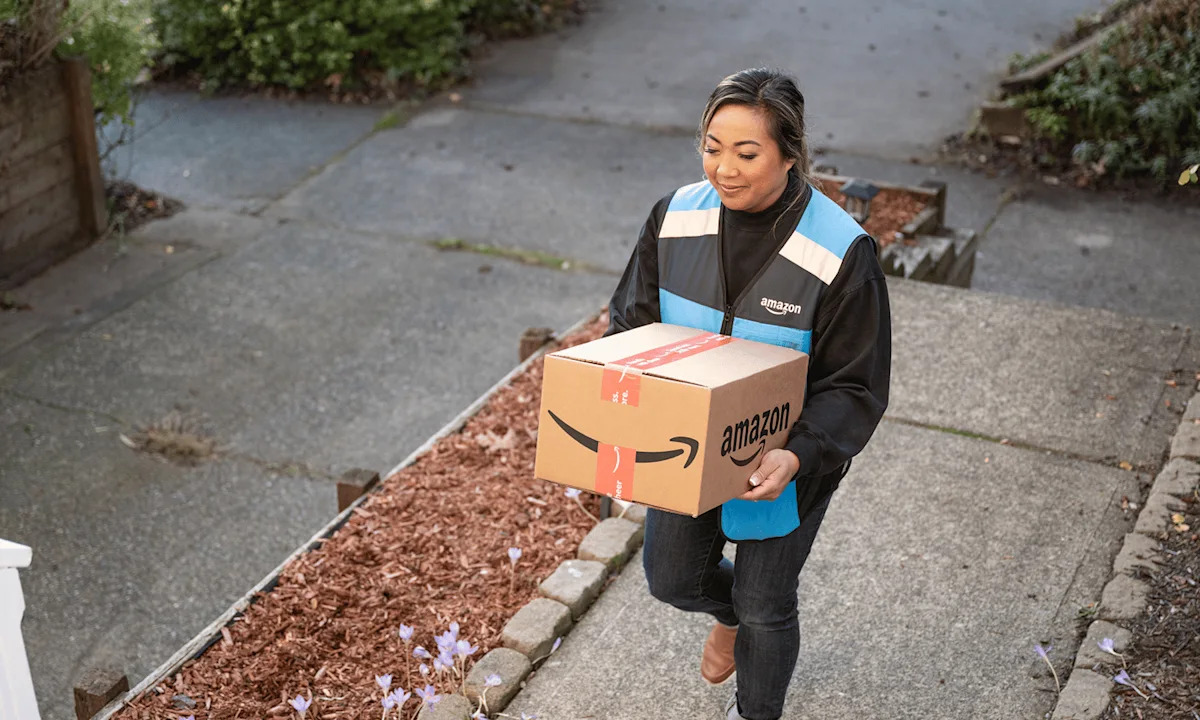
Two retail stocks look worth owning before the rush to me: Amazon and Costco Wholesale (NASDAQ:COST). Both are going into the season with sales growth that has held up well this year.
But their stocks have gone different ways lately. Amazon shares are still well below the record they hit in early August. Costco shares, meanwhile, have risen around 8% so far in October to near $1,000 as I write.
Amazon's fourth quarter is reliably its biggest. In the holiday period of 2025, net sales hit $213.4 billion, 14% higher than a year before and far above the third quarter's $180.2 billion.
The profits show up in the retail business, too. Operating income for Amazon's North America segment, which has most of its store sales, rose around 24% year over year to $11.5 billion in last year's fourth quarter. That was far above the third quarter's $7.3 billion (a number that leaves out a $2.5 billion legal settlement with the Federal Trade Commission).
And this year, Amazon's sales have risen even faster. Revenue growth picked up from 14% in last year's fourth quarter to 17% in this year's first quarter, then 20% in the second, but Prime Day's move to June lifted that final number.
Of course, the same shift holds back the third quarter. Management's outlook calls for growth of 9% to 12%, or about 13% to 16% with Prime Day left out in both years. The third-quarter report, probably due later this month, should also have management's first forecast for the holiday quarter.
Even after a rise of about 2% in October, the stock trades near $254, about 11% below the $284.02 record close it set Aug. 3.
Based on analysts' 2027 earnings estimates, shares cost about 24 times earnings. This looks like a fair price to me for a company going into its biggest quarter with double-digit sales growth.
The warehouse club's fiscal first quarter spans 12 weeks ending right before Thanksgiving, so Black Friday and December fall in Costco's fiscal second quarter. This makes its monthly sales reports the first public look at how the season goes.
Costco's annual report says the winter holidays bring its main seasonal boost in sales and earnings. Last year's holiday quarter, the fiscal second quarter of 2026 (the 12 weeks ended Feb. 15, 2026), showed it.
Net sales rose 9.1% year over year to around $68.2 billion. Earnings per share rose faster, up around 14% to $4.58. And comparable sales (sales at warehouses open more than a year), excluding shifts in gas prices and foreign exchange, grew 6.7%. This measure grew 6.7% again in the fiscal fourth quarter ending Aug. 30, 2026, before accelerating to 7.6% in September.
Costco said a later Labor Day added just a bit more than half a percentage point to September's comparable sales. Put another way, Costco is going into this holiday season with its underlying sales growing faster than they did in the last one.
But the holidays might matter less for Costco's profits than its sales suggest. Membership fees were around $5.9 billion for fiscal 2026, or about half of operating income, and Costco books the fee income evenly over each member's year. With 89.8% of members worldwide renewing, that steady stream can cushion a weaker holiday period.
The prices investors pay to own these two retailers are far apart.
I'd start with Amazon, whose stock costs less than it did in August.
True, big spending linked mainly to artificial intelligence drove Amazon's free cash flow to an outflow of around $7.6 billion in the trailing 12 months. But the cloud computing business likely to use much of that capacity, Amazon Web Services, grew revenue almost 37% year over year for the second quarter.
Costco is another story. The warehouse club earned $20.76 per share for fiscal 2026, so at around $986, investors are paying about 47 times earnings. At the end of September, before October's run-up, the stock was closer to 44 times earnings.
That price already assumes plenty of steady growth. So I'd buy Costco in pieces, maybe adding when the November and December sales reports come out, instead of paying around $1,000 for a full stake today.
The Motley Fool Stock Advisor analyst team just identified what they believe are the 10 best stocks for investors to buy now… and Amazon wasn't one of them. The 10 stocks that made the cut could produce monster returns in the coming years.
Consider when Netflix made this list on December 17, 2004... if you invested $1,000 at the time of our recommendation, you'd have $380,363!* Or when Nvidia made this list on April 15, 2005... if you invested $1,000 at the time of our recommendation, you'd have $1,315,732!*
Now, it's worth noting Stock Advisor's total average return is 919% — a market-crushing outperformance compared to 211% for the S&P 500. Don't miss the latest top 10 list, available with Stock Advisor, and join an investing community built by individual investors for individual investors.
*Stock Advisor returns as of October 18, 2026.
Daniel Sparks and his clients do not have positions in any of the stocks mentioned. The Motley Fool has positions in and recommends Amazon and Costco Wholesale. The Motley Fool has a disclosure policy.
2 Retail Stocks to Buy Before the Holiday Shopping Season was originally published by The Motley Fool