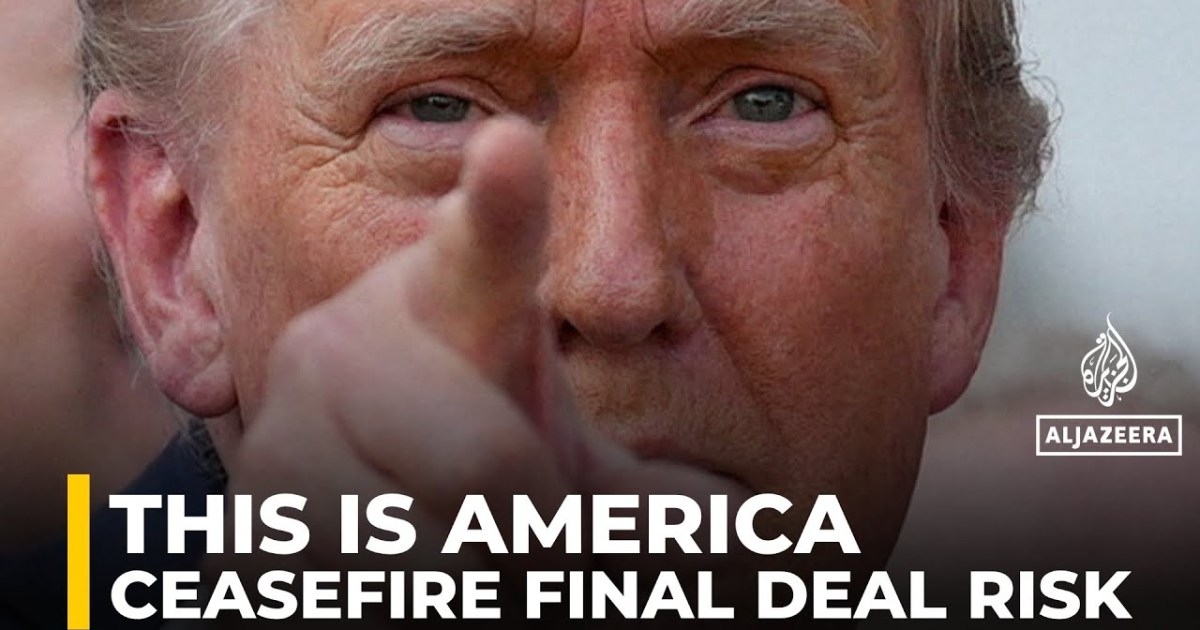
Following President Trump’s announcement of a cease-fire, US Central Command (CENTCOM) commander Admiral Brad Cooper stated: “Iran has suffered a generational military defeat.”
Tehran’s response has been a single counterargument: the Islamic Republic still stands.
That argument mistakes the question. The survival of the Islamic Republic is not in dispute. What is in dispute is whether the surviving entity retains the capacity to direct the forces operating in its name.
Iran developed its mosaic military doctrine by drawing direct lessons from Saddam Hussein’s collapse in just twenty-six days. After the 2003 invasion of Iraq, Iranian Brigadier General Mohammad Ali Jafari reorganized the Islamic Revolutionary Guard Corps (IRGC) in 2008 into thirty-one provincial commands, each with its own weapons stockpiles, logistics chains and pre-delegated authority.
Asymmetric warfare is the recourse of states that cannot prevail conventionally. Dispersion and concealment are the tools of a military that has already conceded the conventional battlefield.
Israel, operating alongside the United States in Operation Epic Fury, mastered asymmetric tactics and turned Iran’s own doctrine against it, employing intelligence penetration, targeted eliminations and network disruption with superior precision.
The clearest demonstration came before the operation began.
In July 2024, Israel assassinated Hamas political leader Ismail Haniyeh inside a Revolutionary Guard guesthouse in Tehran. Iran’s security services must now operate under the assumption that they do not know the extent of the compromise — and that uncertainty is the most debilitating condition an intelligence service can face.
Operation Epic Fury then pushed that penetration to its extreme.
The killing of Supreme Leader Ali Khamenei, the elimination of hundreds of senior IRGC commanders and the degradation of the Quds Force’s extraterritorial capacity together constituted a decapitation campaign of unprecedented precision.
More importantly, fractures between Iran’s political leadership and its military have already surfaced publicly. On March 7, 2026, President Masoud Pezeshkian issued a televised apology to Arab Gulf states for missile and drone strikes conducted during the conflict, pledging that further attacks would cease.
That a sitting president apologized for his own military’s actions within minutes of their execution illustrates precisely what pre-delegated authority has produced: a military that the political leadership must answer for rather than control.
Three vulnerabilities now compound one another.
The first is the mosaic doctrine’s foundational limitation under sustained pressure.
The doctrine solved the problem that Saddam could not, preventing decapitation from producing immediate collapse. It never solved attrition. The mosaic delays the timeline of dissolution but leaves the dissolution itself intact.
The cease-fire arrived at a moment of Iranian weakness, and the pressure that produced that weakness remains available to Washington. The Islamic Republic knows that each day the cease-fire holds, it does so on terms that Washington can revise.
The mosaic doctrine distributed resilience horizontally across provincial land commands, but the IRGC’s functional branches — its navy, air force, missile corps and cyber and intelligence directorates — each represent a distinct accumulation of “tiles” with separate supply chains and command structures.
The United States has dismantled these branches sequentially rather than simultaneously, degrading each functional pillar while removing leadership at the center.
The result is a system weakening from two directions at once: horizontal provincial networks loses coherence as the vertical command spine collapses, and neither compensates for the deterioration of the other.
The third vulnerability is financial, and the most immediately exposing. The IRGC’s ability to sustain operations and evade sanctions has depended on Hezbollah and the broader proxy network to move money and provide the transactional infrastructure linking the center to the periphery. That system has been degraded.
Iran’s shadow fleet — the network of vessels moving sanctioned oil through falsified documentation and ship-to-ship transfers — has faced intensified US interdiction. China-linked front companies that provided financial cover to the IRGC have been sanctioned in successive rounds by the US Treasury.
On March 31, dozens of money changers linked to the IRGC were arrested across the United Arab Emirates following the escalation of Gulf tensions after Iranian strikes, severing one of the regime’s most critical cash arteries. A network that cannot pay its operators does not remain in a network for long.
Washington enters the cease-fire holding all the cards: military dominance, financial strangulation and a regional architecture that has isolated Tehran from the Arab world it once sought to mobilize.
Iran’s response has been to threaten the Strait of Hormuz, the final lever a regime reaches for when it has exhausted all others. That threat is a measure of desperation, not strength.
The operation has not concluded, but the conditions for Iranian defeat are in place.
The entity that emerges from what comes next will bear little resemblance to the Islamic Republic that launched its doctrine of resistance four decades ago. What remains depends entirely on whether Tehran meets Trump’s terms.
Zineb Riboua is a research fellow at the Center for Peace and Security in the Middle East at the Hudson Institute