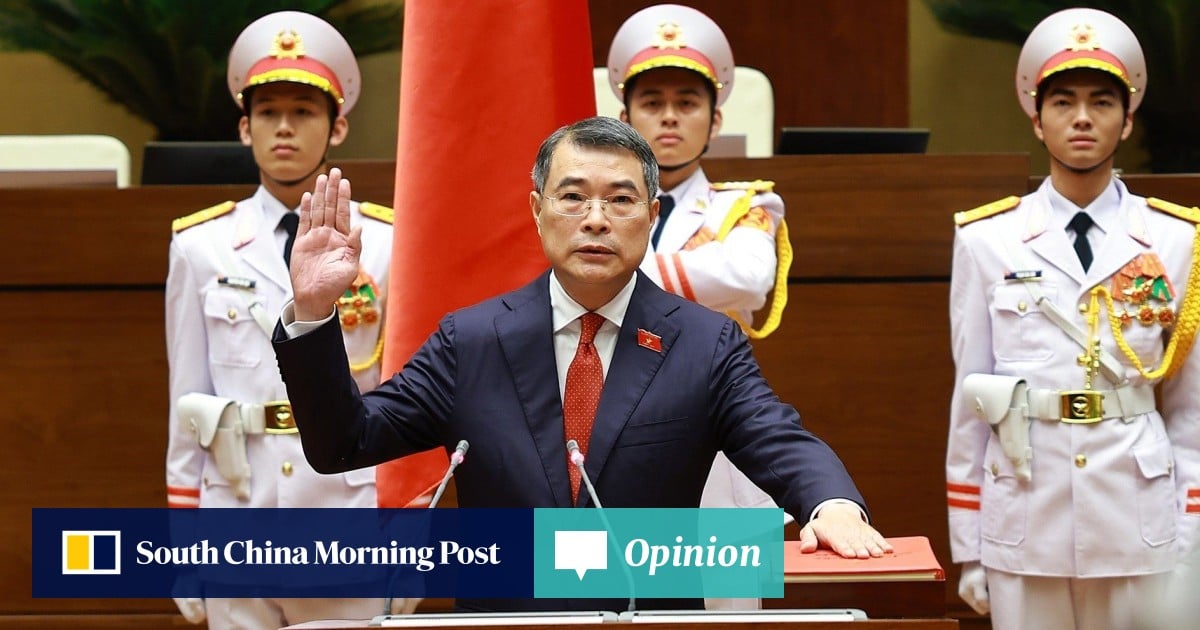
The ex-central banker has the credentials to succeed. Whether he has the political capital remains to be seen
4-MIN READ4-MIN ListenNguyen Khac GiangPublished: 1:00pm, 11 Apr 2026On Tuesday, Vietnam’s National Assembly elected a new prime minister. For once, the appointment looks less like a factional compromise than a deliberate bet on competence. Le Minh Hung, born in 1970, is the country’s youngest prime minister since 1955. In a system that often prizes seniority, that alone is striking.More striking still is Hung’s profile: he is not a provincial baron or a deal maker forged in the rough-and-tumble of local politics. Hung is a technocrat with economic training in Japan and is best known for his years at the State Bank of Vietnam, where he rose to become its youngest-ever governor. His profile suits an economy entering a harder phase of development, but he must now navigate a concentrated power structure at home and a volatile world, with less political capital than any recent predecessor.Hung’s technocratic credentials are real. As central bank governor from 2016 to late 2020, he helped stabilise Vietnam’s macroeconomic foundations, build sizeable foreign reserves and nudge its banking sector towards digital modernisation. He is not a flamboyant politician, rarely speaking to the media, but a steward who understands that keeping the machinery running matters more than announcing grand redesigns.
Since leaving the central bank, Hung has led the Communist Party’s Central Office and the Central Organisation Commission, roles that deepened his political exposure but offered little of the hands-on economic policymaking a prime minister must master from day one.