Video Iran’s Hormuz pressure campaign: Expert warns of maritime law violations UC Berkeley law professor John Yoo comments on the Strait of Hormuz, international maritime law and more on ‘America Reports.’
The Strait of Hormuz is often described as a Gulf chokepoint. That is too narrow a frame for too large a fact. Hormuz is not simply a regional waterway between Iran and the Arab Gulf states. It is a piece of global economic infrastructure, a narrow corridor through which a vast share of the world’s oil and gas trade passes. It is also a route on which shipping, insurance, fertiliser supply, industrial production and food security in much of the world depend. This is not a local matter. It is part of the operating system of global growth.
That is why one principle has to be absolute: there can be no negotiation over freedom of passage in Hormuz. If President Donald Trump were to accept any restriction on transit through the strait, whether in the form of tolls, quotas, selective permissions, inspections manipulated for political ends or any de facto Iranian right to decide who passes and on what terms, it would be a major defeat for the United States and for the world economy. It would mean that Washington had accepted the conversion of a global artery into an instrument of coercion.
That cannot be dismissed as a temporary compromise. Once the principle is conceded, the damage is lasting. The issue is not simply the immediate cost of a few delayed shipments. It is the precedent that the world’s most important maritime chokepoints can be politically priced, selectively restricted and used as bargaining chips by the power that threatens them. If the United States accepts that in Hormuz, every revisionist state will take note.
IRAN WAR NEARS ‘COMPLETION’ AS TRUMP EYES DEADLINE — WHAT THE ENDGAME COULD LOOK LIKE
The dependence on Hormuz is greatest in Asia. Much of the oil and LNG passing through the strait is destined for Asian markets, above all China, India, Japan and South Korea. A closure of the waterway, or even an Iranian claim to regulate access, would therefore do much more than inconvenience Gulf exporters. It would strike directly at the industrial heartlands of Asia. Chinese manufacturing, Indian refining, Japanese utilities and Korean industry would all feel the shock quickly, through fuel prices, factory output, inflation and investor confidence.
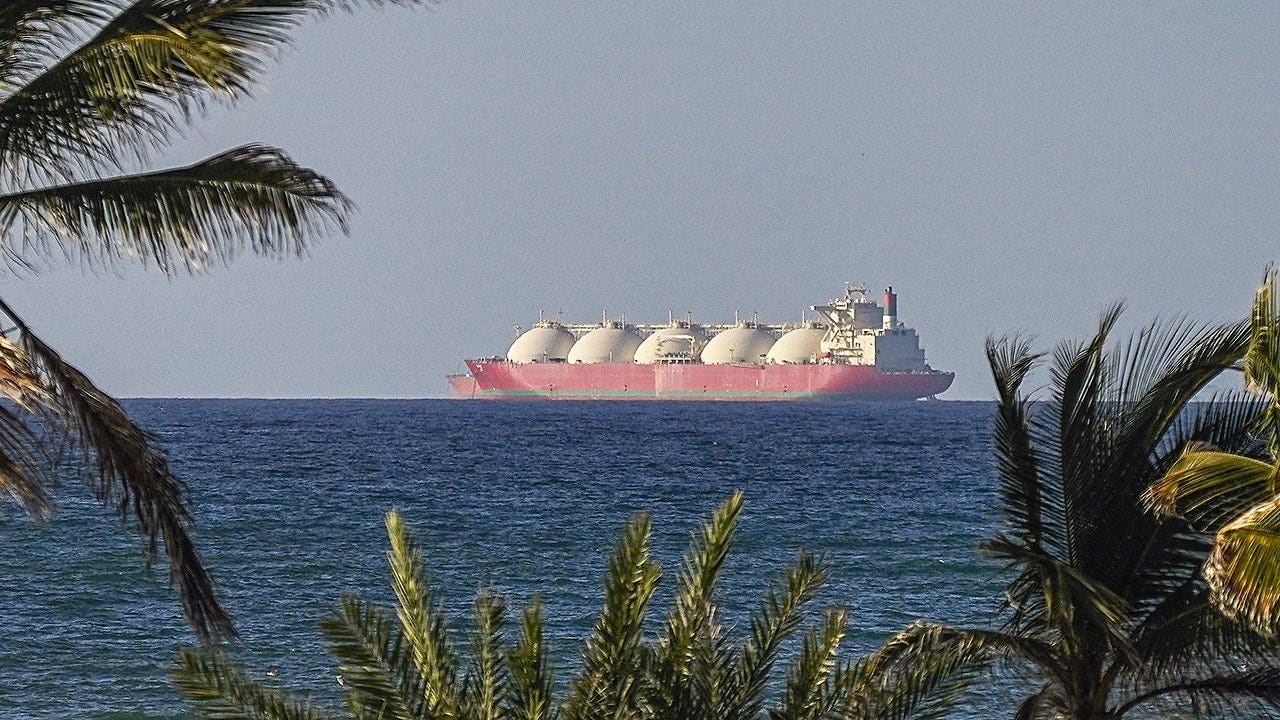
On the gas side, the vulnerability is sharper still. LNG exports from Qatar and the UAE are overwhelmingly dependent on the strait. For countries such as Bangladesh, India and Pakistan, disruption would not simply be an energy problem. It would become a power problem, an industry problem and then a food problem. Gas shortages do not stop at the power plant. They spill into fertiliser production, factory output and household budgets.
Europe is less exposed directly, but far from insulated. In a tight market, marginal supply sets the price. Europe would be drawn into fiercer bidding wars for replacement gas, much as it was after Russia’s invasion of Ukraine. The secondary effects would extend well beyond Europe. Higher energy prices feed into transport, insurance, fertiliser and food. The result is inflation in advanced economies and fiscal stress in poorer and more import-dependent ones. Countries far from the Gulf would still pay a steep price for any attempt to weaponize Hormuz.
That is why Hormuz cannot be treated as a Gulf security problem to be subcontracted to Gulf states. Its disruption radiates through power markets, shipping costs, fertiliser supply chains and food security across the global south as well as the industrial world. This is not a regional dispute with international consequences. It is an attack on a shared economic artery.
WHY TRUMP FACES AN AGONIZING DECISION ON OBLITERATING IRAN’S OIL SUPPLY IF HE CAN’T GET A DEAL
For that reason, the response should not be framed primarily as a question of whose navy escorts which tanker. Force may at times be necessary to deter immediate aggression, but it is not the sustainable answer. Even limited violence, or the credible threat of it, can send insurance costs soaring and effectively seal the strait commercially. A militarised Hormuz is, in practice, a partially closed Hormuz. The more durable answer is economic and global: a sanctions mechanism so comprehensive and so credible that Iran concludes it has more to lose from threatening Hormuz than it could ever gain from coercing the world through it.
CLICK HERE FOR MORE FOX NEWS OPINION
That means not another Western sanctions package with familiar loopholes, but a true economic quarantine prepared in advance: no Iranian oil purchases, no shipping services, no insurance, no port access, no banking channels, no petrochemical trade, no barter arrangements and no back-door facilitation through third countries. More important, it means stating clearly in advance that these measures would follow automatically from any blockade, systematic harassment of commercial traffic or attempt to impose de facto access fees.
Such a regime would have to include China. Without Chinese participation, the exercise would be strategically unserious. A sanctions coalition that excludes one of the principal end markets for Gulf energy would amount to announcing that the world is prepared to tolerate coercion so long as it is selectively monetised. The same logic applies to India, Japan and South Korea. They are not bystanders. They are among the principal beneficiaries of the waterway’s continued openness and among the major victims of any disruption.
CLICK HERE TO DOWNLOAD THE FOX NEWS APP
The same principle applies to Russia and to any other state tempted to help Iran evade pressure. The purpose of a genuine sanctions regime is to force a choice: is shielding Iran worth jeopardising more valuable relationships with Gulf states, India and other countries across the global south? A serious global sanctions threat should make that calculation unavoidable.
Hormuz is not Iran’s lever, still less its toll road. It is part of the basic infrastructure of global commerce. If Tehran tries to weaponize that fact, the world should ensure in advance that the peaceful cost to Iran would be overwhelming. But the first thing that must be rejected is the idea that America can bargain over access. If Trump agrees to any restrictions at Hormuz, the United States will have legitimized extortion at one of the world’s central economic arteries. That would not be a deal. It would be a strategic defeat.
Ali Shihabi is a Saudi author and political analyst.
Get the recap of top opinion commentary and original content throughout the week.
By entering your email and clicking the Subscribe button, you agree to the Fox News Privacy Policy and Terms of Use, and agree to receive content and promotional communications from Fox News. You understand that you can opt-out at any time.
You've successfully subscribed to this newsletter!