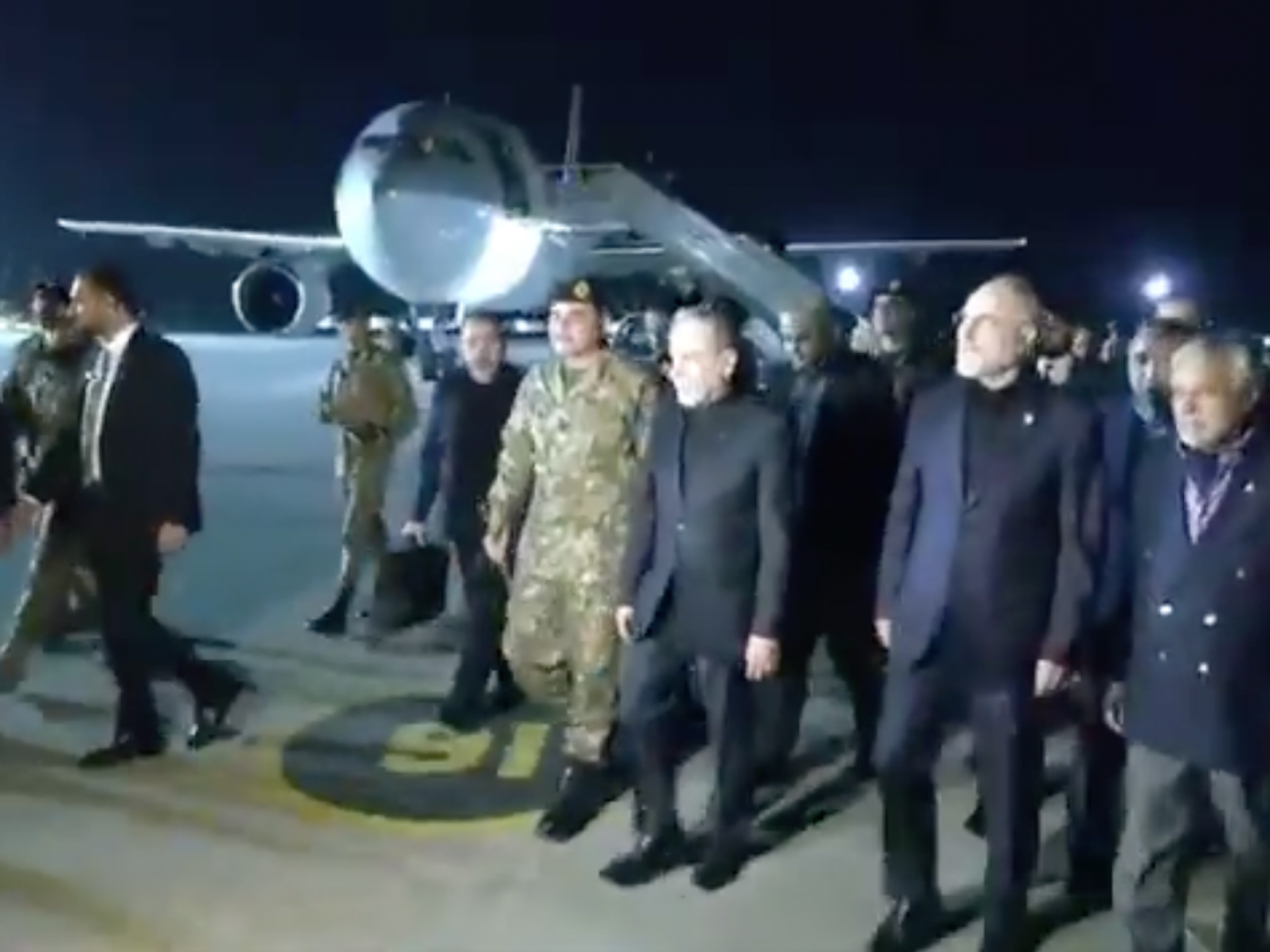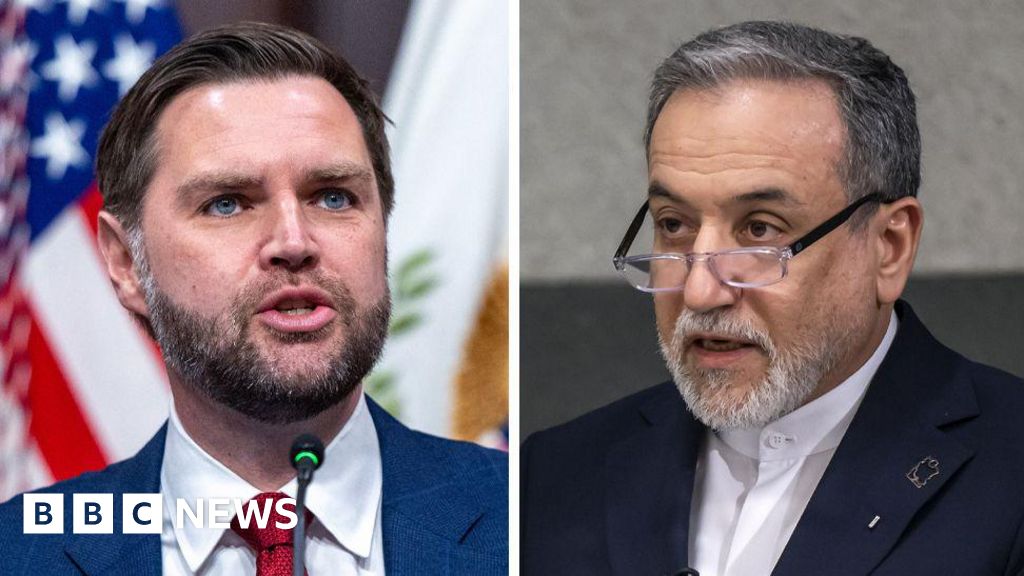
ShareSaveAdd as preferred on GooglePaul AdamsDiplomatic CorrespondentGetty Images/ReutersUS Vice President JD Vance is to lead the US team during the talks, while reports suggest Iranian Foreign Minister Abbas Araghchi will co-lead Iran's delegationThe venue is ready, the guards are in place and the curb along the approach road has received a fresh coat of yellow and black paint.
As hosts of vital US-Iranian talks, the Pakistani government officials are making optimistic noises, emphasising that unlike many others, they enjoy the trust of both sides.
The man heading the US delegation, Vice President JD Vance, is also sounding upbeat.
"If the Iranians are willing to negotiate in good faith," he said before leaving the US, "we're certainly willing to extend the open hand."
"If they're going to try to play us, then they're going to find the negotiating team is not that receptive."
It's fair to say that a whole mountain of obstacles lies ahead.
Israel's ongoing campaign against Iran's Lebanese ally, armed group Hezbollah, threatens to derail the talks before they've even started.
"The continuation of these actions will render negotiations meaningless," Iran's president, Masoud Pezeshkian, posted on X.
"Our fingers remain on the trigger. Iran will never abandon its Lebanese sisters and brothers."
Israel's prime minister, Benjamin Netanyahu, says there is "no ceasefire" when it comes to Hezbollah, but Israel's repeated warning to residents of Beirut's southern suburbs to evacuate has yet to result in any further action.
Donald Trump says Israel's action in Lebanon will now be "a little more low key", and the US State Department says direct talks between Israel and Lebanon will take place in Washington next week.
Whether it will be low key enough to satisfy Iran remains to be seen.
Another issue with the potential to stymie talks from the beginning is the crucial oil shipping passage the Strait of Hormuz.
Donald Trump says Iran is "doing a very poor job" of allowing ships through the Strait, despite initially saying it would.
"This is not the agreement we have!" he declared in a Truth Social post, accusing Iran of being "dishonourable."
Very few vessels are passing through, with hundreds of ships and an estimated 20,000 seafarers still trapped inside the Gulf.
Having achieved its chokehold on this vital waterway, Iran seems determined to formalise it, calling it sovereign Iranian water and talking about a new set of rules to govern what can and can't pass through.
On Thursday, it announced the creation of new transit routes, north of the two existing traffic separation channels. In a statement which played very consciously on existing fears among shipping companies, it said the new routes were necessary "to avoid the presence of various types of anti-ship mines in the main traffic zone".
Amid reports that some of the ships that have made it through in recent weeks have paid a $2m (£1.5m) toll, Trump has warned that Iran "better not be charging fees to tankers".
Arguably the biggest, and certainly the most long-standing, bone of contention is nuclear.
Trump said he was launching Operation Epic Fury, in part, to make sure Iran "can never have a nuclear weapon".
Iran says he has never sought to build a bomb - a claim most western governments view with enormous scepticism – but insists that as signatories to the Nuclear Non-Proliferation Treaty, they have the right to enrich uranium for civilian purposes.
Iran's 10-point proposal, which Trump described as "a workable basis on which to negotiate" includes a demand for international recognition of its enrichment rights.
Trump's own 15-point plan reportedly demands that Iran "end all uranium enrichment on Iranian soil". But asked about this earlier this week, Secretary of Defence Pete Hegseth merely said Iran would "never had a nuclear weapon or the capability to get a path to one".
It took years for international negotiators to reach the 2015 Joint Comprehensive Plan of Action (JCPOA), which tackled this thorny issue in enormous detail.
Iran's network of regional allies and proxies – Hezbollah in Lebanon, the Houthis in Yemen, Hamas in Gaza and an assortment of militias in Iraq – has given Tehran regional clout, allowing Iran to exercise what is often called "forward defence" in its long-running disputes with Israel and the United States.
Since the start of the Gaza war in October 2023, the network Iran calls the "Axis of Resistance" has been under constant attack. One part of it, the regime of the former Syrian dictator Bashar al-Assad, no longer exists.
But Israel sees what it calls the "Axis of Evil" as representing an existential threat, which needs to be fully eradicated.
At a time when the Iranian economy is buckling, many Iranians would also like to see their government spending less on foreign adventurism and more on making their lives easier.
But there's little sign yet that Iran is ready to give up on its allies.
The Islamic regime has suffered crippling international sanctions for decades. It's demanding the lifting of all US and international sanctions as part of any deal.
On Friday, the speaker of parliament, Mohammad Bagher Qalibaf, said an estimated $120bn (£89bn) of frozen Iranian assets must be released before negotiations begin.
This, he said, was one of two previously agreed measures (the other being a ceasefire in Lebanon).
But the 7 April statement from Pakistan's Prime Minister Shehbaz Sharif announcing the two-week ceasefire said nothing about the release of frozen assets. It's not clear what agreement Qalibaf was referring to.
It seems highly unlikely that the Trump administration is willing to make such a substantial concession just to get the talks started.