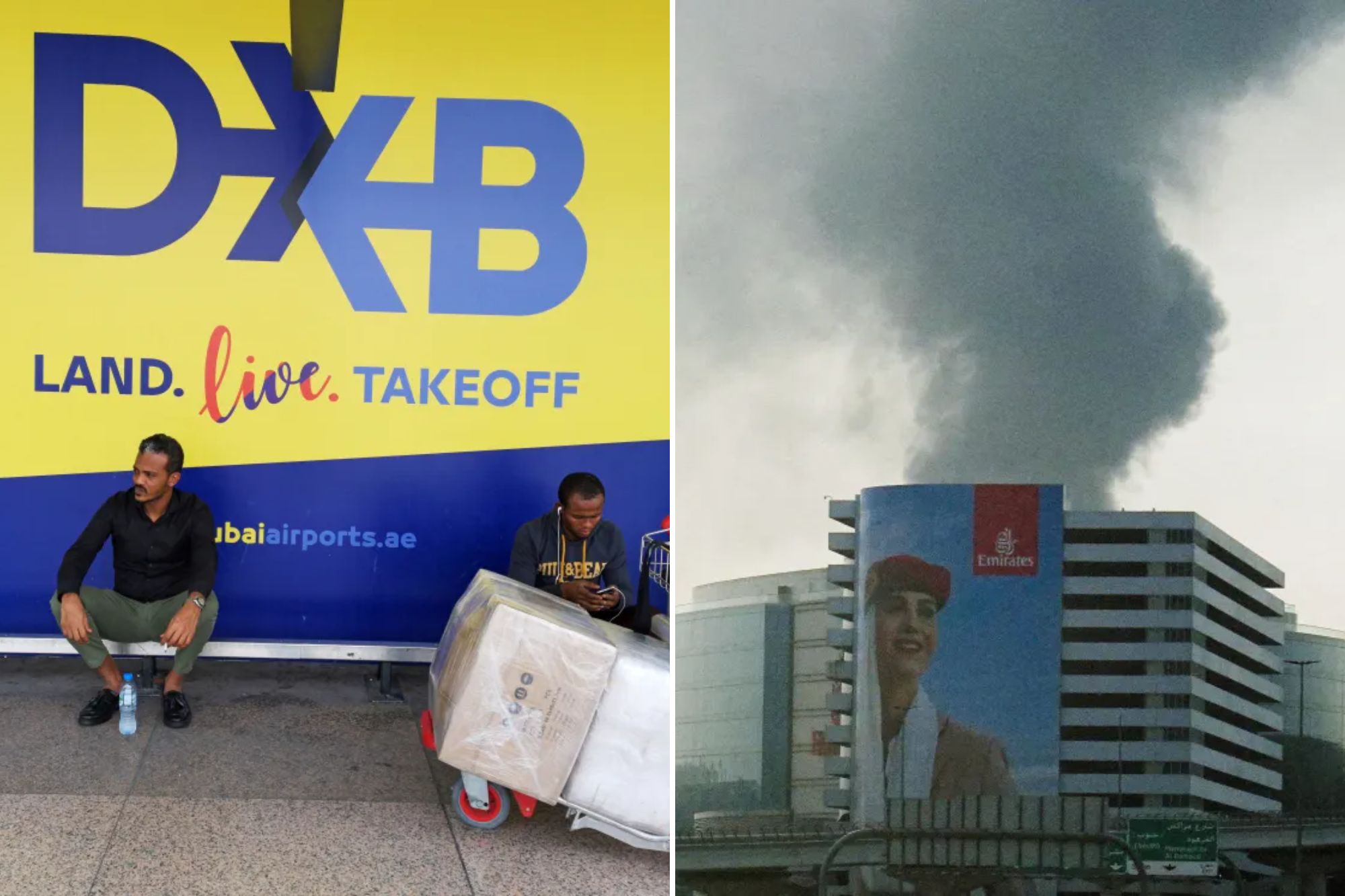
NEW DELHI — Dubai has restricted foreign airlines to just one daily flight to its airports until May 31 due to the Iran crisis, igniting revenue loss fears among Indian carriers that had planned more flights than airlines from any other country, letters show.
The Federation of Indian Airlines (FIA), which represents top carriers IndiGo (INGL.NS), Air India, and SpiceJet (SPJT.BO), has asked India to push Dubai authorities to lift the curbs and, failing that, to consider reciprocal measures on Dubai carriers, including Emirates and flydubai, according to a letter it sent to the Indian government on March 31.
Indian carriers are already under financial pressure from higher fuel prices and longer routings to Western destinations because they have been banned from using Pakistani airspace since last year, following military tensions between the two neighbors.
In a private email to airlines on March 27, seen by Reuters, Dubai Airports said carriers would be allowed one round trip per day to Dubai International Airport (DXB), normally the world’s busiest international travel hub, and the smaller Al Maktoum International Airport (DWC) during the summer season between April 20 and May 31, extending restrictions implemented after the war began.
“Carriers continue to be limited to one rotation per day, until capacity allows more to be facilitated … Additional slots will be allocated if capacity is available,” it said.
The FIA told the Indian government the curbs were not being applied to Dubai’s airlines, such as Emirates and flydubai, creating an uneven playing field that could lead to “substantial” revenue losses.
Dubai Airports and Dubai’s media office did not respond to repeated requests for comment. Flydubai said its flight schedules were approved by the relevant authorities.
Emirates did not respond to a request for comment.
The measures come after Emirates and other Gulf airlines have long complained about India’s bilateral air service agreements that cap the number of seats that can be deployed between countries.
Indian authorities have said such pacts protect Indian airlines in the cutthroat market.
India was the largest source of passengers for DXB in 2025, with 11.9 million travellers passing through the hub.
The Dubai caps will hit Indian airlines the hardest, according to April and May schedules data from Cirium.
Air India and its budget carrier Air India Express have scheduled more than 750 flights into DXB in that period. IndiGo has 481, followed by Saudia and Gulf Air, which planned for 480 and 404, respectively.
The one-flight-per-day cap would mean 30 or 31 per month for each foreign airline, versus the hundreds of daily flights being flown by Emirates and flydubai, according to Flightradar24 data.
IndiGo told Reuters in a statement that the Middle East crisis and the new Dubai extended restrictions “significantly constrained” its operations as it had an approved summer schedule of 15 daily flights from India to Dubai.
“As a result, a significant portion of IndiGo’s capacity and aircraft time is currently underutilized,” IndiGo said in its first comments on the crisis.
Air India, SpiceJet (SPJT.BO), and Indian authorities did not respond to requests for comment.
Air India Express told Reuters the restrictions had “significantly curtailed” its planned services despite relatively high demand on India-UAE routes, limiting options for travellers, particularly from smaller cities, and underscored the need for a “fair and reciprocal operating framework.”
Other major airlines such as Lufthansa (LHAG.DE), Singapore Airlines (SIAL.SI), and British Airways had far fewer flights to Dubai than Indian carriers before the crisis began and have cancelled all flights to the city until at least May 31.
They are instead adding more non-stop Asia-Europe flights to take advantage of strong passenger demand that has pushed up prices.