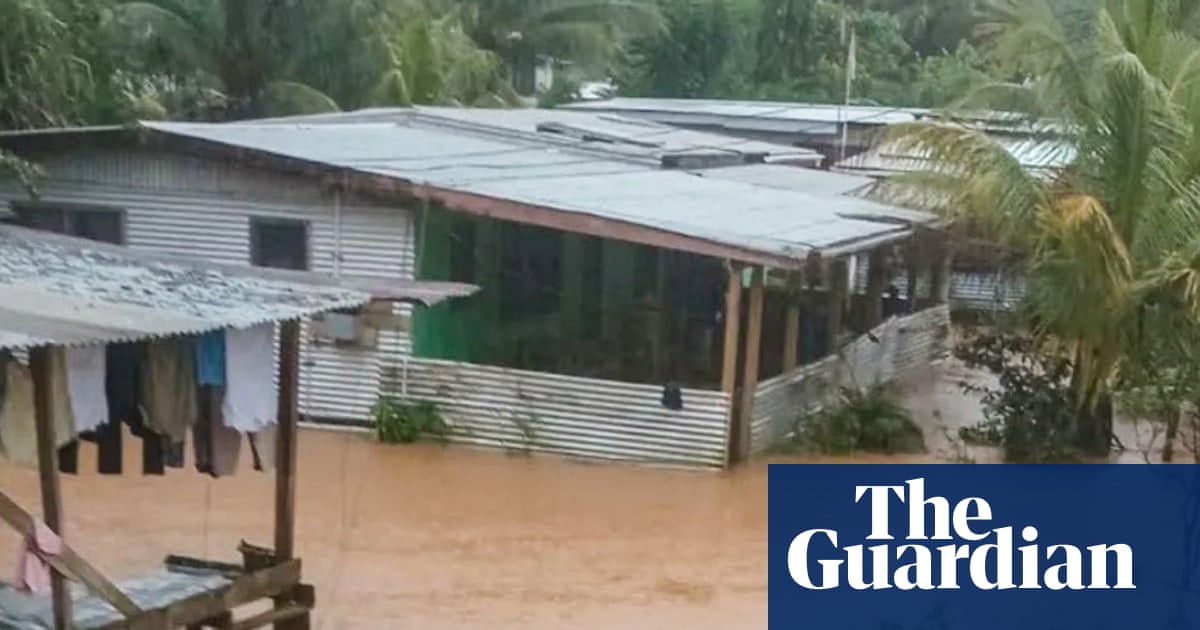
Cyclone Maila has also Fiji, causing widespread flooding in some regions. Photograph: Fiji National Disaster Risk Management OfficeView image in fullscreenCyclone Maila has also Fiji, causing widespread flooding in some regions. Photograph: Fiji National Disaster Risk Management OfficeAnalysisWeather tracker: Cyclone Maila batters Solomon Islands with 115mph windsAlice Fowle and Maggie Shopova for MetDeskPowerful storm brings destruction, while temperatures soar in Vietnam and torrential rain lashes South Korea
Severe Tropical Cyclone Maila, currently in the Solomon Sea, is expected to continue moving south-westwards over the coming days. According to the Australian Bureau of Meteorology, Maila had peak sustained winds of 115mph (185k/ph), with gusts up to 160mph on Thursday, making it the strongest cyclone recorded this far north in the Solomon Sea.
The storm has caused widespread damage across the Solomon Islands, particularly in Western, Choiseul and Isabel provinces, where schools, clinics and homes have been damaged. The government is prioritising humanitarian assistance, after about 120 people were displaced and almost 73,000 people affected overall.
Maila is forecast to move south of Papua New Guinea over the weekend, bringing heavy rain and strong winds to south-eastern areas before moving into the Coral Sea. From Sunday, the storm is likely to continue south-westwards towards the far north Queensland coast early next week.
View image in fullscreenStudents attempt to shelter from searing heat in Hanoi, Vietnam. Photograph: Nhac Nguyen/AFP/Getty ImagesMeanwhile, a prolonged spell of extreme heat is engulfing much of Vietnam, with temperatures exceeding 40C (104F) in central regions. Between Monday and Wednesday, Tay Hieu and Con Cuong in Nghe An province recorded highs of 41.9C and 41.3C respectively.
The heat is expected to persist, with temperatures widely surpassing 35C and peaking near 40C in Nghe An and Hue. Rising electricity demand may strain power supplies, while low humidity is increasing the risk of fires.
View image in fullscreenBTS fans brave the rain as they queue to see the band perform in Goyang, South Korea, on Thursday. Photograph: Kim Soo-hyeon/ReutersSince Wednesday, strong winds and torrential rain have lashed southern South Korea, particularly its southern islands, including Jeju, Gwangju and Yeosu. Winds of 65mph were recorded on Udo, part of Jeju province. Ferries have been suspended and about 250 flights have been cancelled.
The Korea Meteorological Administration has warned that rainfall rates of 20-30mm an hour are possible, raising the likelihood that Jeju could break its April daily rainfall record of 101.6mm, set in 1998.