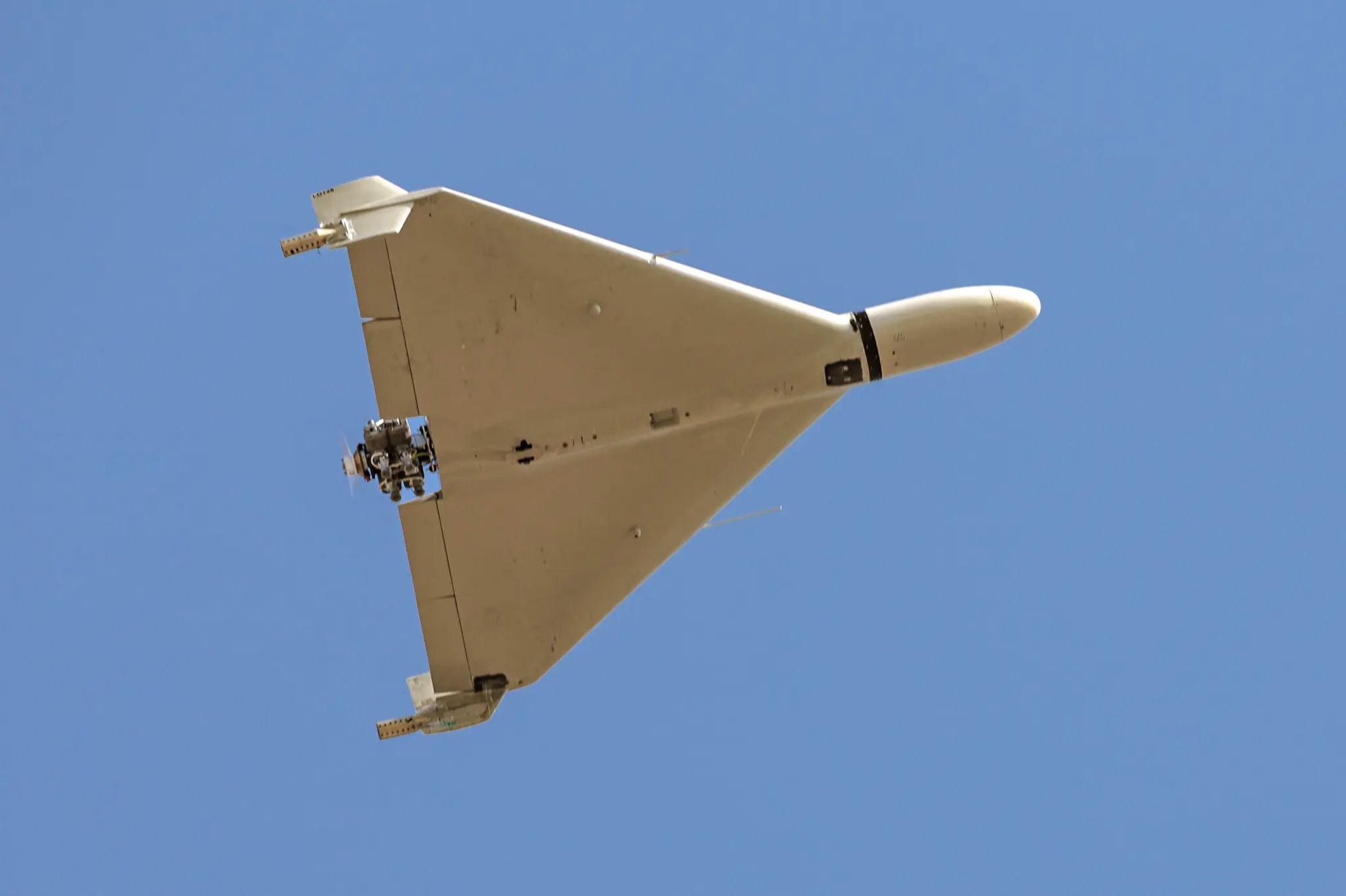
Last month, federal authorities quietly warned California that Iran could attempt a surprise assault using unmanned aerial vehicles launched from offshore vessels.
While the threat was blown out of proportion, such an attack is not hypothetical. Tehran already has the technology and capabilities to carry it out.
California is about to host two of the most visible global events of the decade: the 2026 FIFA World Cup, and the 2028 Olympic and Paralympic Games in Los Angeles.
These events will draw millions of visitors, span dozens of venues, and rely on open, highly networked infrastructure. They are designed to be accessible.
That is precisely what makes them vulnerable.
Middle East Images/AFP via Getty Images The nature of the threat is evolving faster than the systems meant to stop it. Drone warfare, once the domain of advanced militaries, is now cheap, scalable, and increasingly precise. It has already reshaped conflicts abroad. There is little reason to believe it will remain confined there.
A drone infiltration over a packed stadium, a fan zone, or critical infrastructure is no longer a distant scenario. It is a planning assumption.
Securing against that reality will require more than traditional policing. It will require technologies that have been tested under pressure, adapted quickly, and proven in complex civilian environments.
California has a unique advantage, in that it already has close commercial ties with Israel, where dual-use drone technology is being tested daily.
Under constant exposure to missile, drone, and cyber threats, Israeli companies have been forced to innovate for detection, interception, and response.
Israeli companies have built operational platforms that can function in dense, real-world environments. Like California, Israel’s challenge is protecting open, democratic spaces without turning them into fortresses.
Israeli capabilities map directly onto California’s needs. Counter-drone technologies can detect, classify, and mitigate unauthorized UAVs before they reach crowded venues.
AI-enabled surveillance can also provide real-time situational awareness across multiple venues simultaneously. Cybersecurity platforms can safeguard ticketing systems, transportation networks, critical infrastructure, and mobile phone networks.
California does not need to build its relationship with Israeli technology companies from scratch. It already exists at scale.
A recent economic analysis found that Israeli-founded companies support 22,650 jobs in California, generate $8.9 billion in annual economic output, and contribute $4 billion in earnings across the state with a significant concentration in cybersecurity and AI-powered solutions.
In other words, the partnership California needs for security is the same one already helping drive its high-tech economy.
The question is whether state leaders will connect those dots in time and take the necessary actions to safeguard these mega-events. And time is running out.
First and foremost, California’s political leadership should publicly reaffirm the state’s commitment to working with Israeli entrepreneurs and make clear that California is open for business to Israeli companies.
Recent rhetoric from state elected officials has suggested hesitation about engaging with Israel in the future. That could hurt Israeli businesses, but it will also lead to fewer local jobs, less revenue flowing through California’s communities, and a degradation of creativity and innovation within the tech economy.
Next, California should treat the 2026 World Cup as a live testing ground for the Olympics and beyond. This is a real-world opportunity to integrate and evaluate the best drone detection, perimeter security, and cybersecurity technologies available globally.
Of course, not all these solutions will be Israeli, nor should they be. But Israeli firms have earned a seat at the table as part of a competitive, best-in-class approach.
Furthermore, security officials from California and the Olympics should travel together to Israel to engage directly with its dual-use ecosystem. There is no substitute for seeing these technologies deployed in real-world conditions, understanding how they integrate across agencies, and learning how Israel balances security with open civilian life.
Looking beyond 2028, California’s universities would be wise to deepen joint research initiatives with Israeli institutions, thereby accelerating innovation in predictive threat detection, emergency response systems, and infrastructure protection.
These academic partnerships can ensure that California remains deeply embedded in next-generation solutions.
The stakes are clear. The World Cup and Olympics will showcase California to billions. They will also test whether the state can protect itself in an era of rapidly evolving threats.
Drone warfare is no longer a distant phenomenon. It is here. California has time to prepare, but not much.
The tools exist. The partnerships already exist. What remains is the will to act.
Aaron Kaplowitz is president of the United States–Israel Business Alliance.
California Post News: Facebook, Instagram, TikTok, X, YouTube, WhatsApp, LinkedInCalifornia Post Sports Facebook, Instagram, TikTok, YouTube, XCalifornia Post Opinion California Post Newsletters: Sign up here!California Post App: Download here!Home delivery: Sign up here!Page Six Hollywood: Sign up here!