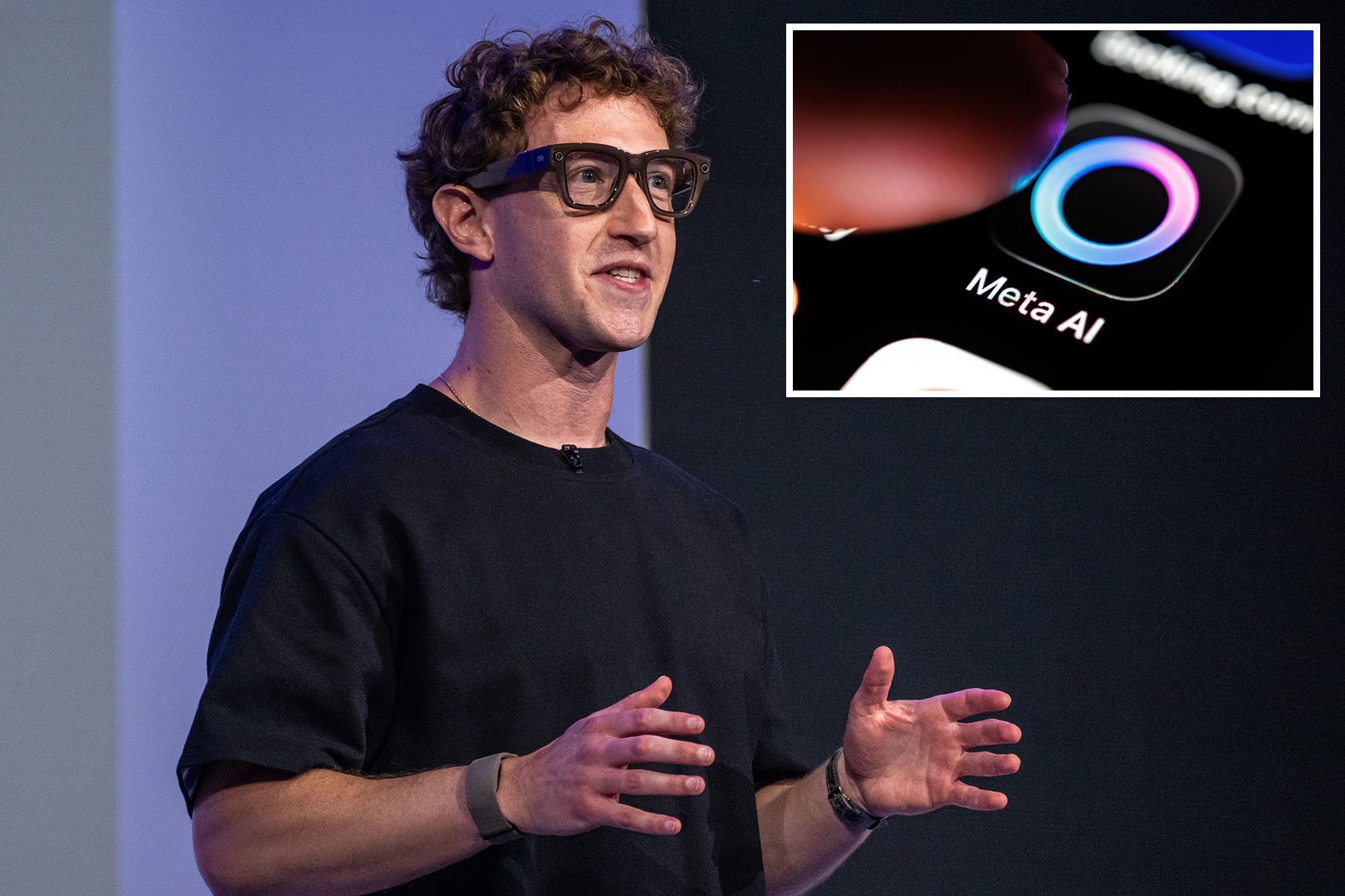
Mark Zuckerberg-run Meta has rolled out a new artificial intelligence model designed to power everything from shopping suggestions to chat — the latest effort in the tech giant’s costly push to catch up in the AI race.
The company earlier this week unveiled Muse Spark, its first big artificial intelligence model since Meta overhauled its internal AI division in a bid to close the gap with rivals like OpenAI and Google.
The latest push comes after Meta poured billions into the Scale AI startup — whose founder Alexandr Wang reportedly went on to describe Zuckerberg’s micromanagement as “suffocating.”
Muse Spark is designed to handle text, images and more complex reasoning tasks, allowing users to ask questions, analyze photos, generate content and even get help with shopping decisions.
Ravi Sawhney, founder of RKS Design, said Meta’s push into AI shopping is less about technology, and more about influencing behavior.
“Meta is trying to move shopping from intent to influence. Instead of people searching for what they want, the platform is shaping what they believe they want in real time,” he told The Post. “That is a fundamental shift.”
Zuck is increasingly tying AI directly to consumer products rather than focusing solely on developer tools or open-source releases.
Meta is baking the technology into new “shopping mode” features that suggest products, compare items and surface recommendations based on what users are already browsing across its apps.
The company has pitched the assistant as more like a personal aide than a chatbot — capable of handling everyday decisions like what to wear, how to decorate a room or which products to buy.
“The opportunity is not better recommendations. It is creating a sense of confidence and self alignment in the decision,” Sawhney told The Post. “Most AI shopping tools will fail here. They will surface more options, more noise and more second guessing.”
He framed the strategy as a direct challenge to existing tech giants.
“Amazon wins on intent. Google wins on information. Meta is betting it can win on identity and discovery,” he told The Post. “That only works if users trust what they are being shown and feel understood, not managed.”
The flashy new features come as Meta scrambles to regain ground in a fast-moving AI arms race that it once helped shape. The company said the model is already live in its Meta AI app and website, with plans to expand it across Facebook, Instagram, WhatsApp, Messenger and its Ray-Ban smart glasses in the coming weeks.
The Facebook parent had been viewed as a leader in open-source AI with its Llama models, but its most recent releases failed to impress compared with offerings from competitors like OpenAI’s ChatGPT and Anthropic’s Claude.
That prompted a sweeping reset effort inside the company.
Last year, Meta reorganized its AI efforts under a new division called Meta Superintelligence Labs and embarked on an aggressive hiring spree, recruiting researchers and executives from top rivals.
The centerpiece of that effort was a $14.3 billion investment in Scale AI — a deal widely seen as a way to bring Wang, into a leadership role overseeing Meta’s AI strategy.
In December, a Financial Times report cited sources in the know as saying that Wang was chaffing under Zuckerberg.
Meta has also snapped up teams from startups and rival labs while reshuffling its internal structure multiple times in recent months in an attempt to speed up development.
At the same time, Meta has been ramping up spending on the infrastructure needed to build and run advanced AI systems — committing tens of billions of dollars to data centers, chips and cloud capacity.
The company told investors it expects to spend as much as $135 billion on AI-related capital expenditures this year alone, underscoring the scale of its bet.
Shares of Meta rose more than 3% in the afternoon trading session on Wall Street on Thursday. As of around 1:30 p.m. ET, the stock was trading at around $633 per share.