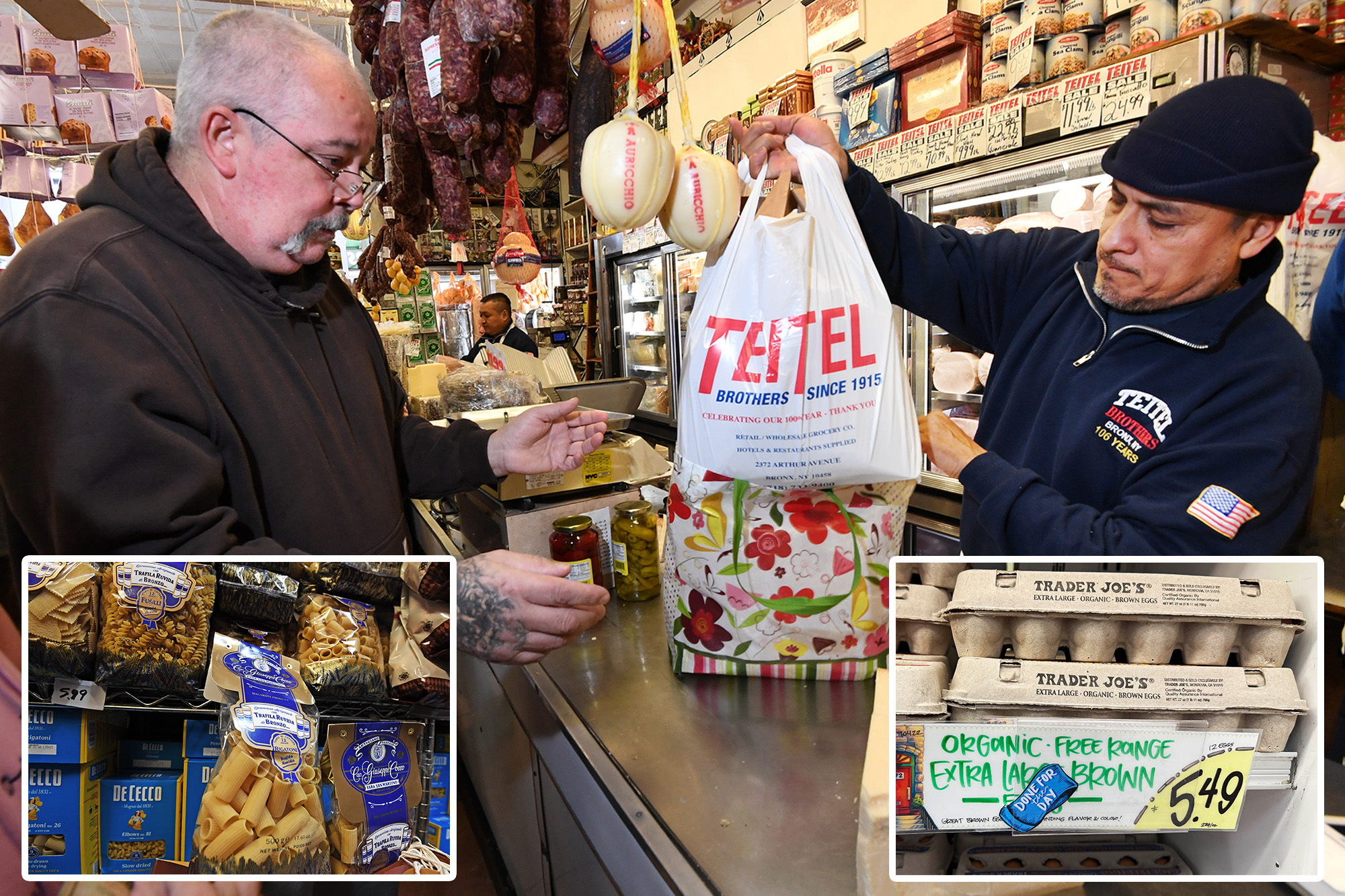
Grocery prices in general are increasing — but some foods are actually seeing a drop in price.
A new analysis from CouponFollow looked at the monthly Consumer Price Index average food price data by the U.S. Bureau of Labor and Statistics for the last two years to determine how ingredient prices have changed since 2024.
The analysis found that 11 of 25 common grocery staples actually dropped in price over the past two years, led by eggs, which saw the largest decline of any item.
A dozen Grade A large eggs dropped 16.6% from February 2024, when they cost $3, to February 2026, when they cost $2.50.
Though eggs were the item with the biggest drop in price over two years, they still cost 73% more than their price in February 2020.
Potatoes and tomatoes were both down 10.8%, according to the data. A pound of white potatoes decreased from 97 cents to 87 cents over the two year period, while the price per pound of field grown tomatoes went from $2.13 to $1.90.
The price per pound of white bread also decreased, down 7.8% from $2.01 in February 2024 to $1.85 in February 2026.
Pasta saw a drop in price, too. Spaghetti and macaroni is down 7.6% from $1.43 to $1.32 per pound. Consumers can also find relief in pantry staples such as butter (-7%) and flour (-2%).
While pantry basics are offering “some of the best relief shoppers have seen in years,” the analysis found that proteins and beverages are leading the surge in price.
The price per pound of ground roast coffee increased 55% over the past two years, raising from $6.09 in February 2024 to $9.46 in February 2026.
However, the analysis noted that a pound of ground roast coffee saw a 123% increase since February 2020 — making it the highest-inflating grocery item over the full six-year window.
The price per pound of romaine lettuce increased 38.6%, up from $2.57 in February 2024 to $3.56 in February 2026.
Ground beef and steak also saw an increase in price, which has become the new normal in the US, thanks to a diminishing in size of cattle herds, ongoing drought and a robust demand.
Per pound, 100% ground beef rose 31.3% from $5.13 to $6.74. USDA choice boneless sirloin per pound increased 21.1% from $11.72 to $14.19.
A 16-ounce can of frozen concentrate rounded out the top five, increasing 15.4% from $4.21 to $4.86.
Because of these price disparities, the meals you make at home will ultimately determine how much grocery inflation you absorb. For example, preparing a protein-heavy dinner, such as taco night, will bring a bigger bill than a breakfast consisting of bread and eggs.
The study looked at taco night, egg and toast breakfast, and homemade biscuits as meals for a family of four that have seen price changes.
Protein-packed taco night was the only meal that got more expensive over the past two years, increasing 19% — with ground beef alone being $3.22 of the total $3.86 increase.
The pantry-staple meals both declined. A batch of homemade biscuits costs $2.13 in ingredients, down 7%, making it the “most affordable and most stable meal” tracked in the study.
A breakfast consisting of eggs and toast for a family of 4 costs $5.07 today, down 9% from February 2024. However, the study noted that the same breakfast cost a whopping $7.48 in February 2025 at the peak of the avian flu egg crisis.
“Grocery inflation isn’t going away overnight, but small changes to how and where you shop can add up fast,” the study said.
“Paying attention to which categories are rising and which are cooling, stocking up on pantry staples when prices dip, and being flexible with pricier proteins are all easy ways to stretch your grocery budget a little further. Stacking those habits with coupons and deals can make an even bigger dent in your weekly bill.”