NT shadow attorney-general Chansey Paech was critical of the introduction of armed officers on buses and accused the CLP government of ‘reading the Trump playbook’. Photograph: Louise Beaumont/Getty ImagesView image in fullscreenNT shadow attorney-general Chansey Paech was critical of the introduction of armed officers on buses and accused the CLP government of ‘reading the Trump playbook’. Photograph: Louise Beaumont/Getty Images‘Inherently dangerous and unnecessary’: NT buses will soon be patrolled by armed officersFirst Nations lawyers and politicians warn the change will disproportionately affect Indigenous people, making them feel ‘less safe, rather than more safe’
Get our breaking news email, free app or daily news podcast
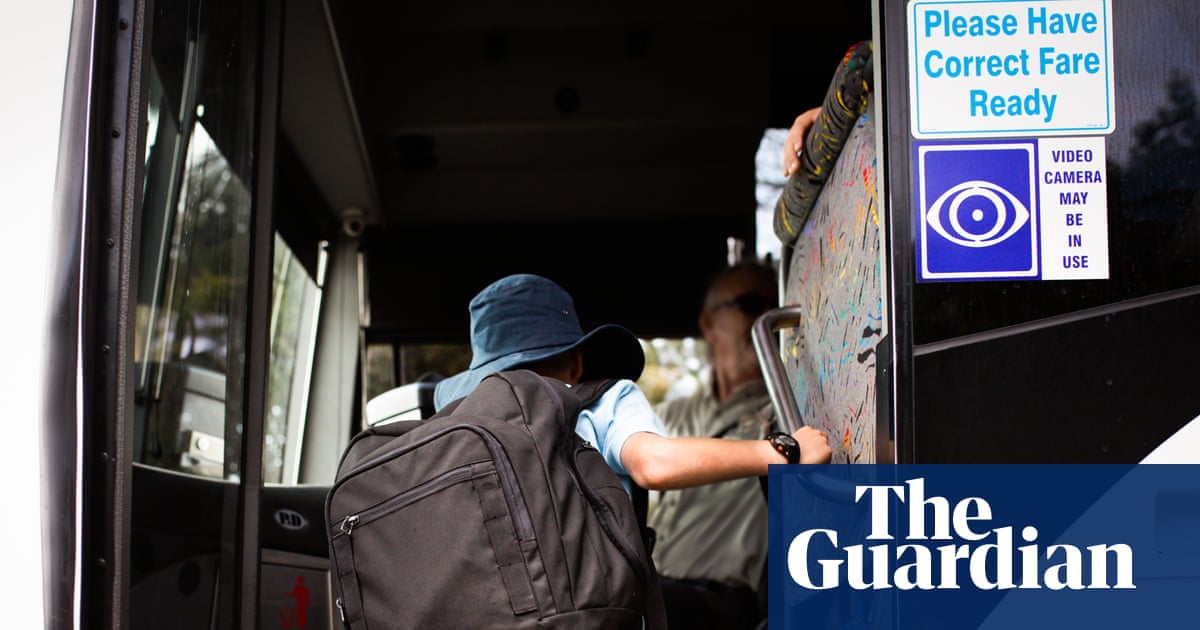
Transit safety and public housing officers in the Northern Territory will soon be armed with guns, in what the territory’s First Nations legal service has labelled an “inherently dangerous and unnecessary” move that would “disproportionately impact Aboriginal Territorians”.
The first of a new force of armed Police Public Safety Officers (PPSOs) will begin patrolling Darwin, Palmerston, Katherine and Alice Springs in June, after an 18-week training program. Legislation to create the new PPSOs was introduced by the NT government last year, in response to what they said was an increase in antisocial behaviour on public transport.
But the legislation has been heavily criticised by Indigenous MPs, legal services and advocacy groups.
Ben Grimes, chief executive of the North Australian Aboriginal Justice Agency (NAAJA), said there is “no evidence that bringing guns on to buses is needed, or that it will create safer public transport”.
“Many people have told NAAJA that the presence of guns on buses will make them feel less safe, rather than more safe,” he said.
“Bringing guns on to crowded and confined buses is inherently dangerous and unnecessary,” he said. “Situations on public transport should be managed through skilful de-escalation, not through use of force. In rare situations where force may be needed, guns should not be the preferred weapon.”
Grimes told Guardian Australia there were “better and more cost-effective ways to address antisocial behaviour”, which included more visible support staff and Aboriginal night patrol workers at key sites, as well as culturally safe engagement and youth outreach in drop-in centres.
Read moreGrimes also said there had been no meaningful consultation with Aboriginal communities – who are disproportionately represented in death in custody statistics – before the bill was passed. An NT police spokesperson said Aboriginal community organisations and local councils were invited to an information session in March.
A spokesperson for the NT government said “community safety” was their number one priority, and that the first squad of 24 PPSOs had commenced their training in February.
“Importantly, 12 of these recruits are already working as Public Housing Safety Officers, Transit Safety Officers, or police staff,” they said.
“This gradual transition means services will continue without disruption, while strengthening the work already being done to address antisocial behaviour and public drinking.”
The NT government did not respond directly when asked if there was any evidence that arming transit safety and public housing offers would reduce crime and antisocial behaviour. However, an NT police spokesperson said the new officers would create “safer public spaces through a highly visible and readily engaged police capability”.
“The PPSO model supports this commitment by deploying trained officers into metropolitan and regional areas experiencing increased service demand,” they said. “This will enable target prevention and response to antisocial behaviour, whilst also minimising harm associated with alcohol misuse.
“In doing so, the PPSO model supports community confidence, and a safer Territory.”
Labor MLA and shadow attorney-general, Chansey Paech, accused the CLP government of “reading the Trump playbook” and said the new policy was “alarming and worrying”.
“Giving people guns is not the answer to overcoming social challenges and problems in our community … we are not America,” the Arrernte and Gurindji man said.
View image in fullscreenYingiya Mark Guyula, an independent NT MLA, said giving transit and public housing officers guns would only ‘intimidate, harass and create widespread fear’. Photograph: Legislative Assembly of the Northern TerritoryPaech told Guardian Australia the government should instead focus on the root causes of crime and antisocial behaviour.
“Lots of people in the Northern Territory are living below the poverty line and that is seeing an increase in crime, and the drivers of crime are further falling backwards which is driving crime up,” he said.
When the bill passed in September, Yingiya Mark Guyula, a Yolngu man and independent MLA, took to social media to warn Aboriginal people “not to go to town if they don’t need to” out of concern they would be targeted by PPSOs.
On Thursday, Guyula told Guardian Australia that giving transport and public housing officers guns was only going to “intimidate, harass and create widespread fear”.
“We see community members with significant mental health and drug and alcohol issues, and young people who need programs and support,” he said. “Instead of helping people to address the underlying problems, they are filling the jails, making bail impossible to get and increasing the number of guns to be used against us.”