Daniel Sparks, The Motley Fool Fri, October 16, 2026 at 11:17 PM EDT 5 min read TSM -2.28% NVDA -1.43% Explore stocks on Coinbase Trading disclosure Trading disclosure The above button links to Coinbase. Yahoo Finance is not a broker-dealer or investment adviser and does not offer securities or cryptocurrencies for sale or facilitate trading. Coinbase pays us for certain activity generated through this link. Prices displayed are informational.
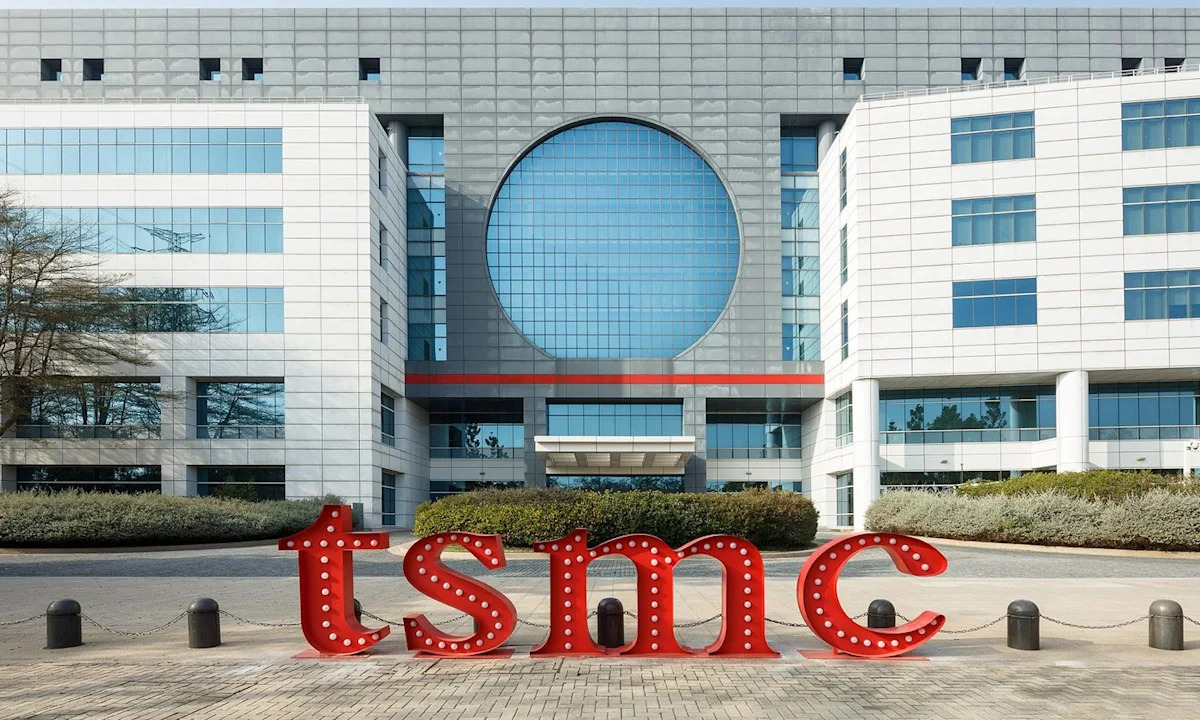
Nvidia (NASDAQ:NVDA) investors got a new look at the demand for artificial intelligence (AI) chips on Thursday, Oct. 15. Taiwan Semiconductor Manufacturing (NYSE:TSM), which makes chip wafers for Nvidia, posted third-quarter revenue of $46.7 billion -- over the high end of the $44.6 billion to $45.8 billion range management had forecast in July.
And TSMC's chairman and CEO, C.C. Wei, didn't sound worried about what's next.
Missed AI's "Act 1"? Act 2 Could Be 14x Bigger. Most investors think they missed the AI boat because they didn't buy Nvidia in 2005. But according to our analysts, we're only at the end of "Act 1"—the R&D phase. "Act 2" is the global rollout. Continue »
"[T]he demand actually is still far above our capability today to supply," Wei said on the company's earnings call. He made the comment in an answer where he wouldn't say if that demand comes more from AI accelerators or central processing units (CPUs).
Nvidia stock, though, headed the other way. Shares ended Thursday at $217.23, off around 9% from the record close they set on Oct. 6 ($239.24).
I think the gap between what Nvidia's supplier is reporting and what Nvidia's stock is doing makes the shares worth buying now.
Showing how much AI is powering the chipmaker, TSMC's revenue from high-performance computing (the platform that includes AI chips) climbed 22% sequentially in the third quarter. That was faster than the platform's 20% sequential growth in the second quarter. High-performance computing is now 68% of TSMC's revenue, up from 57% in the third quarter of 2025. Overall, TSMC's revenue grew 41% year over year in U.S. dollars. Net income, which TSMC reports in New Taiwan dollars, rose 69%.
Management expects more. TSMC guided for fourth-quarter revenue of $52.3 billion to $54.3 billion. The midpoint is around 14% over the third quarter's total, so the company is calling for another double-digit sequential gain after a 16% climb in the third quarter.
TSMC now sees 2026 revenue growing about 44% in U.S. dollars, up from its July outlook of a little over 40%.
Wei also pushed back on any idea that AI chip demand is cooling. He was asked about TSMC's forecast that its AI accelerator revenue would rise at an average yearly rate in the mid- to high-50% range from 2024 to 2029. Wei said "we did not see any sign of slowdown," adding that the rate "probably will be higher."
TSMC doesn't say how much of its revenue comes from Nvidia. So its report isn't a direct preview of Nvidia's next quarter.
But Nvidia sells chips on both sides of the split Wei wouldn't talk about. Its graphics processing units (GPUs) remain its main business, and last quarter it announced Vera, a CPU made for AI agents.
TSMC's fourth-quarter outlook covers October to December. And because chips take months to move from TSMC's wafers to finished Nvidia products, that forecast arguably says more about Nvidia's next few quarters than about the one ending this month.
And Nvidia's own results point the same way as TSMC's. Revenue rose to $96.2 billion in the second quarter of its fiscal 2027 (which ended July 26, 2026), up 18% from fiscal Q1 and 106% year over year. Management forecast around $108 billion in fiscal Q3, plus or minus 2%.
Of course, a shortage doesn't last forever. TSMC spent around $40.6 billion on capital expenditures through the first three quarters of 2026, and when supply eventually catches up to demand, Nvidia might lose some of its pricing power. But that doesn't look like a problem for the next few quarters.
At around $217, Nvidia's share price is about 14 times the earnings per share analysts expect for its next fiscal year (ending January 2028), on average. At the Oct. 6 record, it was around 15 times expected earnings. TSMC's shares, by comparison, go for about 19 times earnings, based on analysts' average forecast for 2027.
Put another way, investors are paying less for every dollar of Nvidia's expected profit than for TSMC's, even though Nvidia's revenue climbed more than twice as fast in each company's latest quarter. The market seems to doubt that Nvidia's growth can last.
Sure, that doubt might be right. If AI spending slows, Nvidia's sales could drop faster than those of a foundry with many kinds of customers. But TSMC's report doesn't show any sign of that yet.
In the end, I'd consider buying Nvidia stock at this price. I'd just keep the stake small. The stock is risky and volatile. After all, the shares dropped 9% in just seven trading days this month.
The Motley Fool Stock Advisor analyst team just identified what they believe are the 10 best stocks for investors to buy now… and Nvidia wasn't one of them. The 10 stocks that made the cut could produce monster returns in the coming years.
Consider when Netflix made this list on December 17, 2004... if you invested $1,000 at the time of our recommendation, you'd have $391,581!* Or when Nvidia made this list on April 15, 2005... if you invested $1,000 at the time of our recommendation, you'd have $1,334,780!*
Now, it's worth noting Stock Advisor's total average return is 936% — a market-crushing outperformance compared to 213% for the S&P 500. Don't miss the latest top 10 list, available with Stock Advisor, and join an investing community built by individual investors for individual investors.
*Stock Advisor returns as of October 16, 2026.
Daniel Sparks and his clients do not have positions in any of the stocks mentioned. The Motley Fool has positions in and recommends Nvidia and Taiwan Semiconductor Manufacturing. The Motley Fool has a disclosure policy.
TSMC Says AI Chip Demand Is Still Far Above What It Can Supply. That's Why I'd Buy Nvidia Stock. was originally published by The Motley Fool