Primary Menu Sections Search Email New York Post Edition CA NY Open US News navigation US News US News Metro Long Island Politics World News US News Metro Long Island Politics World News Search Search trending now in US News Skip to main content Couple found blood-spotted glove, rock with blood on it in desert... US airman, husband allegedly stole $3M from government to fund... White teens vindicated after woke professor accused them of hate... Horrifying moment Stanford swimmer, 20, floats face down in pool... Nor'easter to wallop NYC and surrounding regions: What to expect... Mystery swirls around possible 'second suspect' in Nancy Guthrie... Police ask media to clear out ‘ASAP’ as authorities tighten... 'American Idol' contestant charged with murdering wife after... US News NASA’s moon rocket hit by new problem expected to postpone astronauts’ lunar trip By Associated Press Published Feb. 21, 2026, 12:58 p.m. ET NASA’s new moon rocket suffered another setback Saturday, almost certain to bump astronauts’ first lunar trip in decades into spring.
The space agency revealed the latest problem just one day after targeting March 6 for the Artemis II mission, humanity’s first flight to the moon in more than half a century.
Overnight, the flow of helium to the rocket’s upper stage was interrupted, officials said. Solid helium flow is essential for purging the engines and pressurizing the fuel tanks.
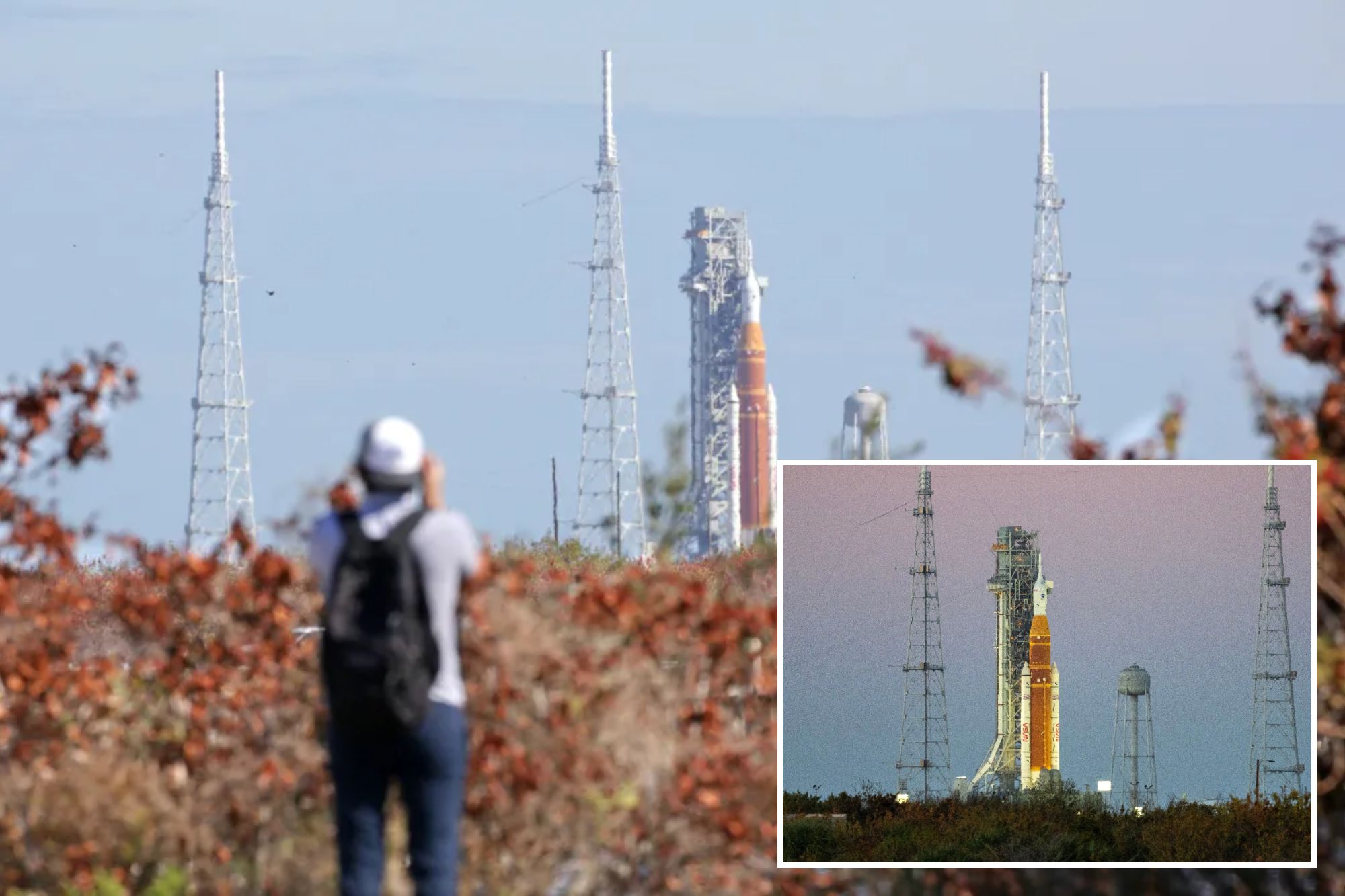
The space agency revealed the latest problem just one day after targeting March 6 for the Artemis II mission. AFP via Getty Images This helium issue has nothing to do with the hydrogen fuel leaks that marred a countdown dress rehearsal of the Space Launch System rocket earlier this month and forced a repeat test.
NASA Administrator Jared Isaacman said a bad filter, valve or connection plate could be to blame for the stalled helium flow.
Regardless of the cause, he noted, the only way to access the area and fix the problem is in the Vehicle Assembly Building at Kennedy Space Center.
“We will begin preparations for rollback, and this will take the March launch window out of consideration,” Isaacman said via X. NASA’s next opportunities would be at the beginning or end of April.
Earlier in the morning, NASA said it was preparing to return the 322-foot (98-meter) rocket to its hangar for repairs, while raising the possibility of the work being done at the pad.
“I understand people are disappointed by this development,” Isaacman said. “That disappointment is felt most by the team at NASA, who have been working tirelessly to prepare for this great endeavor.”
Hydrogen fuel leaks had already delayed the Artemis II lunar fly-around by a month.
A second fueling test on Thursday revealed hardly any leaks, giving managers the confidence to aim for a March liftoff.
This helium issue has nothing to do with the hydrogen fuel leaks that marred a countdown dress rehearsal of the Space Launch System rocket. Pat Benic/UPI/Shutterstock The four astronauts went into their two-week quarantine Friday night, mandatory for avoiding germs.
The interrupted helium flow is confined to the SLS rocket’s interim cryogenic propulsion stage. This upper stage is essential for placing the Orion crew capsule into the proper high-altitude orbit around Earth for checkout, following liftoff.
After that, it’s supposed to separate from Orion and serve as a target for the astronauts inside the capsule, allowing them to practice docking techniques for future moon missions.
During NASA’s Apollo program, 24 astronauts flew to the moon from 1968 through 1972.
The new Artemis program has completed only one flight so far, a lunar-orbiting mission without a crew in 2022.
That first test flight was also plagued by hydrogen fuel leaks before blasting off, as well as a helium issue similar to the one that arose Saturday. The first moon landing with a crew under Artemis is still at least a few years away.