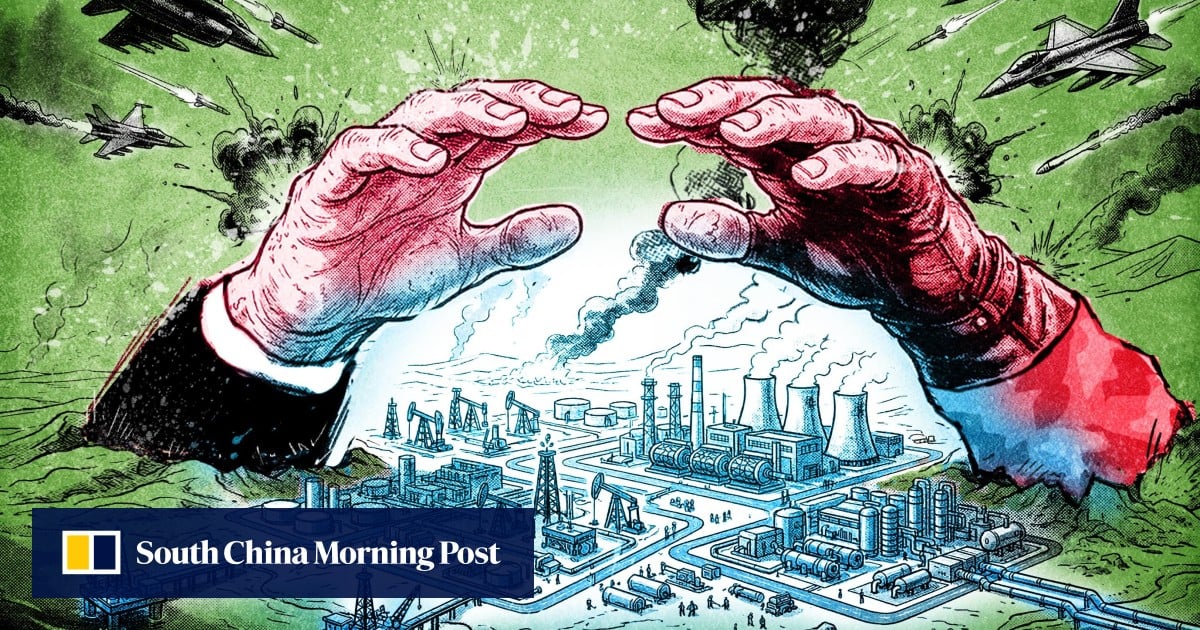
As the conflict has intensified, more energy and civilian sites have been targeted in what is seen as a broader approach
6-MIN READ6-MIN1 ListenAmber Wangin BeijingPublished: 6:00am, 9 Apr 2026Updated: 6:08am, 9 Apr 2026Whether the US-Israeli war on Iran wraps up quickly or drags on, the repercussions will be felt for years, reshaping warfare, geopolitics and energy security as well as how the world sees the United States and its tactical and strategic capabilities. In the final instalment of a three-part series, we look at the move away from precision strikes on limited military assets.When Iran’s South Pars gas field was hit at the start of the US-Israeli war on the country, Tehran retaliated with attacks on energy infrastructure across the Gulf. And as the conflict has escalated, more energy and civilian sites have been targeted.In Iran, the destruction includes pharmaceutical company Tofigh Darou, the Pasteur Institute, a century-old medical research centre, and a major bridge near Tehran which was said to be one of the tallest in the Middle East.
US and Iran agree to 2-week ceasefire amid Pakistani mediation efforts
US and Iran agree to 2-week ceasefire amid Pakistani mediation effortsSo far, more than 67,000 civilian facilities in Iran have been attacked – including nearly 500 schools and more than 200 health centres, according to data released last week by the Iranian Red Crescent Society.