Leo Sun, The Motley Fool Fri, October 16, 2026 at 3:15 PM EDT 5 min read NVDA -1.43% TSM -2.29% ASML -0.96% AMD -5.95% AVGO -4.52% Explore stocks on Coinbase Trading disclosure Trading disclosure The above button links to Coinbase. Yahoo Finance is not a broker-dealer or investment adviser and does not offer securities or cryptocurrencies for sale or facilitate trading. Coinbase pays us for certain activity generated through this link. Prices displayed are informational.
Nvidia (NASDAQ: NVDA) and TSMC (NYSE: TSM) are often considered the bellwethers of the AI chip market. Nvidia, the world's largest producer of discrete GPUs for data centers, provides the best "picks and shovels" for the AI gold rush. TSMC, the world's largest and most advanced contract chipmaker, manufactures Nvidia's chips. It also serves other fabless AI chipmakers, including AMD (NASDAQ: AMD) and Broadcom (NASDAQ: AVGO).
Therefore, if Nvidia stopped developing new AI chips and TSMC stopped manufacturing them, the AI market would grind to a halt. However, neither company could produce new chips without ASML (NASDAQ: ASML) -- the real bottleneck in the AI supply chain.
Missed Nvidia in 2009? This Rare Signal Is Flashing Again. In 2009, a "Double Down" signal flashed for a little-known chipmaker called Nvidia. For the first time in years, that same "Total Conviction" signal is flashing for a company 1/100th the size of Nvidia. Continue »
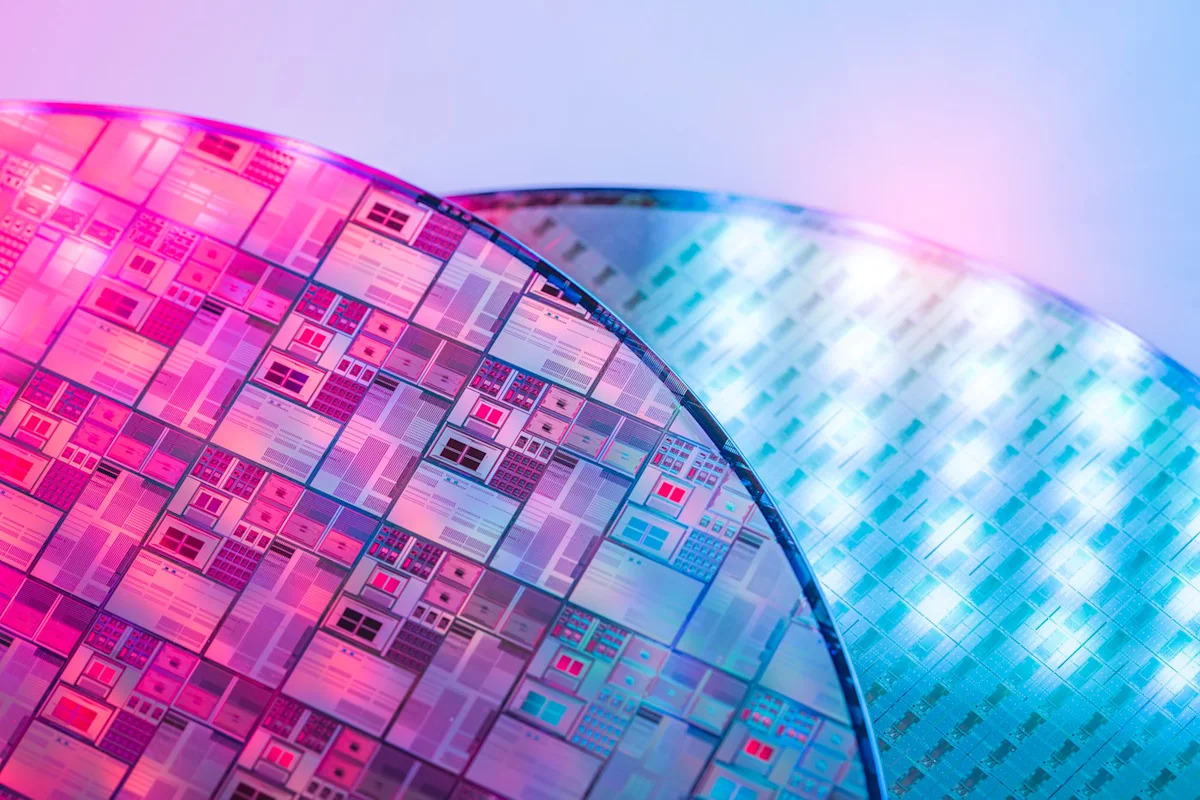
ASML, which is based in the Netherlands, is the world's largest producer of lithography systems. These systems enable chip foundries, like TSMC, to optically etch circuit patterns onto silicon wafers. It dominates the market for lower-end deep-ultraviolet (DUV) lithography systems, which are used to produce older, larger chips. It's also the only producer of high-end extreme ultraviolet (EUV) systems, which are used to produce the world's smallest and densest chips.
ASML began developing its first EUV systems nearly three decades ago, giving it a major first-mover advantage against its industry peers. These massive systems cost between $200 million and $400 million, require multiple planes to ship, and must be assembled on-site.
All of the world's leading foundries -- including TSMC, Samsung, and Intel (NASDAQ: INTC) -- use ASML's EUV systems to manufacture their newest chips. Therefore, the latest AI chips from Nvidia, AMD, and Broadcom -- as well as high-bandwidth memory (HBM) chips for AI clusters -- couldn't exist without ASML's EUV machines.
ASML doesn't face any competitors in this market because it would cost too much to develop and mass-produce new EUV systems. That's why ASML still has plenty of room to raise its prices (and expand its gross margins) without worrying about losing any customers.
In the past, ASML generated more revenue from DUV systems than from EUV systems. But over the past three years, its EUV revenue has overtaken its DUV revenue as more foundries upgraded their systems to produce smaller, denser, and more power-efficient AI chips.
In the first half of 2026, ASML generated more than half of its revenue from its EUV systems (including its older "low-NA" systems and newer "high-NA" systems). That percentage should continue to rise as Nvidia and its peers launch even more advanced chips, and that growth should offset its declining DUV shipments -- which were exacerbated by tighter restrictions on its deliveries of higher-end DUV systems to Chinese chipmakers.
Data source: ASML. YOY = Year-over-year. In euros.
For 2026, ASML expects its revenue to rise 35%-38% with a gross margin of 56%. It's already raised that outlook twice in the second and third quarters of 2026, compared to its original guidance for 22% revenue growth with a gross margin of 51%-53% at the start of the year.
Analysts expect its revenue and EPS to rise 36% and 68%, respectively, for the full year. From 2026 to 2028, they expect its revenue and EPS to grow at CAGRs of 26% and 36%, respectively. Its stock still looks reasonably valued at 26 times next year's earnings, even though it's already rallied 177% over the past three years.
Nvidia and TSMC are still great AI chip plays, but they have clear weaknesses. Nvidia faces intense competition from AMD's cheaper GPUs, Broadcom's custom AI accelerators for hyperscalers, and other inference-oriented chipmakers. TSMC is constantly increasing its capex to ramp up its production and meet the market's insatiable demand for new AI chips.
So if you want a balanced way to invest in the AI market without betting on a single chipmaker or fretting over a contract chipmaker's rising capex, ASML checks all the right boxes. It controls a crucial link in the AI supply chain, is growing rapidly, and has a massive moat.
The Motley Fool Stock Advisor analyst team just identified what they believe are the 10 best stocks for investors to buy now… and Nvidia wasn't one of them. The 10 stocks that made the cut could produce monster returns in the coming years.
Consider when Netflix made this list on December 17, 2004... if you invested $1,000 at the time of our recommendation, you'd have $391,581!* Or when Nvidia made this list on April 15, 2005... if you invested $1,000 at the time of our recommendation, you'd have $1,334,780!*
Now, it's worth noting Stock Advisor's total average return is 936% — a market-crushing outperformance compared to 213% for the S&P 500. Don't miss the latest top 10 list, available with Stock Advisor, and join an investing community built by individual investors for individual investors.
*Stock Advisor returns as of October 16, 2026.
Leo Sun has positions in ASML. The Motley Fool has positions in and recommends ASML, Advanced Micro Devices, Broadcom, Intel, Nvidia, and Taiwan Semiconductor Manufacturing. The Motley Fool has a disclosure policy.
Not Nvidia. Not TSMC. This Equipment Maker Is the Real Bottleneck in AI Chip Production. was originally published by The Motley Fool