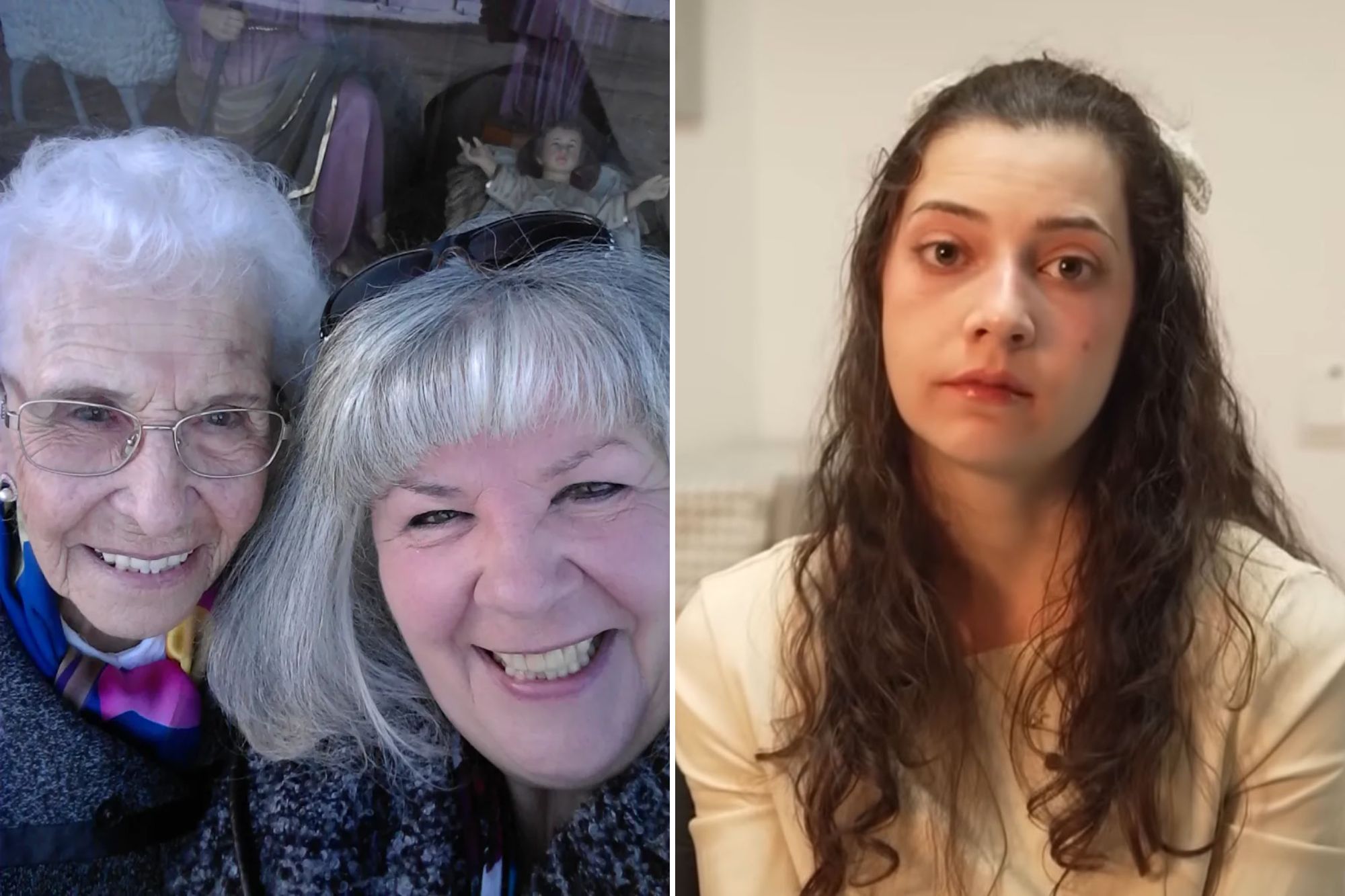
Debbie Fisher is advising New Yorkers to prepare their elderly relatives ahead of the state legalizing Physician Assisted Suicide (PAS) this summer.
The Canadian’s elderly mother, Rita Busby, came dangerously close to being euthanized over a single sentence.
Her mom, who was active and independent in spite of her 93 years, ended up in the hospital after accidentally overdosing on a drug she was prescribed. Drowsy and not thinking straight, Busby had made an offhand comment to one of the nurses that she “wanted to die.” Hospital workers took her at her word.
Next, a Canadian government psychologist pulled Fisher aside to let her know they were preparing to euthanize her mother, a devout Catholic and lifelong Blue Jays fan.
“I was terrified. I couldn’t believe what was happening. They talked to me like I was putting a dog down,” Fisher, 71, told The Post from her home in Ontario, Canada.
Luckily Fisher and her mom were prepared, as Busby had signed over Power of Attorney to her daughter. Now she and others in Canada — which legalized PAS a decade ago — are warning the Empire State of the “slippery slope” into a culture of coercive death which may be headed their way.
“My mom wanted to die, she didn’t want to be killed!” Fisher said. “If I hadn’t been there, and she hadn’t signed over Power of Attorney, who knows what would have happened”
It was a narrow escape and Rita lived for six more months — during that time she went bowling and to baseball games, attended a family reunion and mended strained relationships before dying naturally at home in 2019.
“People don’t understand there’s a lot of things that go on behind the scenes [in hospitals] when there’s no one there to protect them,” said Fisher.
In the last ten years, an estimated 100,000 Canadians have been euthanized by their government — about one in 20 deaths in the country in 2024 alone.
“You just opened Pandora’s Box and the slippery slope will get very steep very fast,” Heather Hancock, 58, of Moose Jaw, Saskatchewan and who suffers from cerebral palsy, told The Post.
“This is eugenics and this is genocide against the [disadvantaged],” she claimed.
Hancock is no stranger to death-pushers. She’s lost count of the number of times Canadian doctors have tried to coerce her into killing herself, she claimed, through Medical Assistance in Dying, or MAiD —the title given to their PAS program.
During one hospital visit, “the nurse on my ward looked at me and said, ‘You really should consider MAiD. You’re not living. You’re just existing,” she recalled to The Post.
She now carries a laminated “do not euthanize” card wherever she goes.
Hancock warned certain classes of New Yorkers may have to be vigilant going into heath care facilities.
“Keep your ears and eyes open, especially if you have a disability or mental illness or are in any way considered a disadvantaged or non-contributing member of society. Those are the people that are targeted,” she said.
“[PAS] is an effective way to get rid of those they deem draining the healthcare system. It’s not compassionate.”
Major US medical groups strongly condemn PAS, including the American Medical Association, which warns in its code of ethics, “Physician-assisted suicide is fundamentally incompatible with the physician’s role as healer, would be difficult or impossible to control, and would pose serious societal risks.”
Fourteen additional states are considering legalizing PAS this year.
So far, no state has legalized euthanasia — the form of assisted suicide where a medical professional administers the lethal agent rather than being prescribed a deadly drug the patient takes on their own.
Between 30 and 50 percent of patients prescribed the killing concoction don’t end up taking it, studies show, whereas booking a euthanasia appointment has a much higher kill rate. Virtually all assisted suicides in Canada are now carried out by euthanasia.
“It makes it feel more like a medical act. People feel more obligated to it because, of course, the doctor has to schedule it,” Alex Schadenberg, executive director of Canada’s Euthanasia Prevention Network, an advocacy group, told The Post.
Canada, which has a socialized medical system, will formally legalize euthanasia for mental health as the sole underlying condition in 2027, if legal challenges against the expansion are unsuccessful.
“It could be really touchy for someone in New York if they don’t have the gold standard in health insurance and they develop some kind of disability,” said Schadenberg.
“In Canada we have serious funding problems in our healthcare system, hospitals are running deficits. They would never say it to you, but clearly dead people don’t cost money.”
“You’ve had cases of people who are homeless asking to be approved for euthanasia,” he added, which was reported on in 2024.
Health Canada told The Post: “Canada’s medical assistance in dying law seeks to respect personal autonomy for those seeking access to MAID, while at the same time protecting vulnerable people and the equality rights of all Canadians. MAID is a complex and deeply personal issue.
“The Government of Canada is committed to ensuring our laws reflect Canadians’ needs, protect those who may be vulnerable, and support autonomy and freedom of choice.”
Studies show overall suicide rates increase when PAS becomes legalized, going up by 10.5 percent in Canada since PAS was broadened in 2021.
In Europe the numbers are more staggering: suicides increased by 18.5 percent — and raised by nearly 40 percent in women — among nine countries where PAS is permitted, according to a 2022 study.
One case in Spain caught the attention of the White House this month, which has demanded a probe into the euthanization of 25-year-old gang rape victim Noelia Castillo, who had been confined to a wheelchair since 2022 when she attempted suicide by jumping from a fifth-floor building.
“[PAS] demystifies the issue of suicide. It takes away the whole concept that suicide is not the right way to go,” said Schadenberg.
New York’s law, set to take effect on August 4, requires patients must be a New York resident, at least 18 years old, mentally capable of making health decisions, and diagnosed with a terminal illness with six months or less to live.
There is a mandatory five-day waiting period between the time a suicide drug is prescribed and when it can be filled. The program is overseen by the Department of Health.
In 2021, Canada removed its mandatory ten-day waiting period and now desperate Canadians can get same-day suicides.
Such was the case when an 80-year-old Ontario woman recovering from heart surgery (known as “Mrs. B” in an official report) requested palliative care and initially declined MAiD due to her religious beliefs. However, her husband — experiencing caregiver burnout —contacted a MAiD referral service the same day; after two quick assessments, a third provider approved her, and she was euthanized later that evening, according to the report.
States tend to follow Canada’s trend of loosening restrictions over time — but so far not to the same extremes.
Each state where PAS is legal reports increasing usage over time. Oregon, Washington, Vermont, Hawaii and Colorado have also removed residency requirements, resulting in grisly “death tourism,” while California was the first to shorten mandatory waiting times.
Liberal state California has overseen the most PAS deaths in the US with 4,287 between 2016 and 2023, with Oregon a close second.
“It changes medicine,” said Schadenberg. “People have to recognize the importance of being there with their loved ones in the hospital. In our culture, there are too many people going through difficult health conditions alone and that actually breeds the death idea.”
PAS also transforms the death industry. Entrepreneurial New Yorkers could soon follow the lead of Canadian funeral homes offering one-stop MAiD services.
In London, Ontario, A. Millard George Funeral Home converted a former casket showroom into a “Compassion Suite” where patients can die surrounded by family. Quebec’s Complexe Funéraire du Haut-Richelieu similarly provides a dedicated space for the procedure, allowing loved ones to hand off the body immediately afterward.
Advocates for PAS argue it’s about bodily autonomy, dignity and independence.
“For New Yorkers nearing the end of life, what matters most is having access to the full spectrum of end‑of‑life care,” Francesca Triest, New York-New Jersey Campaign Manager for Compassion & Choices, which lobbied strongly for New York’s law, told The Post.
“The Medical Aid in Dying Act reinforces a fundamental principle: every individual deserves compassion and the autonomy to make personal decisions about their own body and their care at life’s end.”
But Fisher said that sends the wrong message to everyone else. “If it’s legal, it must be OK. That’s the mindset they’re in,” she said.
Adding: “My body, my choice and I’m just going to go to sleep and all my problems go away. But the families are left behind.
“It’s like a holocaust. It serves no purpose.”