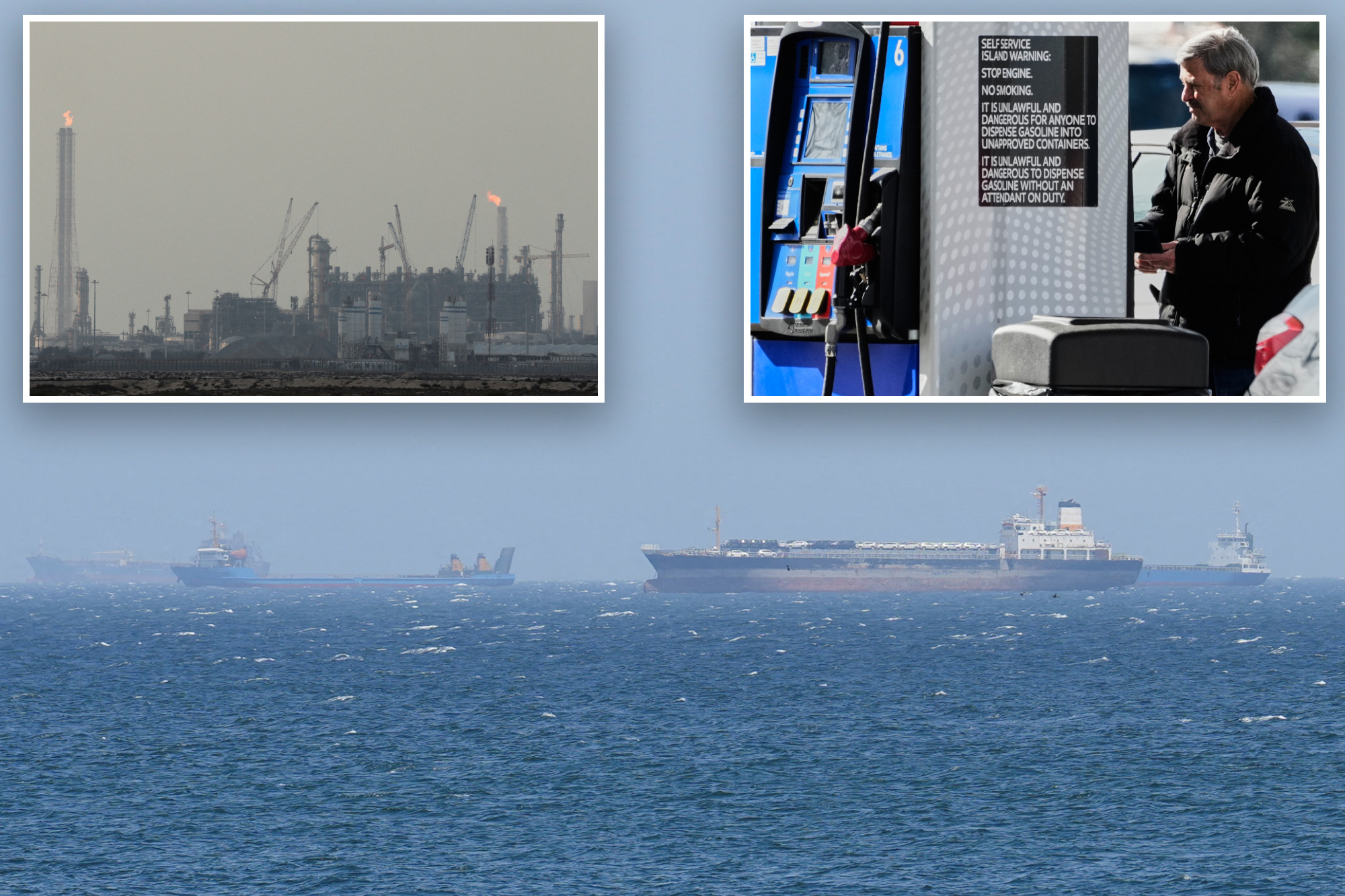
Despite the reopening of the Strait of Hormuz as part of a two-week cease-fire with Iran, it will take months for energy supplies to stabilize – and Americans will likely see high gasoline prices stick around through the summer, experts told The Post.
Attacks on dozens of energy facilities throughout the Middle East have left a wake of destruction that will require time and money to repair, while operators are also facing a heavy lift to restart oil field production.
“You can’t just flip a switch and turn all of the oil flow out of the Gulf back on,” Joe Adamski, managing director of ProcureAbility, a supply chain consultancy, told The Post.
Oil wells are not meant to be turned off for long periods of time, since the equipment could corrode and break, so operators are likely to discover more damages as they attempt to restart production, Adamski said.
There’s also the issue of emptying storage containers, which are currently filled with oil, onto new ships – while vessel owners are likely still wary of traversing through the strait, as Iran’s navy reportedly warned on Wednesday that ships will be “destroyed” if they attempt to pass through without permission.
“It would take months” for global energy supplies to normalize, Jeff Krimmel, founder of Krimmel Strategy Group, told The Post. “It would likely take through the end of 2026.”
US gasoline prices skyrocketed at a faster rate on a percentage basis than oil during the US and Israel’s war with Iran, since “there was some fear reaction from refiners” – so prices are unlikely to return to prewar levels anytime soon, Adamski said.
“We certainly would expect to pay more for gas than what we had a month, six weeks ago,” Adamski told The Post. “We’re at best gonna get into the high $3s in the summer months. A more likely scenario is we will stay above $4 on a national average basis.”
In a Truth Social post Tuesday evening, less than two hours before the president’s 8 p.m. ET deadline for Iran to reopen the strait or face a bombardment of its power plants and bridges, President Trump announced a two-week cease-fire with the nation.
“I agree to suspend the bombing and attack of Iran for a period of two weeks. This will be a double sided CEASEFIRE!” Trump wrote, adding that it is subject to the safe and immediate reopening of the strait – hours after threatening “a whole civilization will die tonight.”
Wall Street breathed a sigh of relief Wednesday, sending the Dow rallying more than 1,000 points as Brent crude oil plummeted below $95 a barrel.
It would take months for oil benchmarks to fully settle into the mid- to high $70 range – though it’s unlikely prices will fully drop to prewar levels in the low $60s, experts said.
The International Air Transport Association, an industry group of global airlines, also warned Wednesday that even if the strait opened and remained open, it would take months for jet fuel supplies to normalize.
Once the strait is fully reopened, the first step toward resuming the flow of global energy supplies is to move out all the vessels that are already loaded with oil and move in empty ships.
“It’s not clear that the shippers will immediately trust that they can send their ships, their vessels through freely and confidently ensure the safety of the crew, the safety of the cargo, so I think there’s going to be a wait-and-see element,” Krimmel told The Post.
The cease-fire is only for two weeks, and there are also concerns that forces on either side could break the temporary peace deal – so vessel owners are fearful of ending up stranded in the strait, Krimmel added.
Iran has also reportedly proposed charging some ships fees as high as $2 million for safe passage through the strait, which could also complicate the free flow of crude through the Persian Gulf.
When asked about the idea on Wednesday, Trump told ABC News that he’s open to the concept – as long as the US gets a cut of the action.
“We’re thinking of doing it as a joint venture. It’s a way of securing it — also securing it from lots of other people,” Trump said. “It’s a beautiful thing.”
The next major step is bringing production back online, including at dozens of refineries and facilities in Iran, the United Arab Emirates, Qatar and Kuwait that were targeted in strikes – taking roughly 10% of the world’s oil supply offline.
Attacks on Qatar’s Ras Laffan plant, which chills enough natural gas to meet the annual demand of the UK and Italy combined, took out roughly 17% of the site’s capacity in what some analysts are calling an “Armageddon” situation.
It’s unknown how much damage has been incurred at facilities throughout the Middle East.
In the meantime, many countries are using up energy reserves they had before the war – so if the cease-fire does not stretch beyond two weeks, prices will start to rise again.