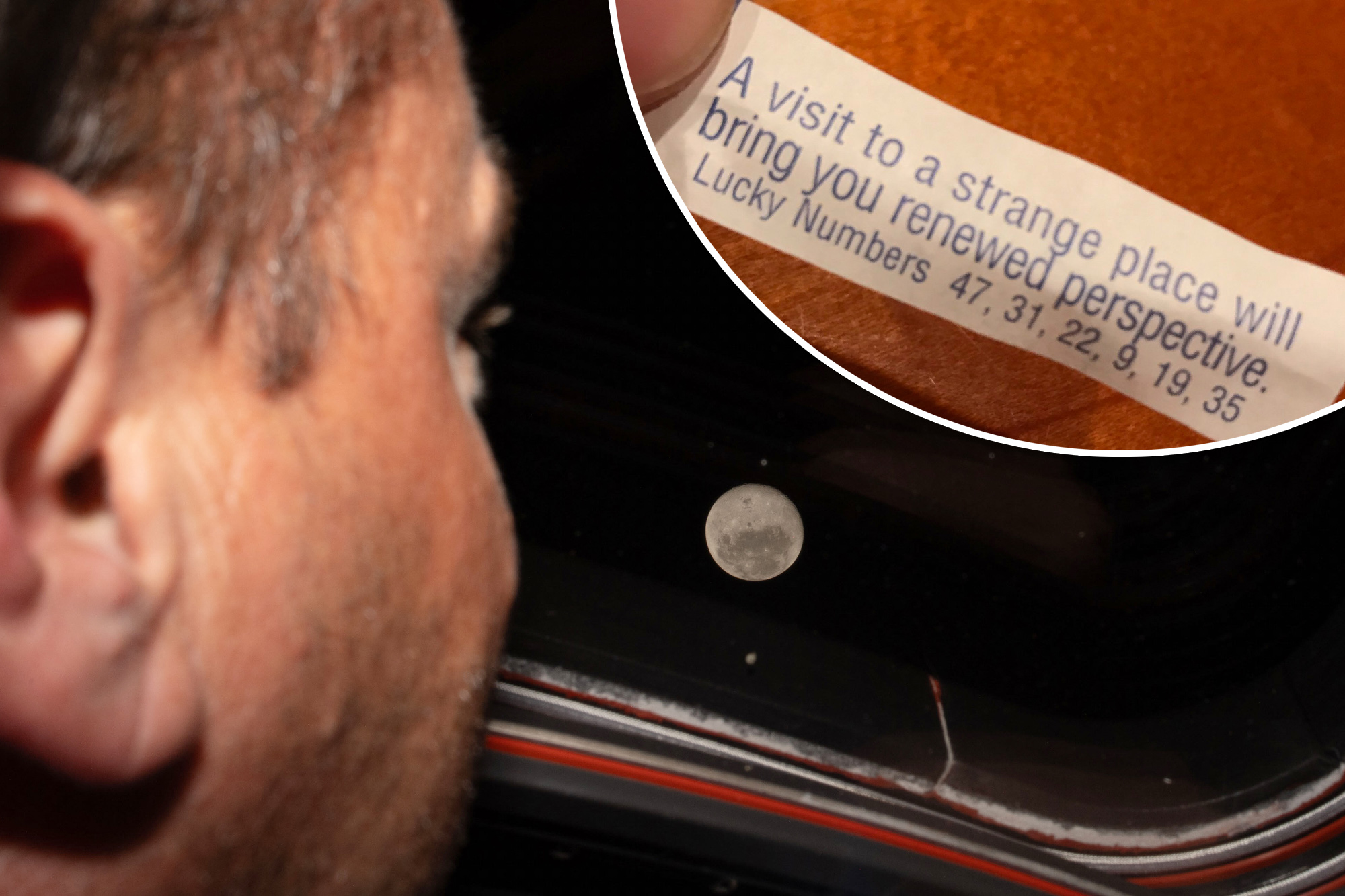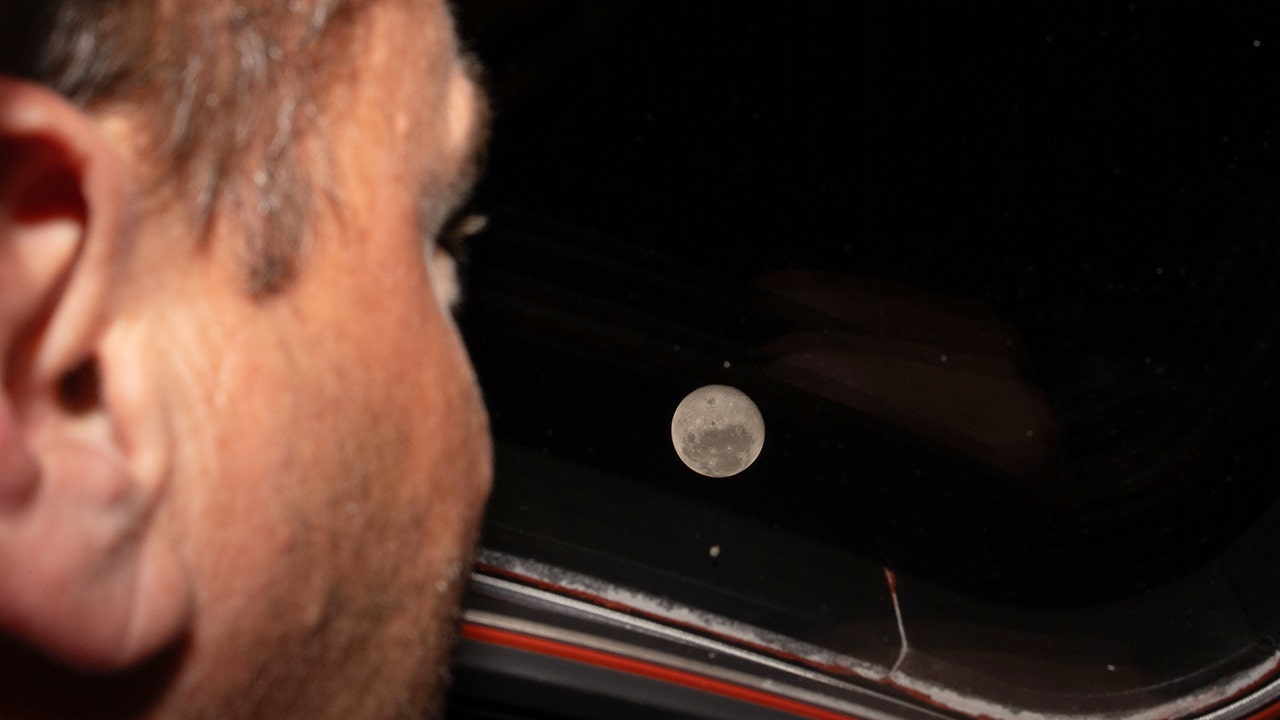
This brings new meaning to “male gaze.”
There’s perhaps a reason people see the “man” — and not the woman — in the moon. Australian scientists found that humans are preconditioned to spot faces in inanimate objects, and that, more often than not, they happen to be male, per a study published in the journal Royal Society Open Science.
“For whatever reason, it seems like we’ve got this template stored in our brains about what a basic human face is, and it resembles a male face,” declared the study’s lead author, Dr. Lindsay Peterson, a psychology expert at the University of New South Wales who specializes in visual perception and face detection.
Dubbed pareidolia, spotting visages in the darndest places is a common human trait, per the study.
“An observer may report seeing a smiling face on the side of a handbag, Jesus in a piece of toast, or a pained face in an ultrasound image,” wrote the researchers, adding that the phenomenon has sparked interest on both social media and in the scientific community alike.
Aside from being just an optical illusion, the illusory faces help shed light on how we process the real deal — a crucial component of our “social and cognitive functioning.”
While the phenomenon is not new to science, the types of faces we perceive had remained unclear — until now.
To test just how primed we are to put a face to a flame or any other item, the researchers recruited 70 participants and showed them two types of images. One depicted a handbag whose zip, folds, and buckles appeared to form a mouth — redefining “pursed lips” — while the other showed abstract “visual noise.”
They found that while people saw faces more frequently in the purse (96.7% of images) than visual noise (53.4%), the majority of participants — 90%– reported seeing a face in at least one of the abstract pictures.
Apparently, our peepers are pretty misogynistic because in both instances, participants were likely to perceive the faces as male, suggesting that we might not see color, but we definitely perceive gender.
Dr. Peterson said this had to do with ingrained sexism, explaining, “male bias exists across generations and in children as young as four years old, which suggests that it’s hard-wired.”
The main dichotomy was that the purse was perceived as a young and happy male face, while the abstract image was viewed as older and angrier.
The reason behind our knack for conjuring the latter in visual noise is yet unclear, although researchers have suggested that the mind is hard-wired to identify danger in unfamiliar places.
“Your lizard brain is telling you that the safest thing is to assume it’s a threat and then deal with it,” said Peterson.
In a second experiment, participants were shown two clips of abstract noise, one that moved in a random pattern and the other that moved in a vertically symmetrical one — a subtle cue that parallels the layout of the human face.
Lo and behold, participants saw faces in 65.8% of the videos that were symmetrical compared to just 23.6% for the random pattern clips.
“Once you introduce vertical symmetry, faces predominate,” said study co-author Prof Branka Spehar, also of the University of New South Wales.
Visages included everything from angels to demons and even Buddha, per Peterson, who found it “amazing you can have these quite rich responses to a stimulus that is essentially noise.”
Why are we so quick to form false faces in our mind’s eye? Professor David Alais, a neuroscientist at the University of Sydney, who was not involved in the study, said that it was a side effect of our ability to process bona fide visages quickly, The Guardian reported.
“You want to detect faces as quickly as possible, in case they’re friends or foes … but you get a bit of a by-catch, you sometimes catch false faces,” he told the outlet.