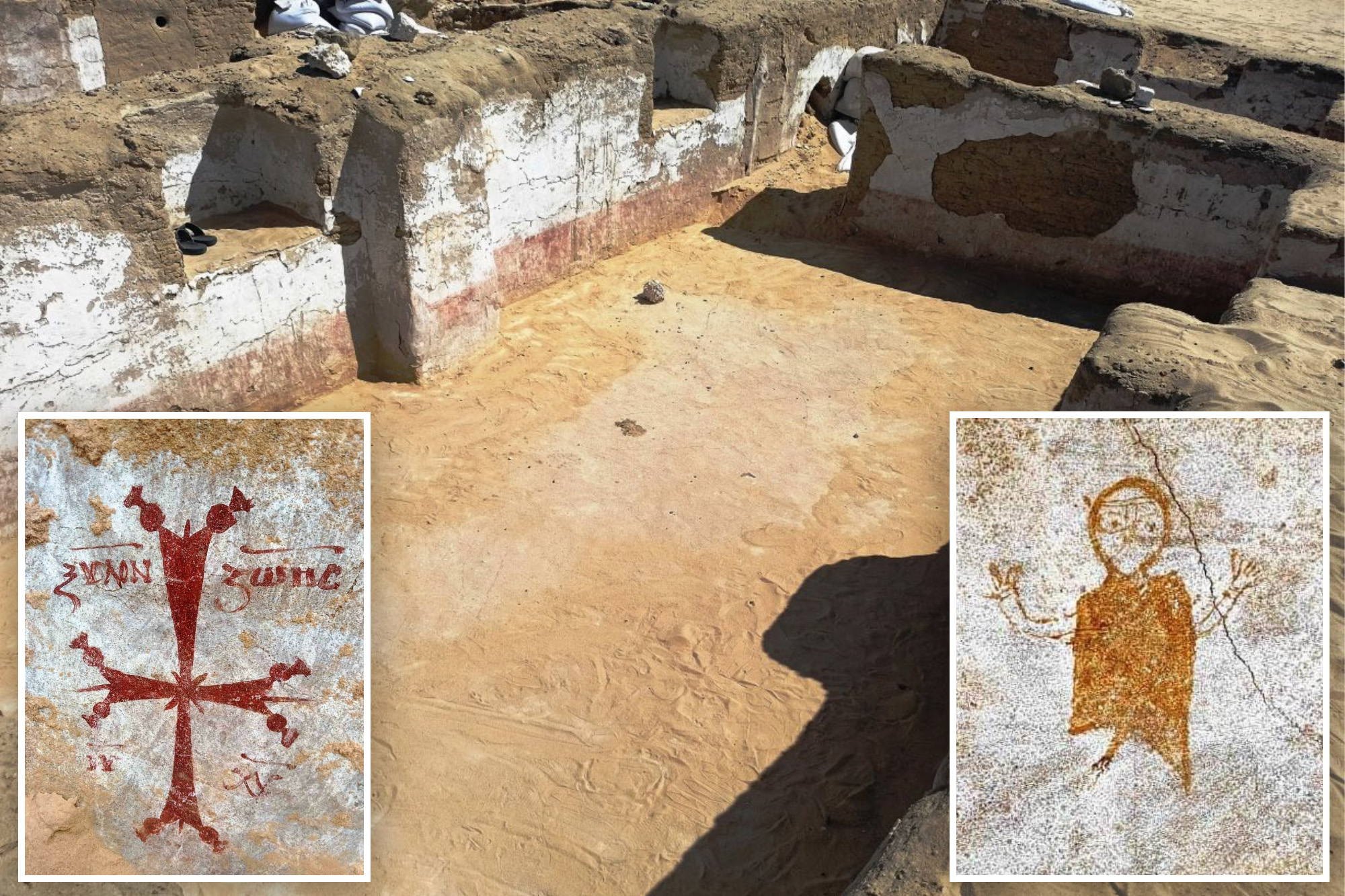
An ancient monastery dating to the dawn of Christianity was recently uncovered in an Egyptian desert, according to local officials.
The Egyptian Ministry of Tourism and Antiquities announced in late March that the monastery had been found in Wadi El-Natrun in Beheira Governorate.
Wadi El-Natrun is considered “one of the most important centers for the emergence of monasticism in Egypt and the world,” according to officials, and the monastery dates from the fourth to sixth centuries A.D.
The mudbrick building measures around 21,528 square feet, with walls more than three feet thick and rooms reaching about seven feet in height.
The site features an open courtyard surrounded by buildings. The buildings housed monks’ cells, ovens, kitchens, and storage areas.
Archaeologists also found human skeletal remains — believed to belong to monks — along with wall paintings and architectural features.
“Architectural studies show the use of various roofing systems, including vaults and domes constructed from mudbrick,” the officials noted.
“The walls were coated with a layer of white plaster and decorated with wall paintings featuring crosses, palm trees, and various plant and geometric motifs.”
Excavators also unearthed several inscriptions bearing the names of monks who lived there, along with “religious texts invoking mercy and forgiveness.”
“These contribute to dating the building and documenting the daily lives of its inhabitants,” the release said.
Sherif Fathy, minister of tourism and antiquities, said the find “represents a significant addition to our understanding of the origins of monasticism in Egypt, which began on Egyptian soil before spreading worldwide.”
Fathy also emphasized the “ministry’s commitment to integrating Coptic heritage sites into comprehensive tourism offerings … to enrich the tourist experience and highlight Egypt’s rich heritage.”
Mohamed Taman, head of the central administration for Lower Egypt and Sinai Antiquities, said the discovery “adds a new dimension to understanding the layout of early monasteries, particularly with the presence of internal burial spaces reflecting monastic life.”
The discovery comes soon after archaeologists uncovered a similar monastic complex in the Beheira Governorate.
The Christian monastic site, which officials announced on March 23, featured a guesthouse with 13 rooms, as well as wall paintings.
Earlier in January, Egyptian officials announced that another monastery had been found in the village of Al-Duwair in the Sohag Governorate.
At the site, archaeologists found the remains of “a fully integrated residential complex for monks dating back to the Byzantine period,” the statement said.