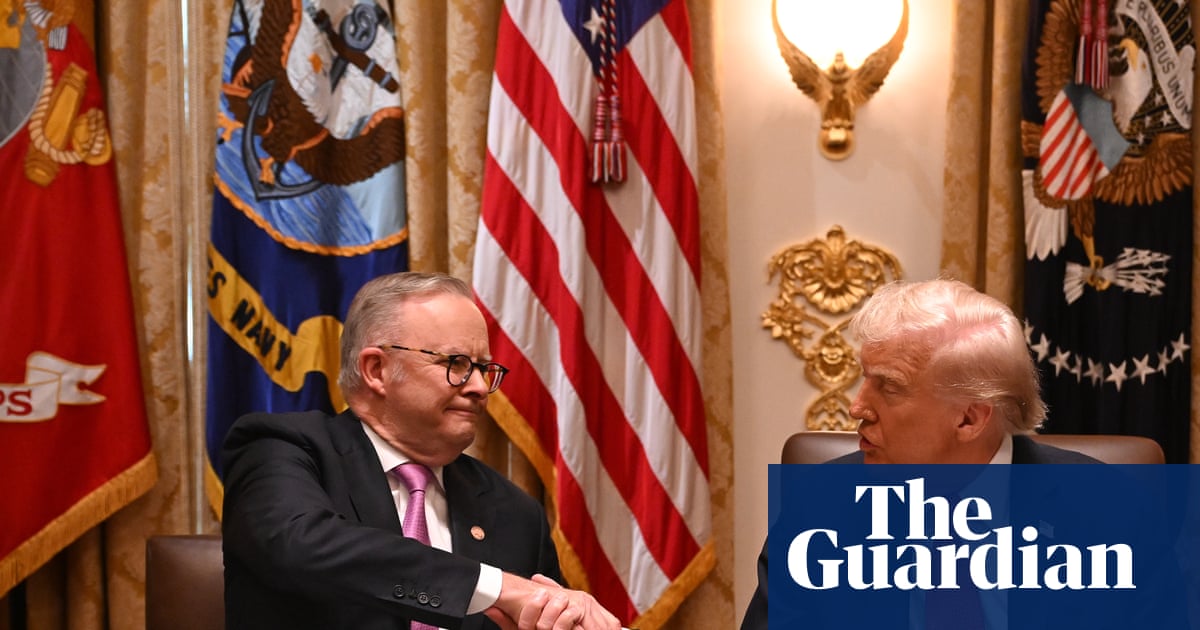
Australian prime minister, Anthony Albanese and US president, Donald Trump, shake hands during a meeting in the cabinet room at the White House. Photograph: Lukas Coch/AAPView image in fullscreenAustralian prime minister, Anthony Albanese and US president, Donald Trump, shake hands during a meeting in the cabinet room at the White House. Photograph: Lukas Coch/AAPAnalysisWhen it comes to Trump, Albanese’s tactic has been don’t buy-in and don’t bite back. Why has that changed?Dan Jervis-Bardy The prime minister clearly believed that Trump’s threat of mass bombings of bridges and power plants crossed a new line
Get our breaking news email, free app or daily news podcast
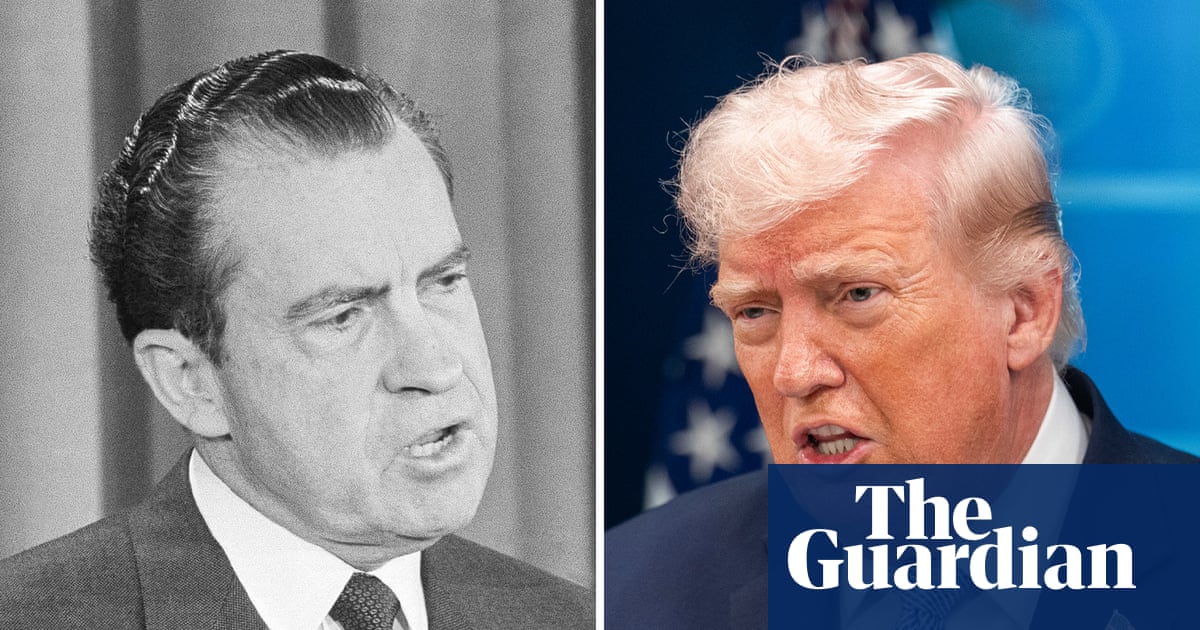
Anthony Albanese has adopted a careful and deliberate strategy for dealing with Donald Trump since his return to the White House in early 2025: don’t buy-in, don’t bite back.
The approach is a calculation that there is little to be gained from responding to Trump’s every Truth Social post, lest it distract the government, provoke the president or, heaven forbid, threaten the Aukus pact.
The prime minister has refused to stray from it even when Trump has made absurd and inflammatory suggestions such as transforming war-ravaged Gaza into the “Riviera of the Middle East”.
Albanese would argue his polite, non-confrontational brand of diplomacy has been a success: Aukus is “full steam ahead”, a multi-billion dollar critical minerals deal has been inked, Julian Assange is free and Australia is no worse off when it comes to US trade tariffs than most other countries.
But as Trump’s outbursts have escalated since the start of the Iran conflict, including with repeated criticisms of Australia, the approach has become less and less tenable.
Read moreWhen Trump threatened the widespread bombing of civilian infrastructure in Iran if the regime did not surrender, silence was not an option.
Albanese did respond this time, describing the threat as an “extraordinary statement to make”.
“I don’t think it’s appropriate to use language such as that from the president of the United States. And I think it will cause some concern,” he told Sky News.
The rare criticism was carefully worded and delivered in the comfort of a pre-recorded television interview, without the opportunity for other reporters to interrogate it.
It should not be significant that an Australian prime minister has called out what was a brazen threat to commit a war crime.
But so disciplined has Albanese been in refusing to offer a “running commentary” on Trump that Wednesday’s comments warrant further examination.
The prime minister clearly believed that Trump’s threat of mass bombings of bridges and power plants crossed a line that hadn’t been crossed previously, necessitating a public response.
Many – including Labor elders and members of the party’s rank-and-file – would argue the line was breached long before that incendiary Truth Social post, including when the US and Israel started bombing Iran in what experts assessed was a clear breach of international law.
The prime minister’s criticism of Trump’s language came after he last week started questioning the objectives of a war that the government had endorsed from the outset.
The two developments should not be interpreted as the first signs of a de-coupling from the US, or that Albanese is about to join the likes of French president, Emmanuel Macron, in openly challenging Trump.
Rather, it strikes as the prime minister reacting to the Australian public’s resentment of Trump and the war in Iran, which is directly responsible for the spiralling petrol and diesel prices that motorists are paying at the bowser.
It is, as is so often the case with Albanese, a political calculation.
As prime minister, Albanese perhaps cannot afford to be as colourful in his criticism of Trump as Andrew Hastie or the Nationals leader, Matt Canavan, who on Wednesday described the president’s threats as “well beyond the realms of acceptability”.
But, to borrow another line from Canavan’s appearance at the National Press Club, he should be able to “call a spade a spade at times like these”.
We now await to see Albanese’s response to Trump’s next outburst.