Billionaire Ray Dalio Says an AI-Fueled $4.4 Trillion Debt Crisis Is Coming Rich Duprey Fri, October 16, 2026 at 11:32 AM EDT 5 min read NVDA +0.09% AVGO -2.71% Explore stocks on Coinbase Trading disclosure Trading disclosure The above button links to Coinbase. Yahoo Finance is not a broker-dealer or investment adviser and does not offer securities or cryptocurrencies for sale or facilitate trading. Coinbase pays us for certain activity generated through this link. Prices displayed are informational.
Ray Dalio projects U.S. net debt supply will hit $4.4 trillion by 2027, forcing corporate and government borrowers to compete for the same investor dollars.
Hyperscaler bond issuance doubled all of 2025 in just six months, hitting $220 billion and now representing 10% of global investment-grade bond issuance.
Favor AI companies that cover expansion from operating cash flow, as rising interest costs on continual refinancing can erase returns even for successful businesses.
Just released. Our analysts combed the entire stock market and named the ten best stocks to buy right now, and NVIDIA didn't make the cut. Enter your email to see the names that beat NVDA. The report is free. Enter your email and see if any of your stocks made the cut.
Artificial intelligence's next obstacle may be the cost of money. Building data centers requires financing today, while the revenue needed to justify those investments arrives later. Washington also needs buyers for its debt, putting government borrowing and corporate expansion in competition for investors' dollars.
For shareholders, that creates a risk beyond whether AI delivers useful technology: even successful businesses can become disappointing investments when financing costs consume their profits. The pressure spreading beyond the bond market could make the price of funding growth as important as growth itself.
Bridgewater Associates founder Ray Dalio warns that this competition is intensifying. His analysis deserves attention, although they describe a financing squeeze that could develop, rather than an inevitable crash.
In a post on Tuesday over at LinkedIn, "The Numbers Behind the Bond Bear Market," Dalio projects annual net U.S. debt supply will reach approximately $4.4 trillion in 2027, up from $3.5 trillion in 2025. That represents roughly a 26% increase.
The figure covers borrowing across the economy, not AI debt alone. It also excludes refinancing existing obligations. Separately, Dalio estimates corporations will need approximately $2 trillion to refinance debt in 2027, alongside $1.4 trillion in new borrowing.
Refinancing replaces an old loan; new borrowing adds another claim on future income. Both require willing lenders.
Why Didn't NVDA Make The Top 10 List?
24/7 Wall St has helped investors make money for over two decades, and our top analysts just finished ranking the definitive Top 10 Stocks To Buy Now. Not the ten biggest companies. Not the ten everyone is arguing about. The ten best stocks to buy right now.
The report is free, and you can see why we think each stock is a top investment today.
Enter Your Email and See the Ten →
If buyers demand higher yields to absorb that supply, borrowers must pay more. For example, a one-percentage-point increase on $10 billion of newly priced debt adds $100 million in annual interest. That money cannot fund another data center or reach shareholders through dividends.
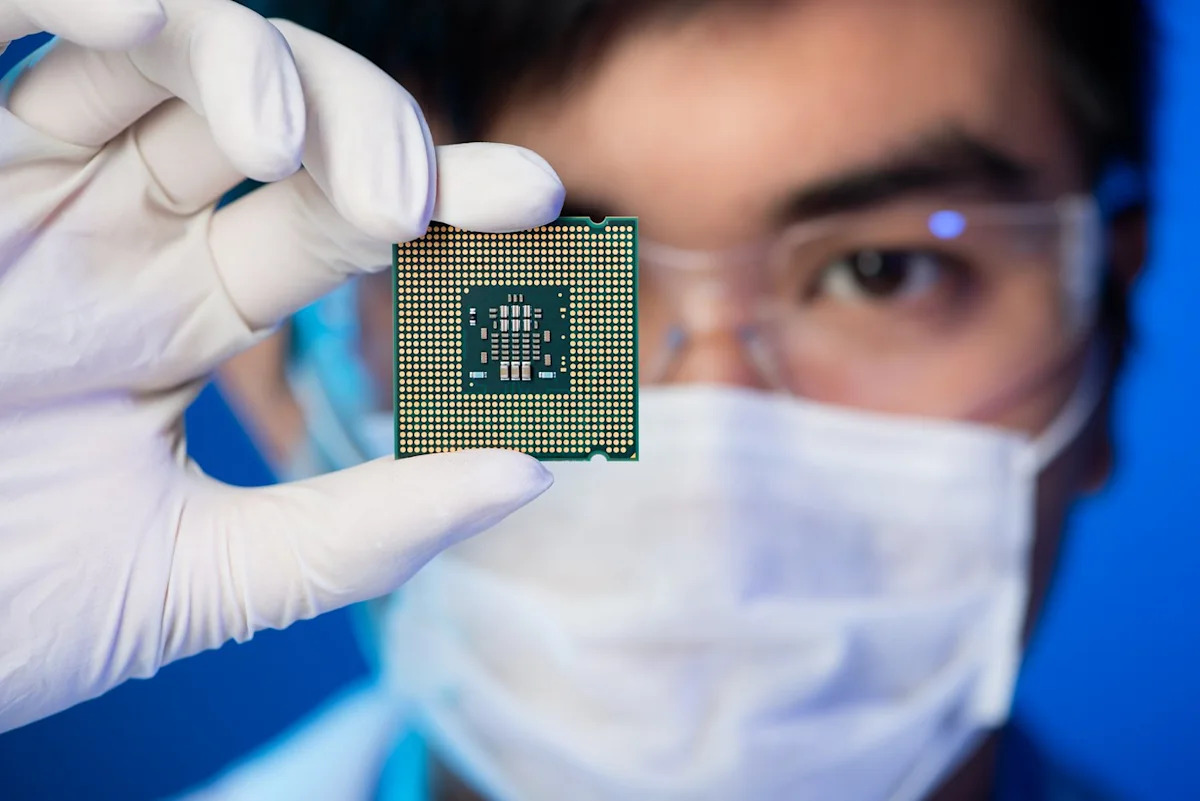
AI growth is hitting a $4.4 trillion wall of debt—and even the most successful tech could turn into a disappointing investment as financing costs skyrocket. © 24/7 Wall St.
Dalio puts hyperscaler bond issuance at approximately $220 billion during the first half of 2026, compared with $108 billion throughout all of 2025. These giant cloud operators borrowed more than twice the prior year's total in just six months.
The International Monetary Fund's October Global Financial Stability Report reinforces the concern. According to Reuters, hyperscalers now account for 10% of global investment-grade bond issuance compared to less than 1% in 2024.
As AI construction consumes more cash, investors must distinguish growth financed by customers from growth sustained by repeated trips to lenders.
Supplier financing adds another complication. Broadcom (NASDAQ:AVGO) just agreed to lend Anthropic up to $42 billion. Nvidia (NASDAQ:NVDA) is involved in more than $750 billion worth of similar AI investments, financing deals, and partnerships. While such chip-buying arrangements connect sales with customers' ability to repay, it also leaves the supplier exposed if the customer struggles.
Dalio's forecast suggests investors should be selective about the AI stocks they buy, not abandon them. Certainly, higher borrowing requirements alone do not prove lenders will retreat, as stronger earnings, productivity gains, or additional investment could help absorb the supply.
Still, investors should favor businesses that can cover expansion and interest payments from operating cash over their peers who are dependent on continual refinancing. Due diligence requires comparing cash that remains after capital spending, upcoming debt maturities, and lease commitments before treating two AI companies as equally attractive.
The technology can succeed while an expensive financing structure results in disappointing shareholders. Buying growth at any price becomes harder to defend when the interest bill keeps rising.
If you have cash sitting in your account right now, give this two minutes. After more than two decades of helping investors beat the market, our top analysts at 24/7 Wall St. put together a definitive report on the Top 10 Stocks To Buy Today. And NVDA wasn't one of them.
They combed the entire market. It's not 10 ideas, not 10 stocks everyone is talking about, it's what their research points to as the 10 best stocks to buy right now, and it's free. Read more here and see which stocks made the list -->>
Contact editorial@247wallst.com for any questions or corrections.