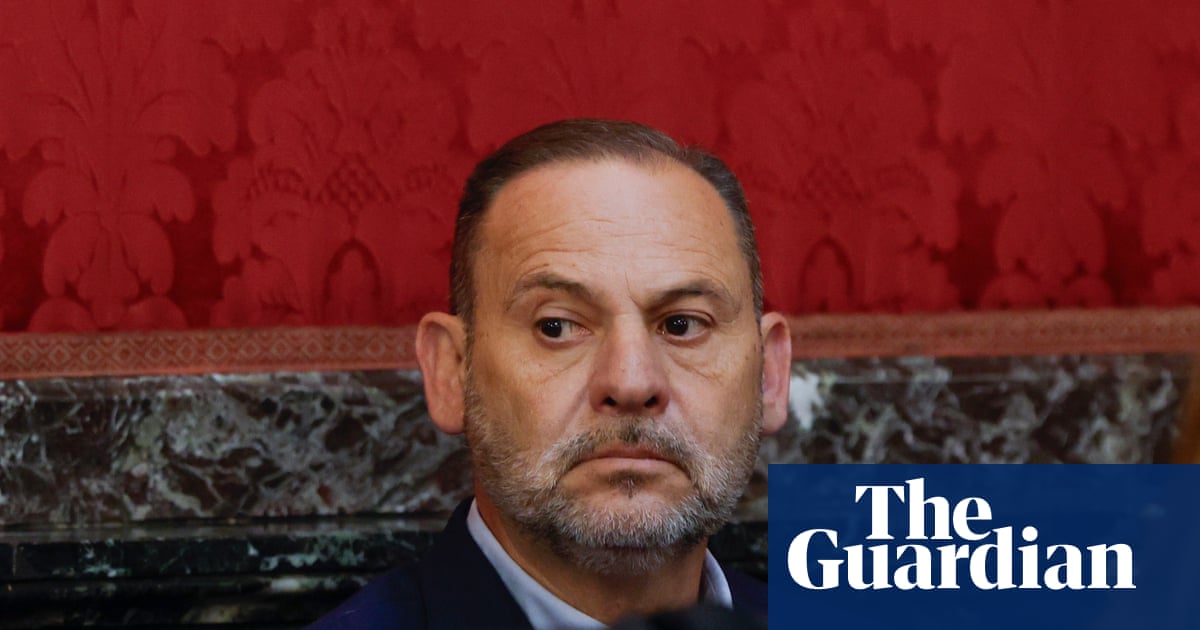
Former minister José Luis Ábalos stands trial over alleged corruption. Photograph: JJ Guillen/EPAView image in fullscreenFormer minister José Luis Ábalos stands trial over alleged corruption. Photograph: JJ Guillen/EPATwin corruption trials cast a shadow over Spain’s main parties ahead of key electionsWith former ministers and party heavyweights being dragged into court, the country is once again confronting the unresolved legacy of political graft and shady backroom deals
Don’t get This Is Europe delivered to your inbox? Sign up here
Easter will not have been a particularly celebratory time for Spain’s two biggest political parties. In a quirk of judicial fate, both the ruling Spanish Socialist Workers’ party (PSOE) and the conservative People’s party (PP) are bracing themselves after two high-profile trials involving former senior figures from each party began in Madrid this week.
Though vastly different, both cases have the potential to seriously dent each party’s claims of having zero-tolerance for corruption as voters in Andalucía, Spain’s most populous autonomous community, prepare for next month’s regional election. That will be followed by a general election next year.
So what are the cases? And why do they matter? The PSOE high command, including the prime minister, Pedro Sánchez, will be keeping a close eye on events at the supreme court, where the so-called “caso Koldo” – nicknamed after one of the defendants but also known as the “caso mascarillas” (masks case) – began yesterday morning.
Sánchez’s former right-hand man, the ex-transport minister José Luis Ábalos (pictured top), is accused – along with his former aide Koldo García and the businessman Víctor de Aldama – of taking kickbacks on public contracts for sanitary equipment during the Covid pandemic. Ábalos and García, who deny all charges, are facing sentences of 24 years and 19 years respectively while Aldama, who has already admitted to his part in the alleged scheme, faces a seven-year sentence.
The trial is one of several scandals to have enveloped Sánchez’s administration and inner circle over recent months. Although the prime minister himself has not been accused of any wrongdoing, his wife, Begoña Gómez, and his brother, David Sánchez, have both been investigated over complaints brought by the pressure group Manos Limpias (Clean Hands), a self-styled trade union with far-right links that has a long history of using the courts to pursue political targets.
Gómez is awaiting trial over accusations that she used her influence as the wife of the prime minister to secure sponsors for a university master’s degree course she ran and used state funds to pay her assistant for help with personal matters. David Sánchez will face trial next month over allegations that he was handed a bespoke job by the socialist-led council of the south-western city of Badajoz in July 2017, when his brother was the national leader of the PSOE but was not yet prime minister.
Gómez and David Sánchez have denied any wrongdoing. The prime minister – who has said his family have been the victims of a “harassment and bullying operation” – has insisted that neither has committed any offence.
Any suggestion of graft and cronyism, however, is damaging to a prime minister who took office promising to “do away with this corruption thriller into which the People’s party has plunged our politics”.
It was the issue of corruption that propelled Sánchez to power almost eight years ago. Sensing the extent of public anger after the PP was found to have profited from an illegal kickbacks-for-contracts scheme in the so-called Gürtel case, Sánchez gambled on a no-confidence motion to cast the PP government of Mariano Rajoy from office. The gamble paid off and Sánchez has defied expectations to remain in the Moncloa palace ever since.
View image in fullscreenFormer interior minister Jorge Fernández Díaz arrives at court for his trial. Photograph: Javier Lizón/EPAAlthough the PP has sought to capitalise on the succession of scandals and to remind Spaniards of Sánchez’s former proximity to Ábalos, its gleeful hand-rubbing has been somewhat curtailed by the fact that it, too, is likely to endure an embarrassing spell in court over the coming days.
On Monday, Jorge Fernández Díaz, who was Rajoy’s interior minister from 2011 to 2016, went on trial at Spain’s highest criminal court, the Audiencia Nacional, charged with allegedly spying on Luis Bárcenas, a former PP treasurer who had threatened to expose corruption within the party.
Fernández Díaz, who denies any knowledge of a plot to spy on Bárcenas, is charged with offences including embezzlement, concealment and breaching privacy, and faces a 15-year sentence if convicted.
Fernández Díaz and other former senior interior ministry officials are accused of carrying out an extrajudicial operation to spy on Bárcenas to ensure that details of the PP’s illegal financing did not come to light after he was remanded in custody in 2013 on charges of tax fraud and money laundering.
Bárcenas, a close ally of Rajoy who served as PP treasurer until 2009, was eventually jailed for 33 years for fraud and money laundering in 2018. He has repeatedly claimed that high-level party officials knew about the illegal PP contributions. In an interview with El Mundo over the weekend, Bárcenas said he thought a spying operation “of this nature could not have been carried out without the knowledge of the highest levels of the party”.
In July 2017, Rajoy became the first serving Spanish premier to testify in a criminal case when he was called to give evidence to the Gürtel trial about his time as the PP’s vice-secretary general. Rajoy emphatically denied any knowledge of an illegal funding racket within the PP and said his duties during the period in question were exclusively political and not financial. He is due to give evidence at Fernández Díaz’s trial, as is María Dolores de Cospedal, a former PP secretary-general.
Not altogether surprisingly, the PP is hoping to keep the focus on Ábalos and co while the government is looking to trumpet its achievements.
“This is going to be a very long week for [the government],” a PP spokesperson said on Monday. “This is a trial that will show who’s to blame for a piece of corruption that we Spaniards lived in real time.”
Meanwhile, the prime minister – whose fierce opposition to Donald Trump’s war in Iran has won him plaudits around the world – has taken the opportunity to point out that Spain has just exceeded 22 million social security contributors for the first time in its history.
“You’re the ones who raise, drive, and build this country,” he said. “[You’re] a team that’s making history.”
Political messaging, however, can only do so much – and an awful lot is riding on the verdicts that will eventually emerge from the supreme court and the Audiencia Nacional. As the events of 2018 proved, both the PP and the PSOE know very well just how much can rest on the outcome of a single court case.
To receive the complete version of This Is Europe in your inbox every Wednesday, please subscribe here.