Jennifer Saibil, The Motley Fool Fri, October 16, 2026 at 10:43 AM EDT 5 min read JPM +2.50% NVDA -0.47% Explore stocks on Coinbase Trading disclosure Trading disclosure The above button links to Coinbase. Yahoo Finance is not a broker-dealer or investment adviser and does not offer securities or cryptocurrencies for sale or facilitate trading. Coinbase pays us for certain activity generated through this link. Prices displayed are informational.
JPMorgan Chase's (NYSE: JPM) third-quarter earnings missed the mark this week, and its stock fell after the report. However, it had already been falling due to interest rate drama, and the results were more mediocre than catastrophic.
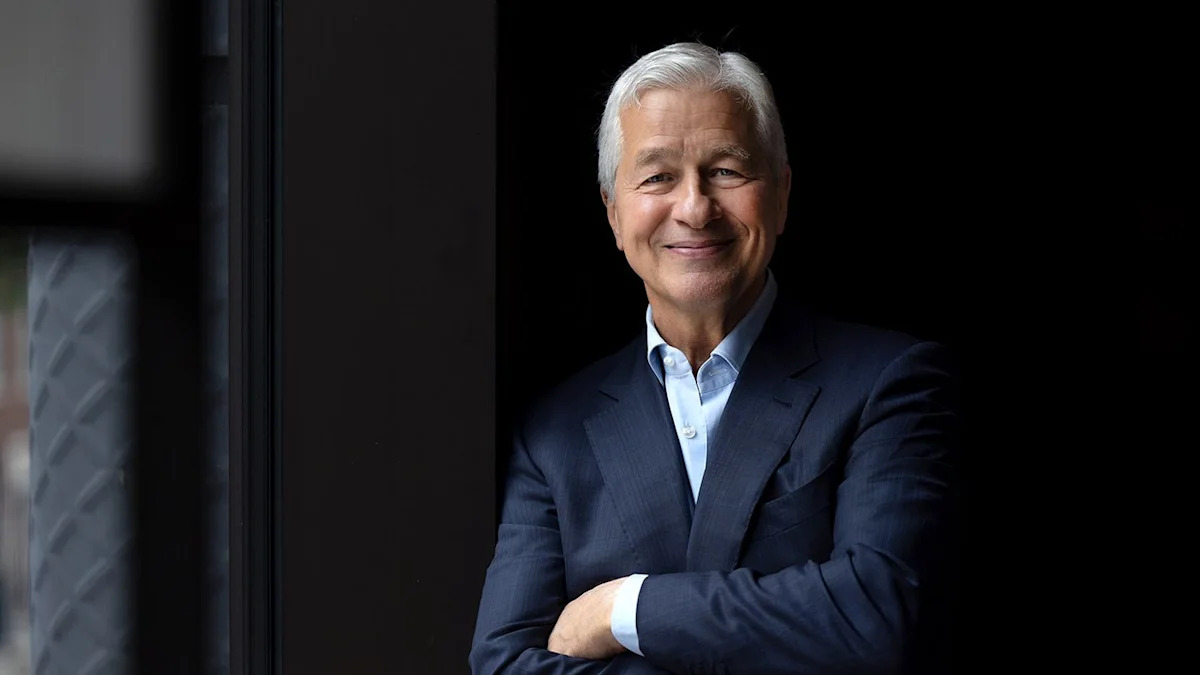
Beyond the third quarter, though, CEO Jamie Dimon warned of many moving pieces that could impact the bank and the economy in the coming months. Here's what he said.
Missed AI's "Act 1"? Act 2 Could Be 14x Bigger. Most investors think they missed the AI boat because they didn't buy Nvidia in 2005. But according to our analysts, we're only at the end of "Act 1"—the R&D phase. "Act 2" is the global rollout. Continue »
Dimon has the status of leading the biggest bank in the U.S., which is why people pay attention to his insider opinion on what's happening in finance. The bank's performance is also a good proxy for the state of banking.
Overall, the big banks -- many of which have already reported third-quarter earnings -- have demonstrated solid growth. Much of the commercial activity is benefiting from unceasing artificial intelligence (AI) spending as hyperscalers continue their build-out, and the markets segment is still getting a boost from robust investing activity. Dimon noted, however, that activity was already moderating in the third quarter.
The third quarter was bound to see a slowdown from the second quarter, which featured the Space Exploration Technologies initial public offering (IPO), the biggest IPO ever. In the commercial and investment banking (CIB) segment, JPMorgan Chase's revenue increased 14% year over year, but it was down 8% from last quarter. The company had already signaled the slowdown at the Barclays Global Financial Services Conference in September, when Co-President Doug Petno said that the company expected a mid-teens increase, and the stock dropped at the time.
Significantly, earnings per share (EPS) were $5.57, falling short of the $5.93 expected by Wall Street, while total revenue increased 8% to $50.17 billion, lower than the $51.23 billion Wall Street wanted.
It's a testament to the market's confidence in the bank that the stock didn't fall further after the report. It's already down 10% over the past few weeks due to the previous update, as well as bond market and interest rate volatility weighing on its price.
Dimon echoed his previous sentiment that the bank is enjoying the heightened market activity. "Hopefully we'll enjoy this good environment for a while," he said. "We just don't know when it's going to stop."
Dimon mentioned an array of factors that could cause the strong activity and bull market to topple. "Large fiscal deficits, sticky inflation, elevated asset prices, rising interest rates and geopolitical conditions continue to shift under the surface," he said. He ended on a positive note, pointing out that "these forces may be manageable, but we remain prepared for a wide range of outcomes."
Each of these factors alone could have a major impact on the economy. The U.S. debt has reached $40.25 trillion and continues to rise, while many global regions are dealing with spiraling deficits. Inflation is still raging, aided in part by the resilient U.S. consumer, but it isn't likely to stay that way forever. Eventually, consumerism is likely to slow down, negatively affecting retailers and the overall economy.
The flip side of that is interest rates, which may soon be raised to counter inflation. Interest rates also slow the economy and specifically impact banks because fewer people look for loans when interest rates are high, both personally and commercially, and default rates rise.
Rising asset prices are obvious as the S&P 500 gets closer to ending its fourth straight year with double-digit gains. That will come to an end at some point, and while slumping market activity wouldn't be good for JPMorgan Chase's trading segment, the bigger picture would be stalled economic activity as people's savings contract, at least in the short term.
Finally, geopolitical tensions continue in several regions, and specifically, the threat of rising oil prices remains. These are all reasons for investors to carefully consider the makeup of their portfolios right now and make sure they're well balanced to manage through any upcoming downturn.
Before you buy stock in JPMorgan Chase, consider this:
The Motley Fool Stock Advisor analyst team just identified what they believe are the 10 best stocks for investors to buy now… and JPMorgan Chase wasn't one of them. The 10 stocks that made the cut could produce monster returns in the coming years.
Consider when Netflix made this list on December 17, 2004... if you invested $1,000 at the time of our recommendation, you'd have $391,581!* Or when Nvidia made this list on April 15, 2005... if you invested $1,000 at the time of our recommendation, you'd have $1,334,780!*
Now, it's worth noting Stock Advisor's total average return is 936% — a market-crushing outperformance compared to 213% for the S&P 500. Don't miss the latest top 10 list, available with Stock Advisor, and join an investing community built by individual investors for individual investors.
*Stock Advisor returns as of October 16, 2026.
JPMorgan Chase CEO Jamie Dimon Warns That Inflation, Rising Asset Prices, and More "Continue to Shift Under the Surface." was originally published by The Motley Fool