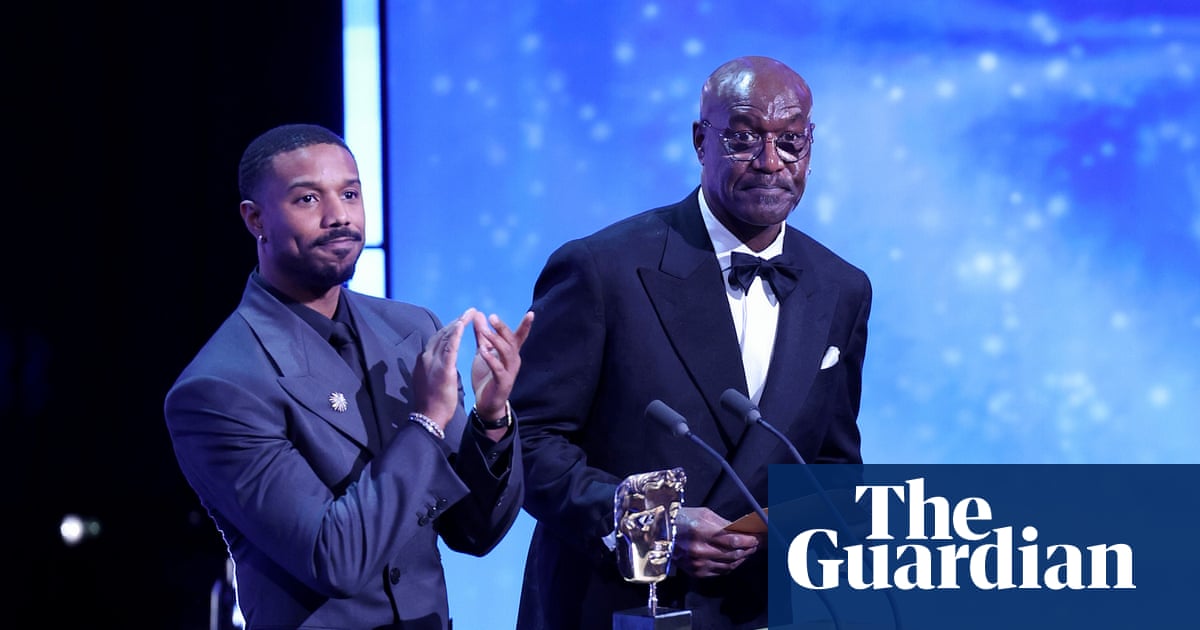
The slur was shouted out while two stars of the film Sinners, Michael B Jordan and Delroy Lindo, were on stage. Photograph: Tristan Fewings/Getty Images for BaftaView image in fullscreenThe slur was shouted out while two stars of the film Sinners, Michael B Jordan and Delroy Lindo, were on stage. Photograph: Tristan Fewings/Getty Images for BaftaAiring of Bafta racial slur breached BBC standards, corporation findsExecutive complaints unit finding relates to broadcast of N-word during awards ceremony
The BBC breached its editorial standards by broadcasting a racial slur during the Bafta film awards ceremony in February, the corporation’s executive complaints unit (ECU) has found.
The Tourette syndrome campaigner John Davidson could be heard shouting the slur as the Sinners stars Michael B Jordan and Delroy Lindo presented the award for special visual effects during the ceremony at London’s Royal Festival Hall.
The ECU found editorial standards were unintentionally breached by broadcasting the offensive term and by failing to edit it out of the time-delayed showing of the ceremony. A third breach occurred when the word was not removed from the iPlayer version of the programme until the following morning.
The ECU report said: “There was a lack of clarity among the team as to whether the N-word was audible on the recording. This resulted in there being a delay before a decision was taken to remove the recording from iPlayer; that decision was not taken until approximately 9.30 the following morning.
“In the ECU’s view, this delay was a serious mistake, because there could be no certainty that the word would be inaudible to all viewers, and because there was a greater likelihood of its being found intelligible by viewers coming to the iPlayer in the knowledge that it had been spoken.”
The report added: “The fact that the unedited recording remained available for so long aggravated the offence caused by the inadvertent inclusion of the N-word in the broadcast.”
The ECU said the initial broadcast of the offensive term “was highly offensive and had no editorial justification” but accepted that members of the production team monitoring the event in the outside broadcast vehicle “did not hear or recognise the N-word”.
The report said: “The ECU accepted their account, for two reasons. Firstly, the use of the N-word in that instance was extremely indistinct, to the point where it might well not have been recognised by the production team.
“Secondly, there was another occurrence of the N-word about 10 minutes later, which was recognised by the production team and immediately edited out in accordance with the protocols on offensive language which were in place. There is no reason to conclude they would have applied the protocols in one case while deliberately ignoring them in the other.”
The BBC was also accused of breaching editorial standards by editing out “free Palestine” from the acceptance speech of the winner of the prize for outstanding debut, Akinola Davies Jr.
Although the ECU report found Davies had a right to express his views, it said the removal of the words “did not hinge on the considerations of impartiality”.
The report said: “The principal consideration was that approximately three hours of recorded material had to be edited to fit a two-hour transmission slot. The priority in the editing was to focus on the main thrust of the event, namely the content being celebrated. As is usual in coverage of events of this kind, cuts were made in some of the longer acceptance speeches, including that of Mr Davies.”
The report added: “It appeared to the ECU that the content of what was cut from Mr Davies’ speech played no part in the decision to edit it except to the extent that it was remote from the event’s main thrust and the likely focus of the audience’s interest.”