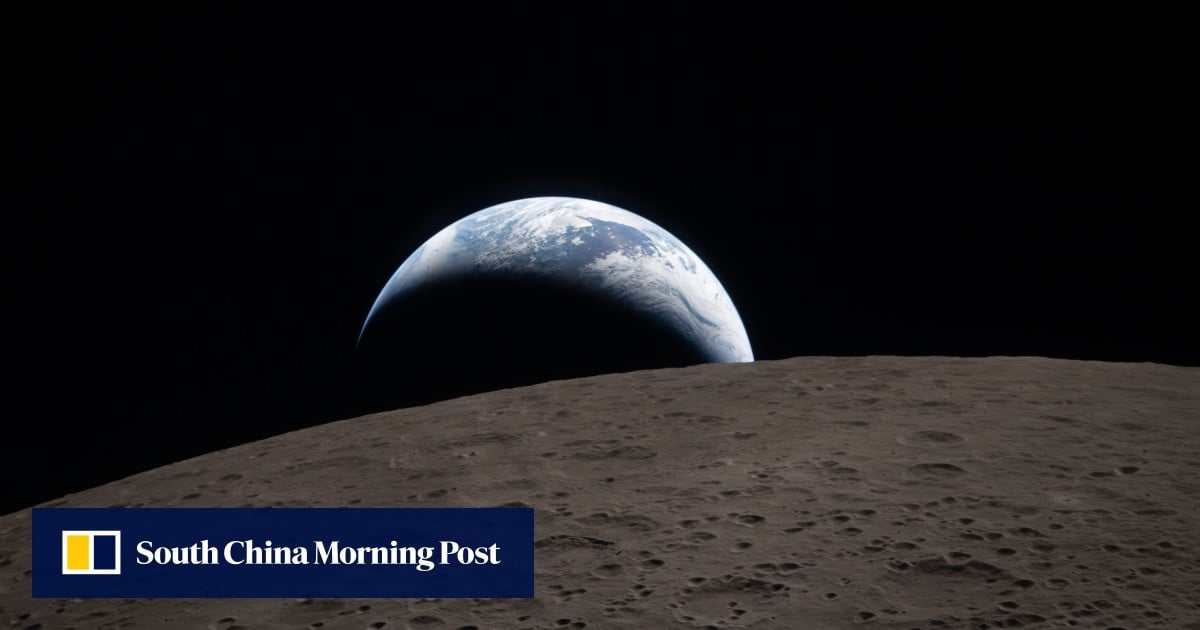
The Indian space sector could work with international partners on future Chandrayaan and other lunar missions, analysts say
3-MIN READ3-MIN ListenBiman MukherjiPublished: 6:00pm, 8 Apr 2026As Nasa’s Artemis II crew loops around the moon, the mission involving four astronauts from the US and Canada is set to reignite India’s ambition to grow its space sector and launch future lunar missions.The Orion spacecraft used in the Artemis II mission reached a maximum distance of 406,780km (252,760 miles) from Earth, surpassing the record set by Apollo 13 in 1970. The close approach to the moon was the climax of the mission launched on April 1, with the astronauts scheduled to return to Earth on Friday.
The first crewed lunar mission in more than half a century is a dress rehearsal by the US to send humans to the moon again by 2028.
While there are no Indian astronauts aboard the Orion, a successful conclusion to Artemis II would benefit India, according to analysts.
India is among the countries that have signed the Artemis Accords, a US-led non-binding framework that sets principles for lunar exploration, including cooperation, interoperability and data sharing.
“Though India is not a participant in Artemis-II, it is a signatory of the Artemis Accords and thereby integrates into the broader US-led lunar exploration ecosystem. Consequently, the success of Artemis-II strengthens a framework in which India is now a stakeholder,” said Kaushik Ray, a veteran defence and space expert.