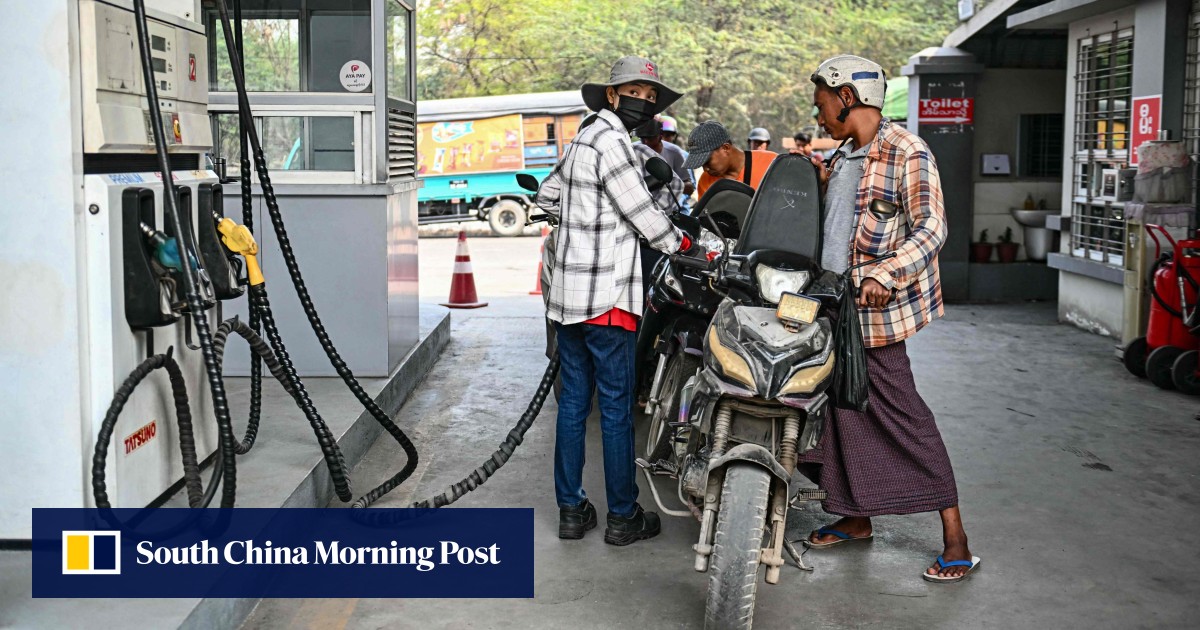
Rising fertiliser costs and fuel rationing have affected farmers’ productivity, but Myanmar has little capital to replenish these stocks
3-MIN READ3-MIN ListenAidan JonesPublished: 5:06pm, 8 Apr 2026Myanmar’s weak economy is being brutally exposed to the fuel crisis, with farmers unable to fill up tractors to work their fields and a fertiliser shortage caused by the throttling of the Strait of Hormuz threatening food security just as the planting season begins.Battered by civil war and runaway inflation, and with a quarter of its population already lacking sufficient food, Myanmar is poorly positioned to absorb the oil shock and its cascading effects on an economy that is among the most fragile in Asia, experts warn.
Although the US and Iran appeared late on Tuesday to have agreed to a two-week ceasefire, which could see Tehran reopen the strait to tankers and container ships, Myanmar is unlikely to see fuel prices drop quickly or secure desperately needed fertiliser imports.
With little foreign exchange, Myanmar is down the pecking order of Asian nations able to replenish energy and fertiliser stocks from the Middle East, the global crucible for production of urea – a key ingredient in fertiliser – as well as oil and gas.
The World Food Programme (WFP) has warned that a 50 per cent reduction of fertiliser use this planting season – which has just begun – could result in a 10 to 15 per cent decline in agricultural production.
Inflation that ran as high as 20 per cent last year has spiked again, heaping pressure on the nation’s poorest.