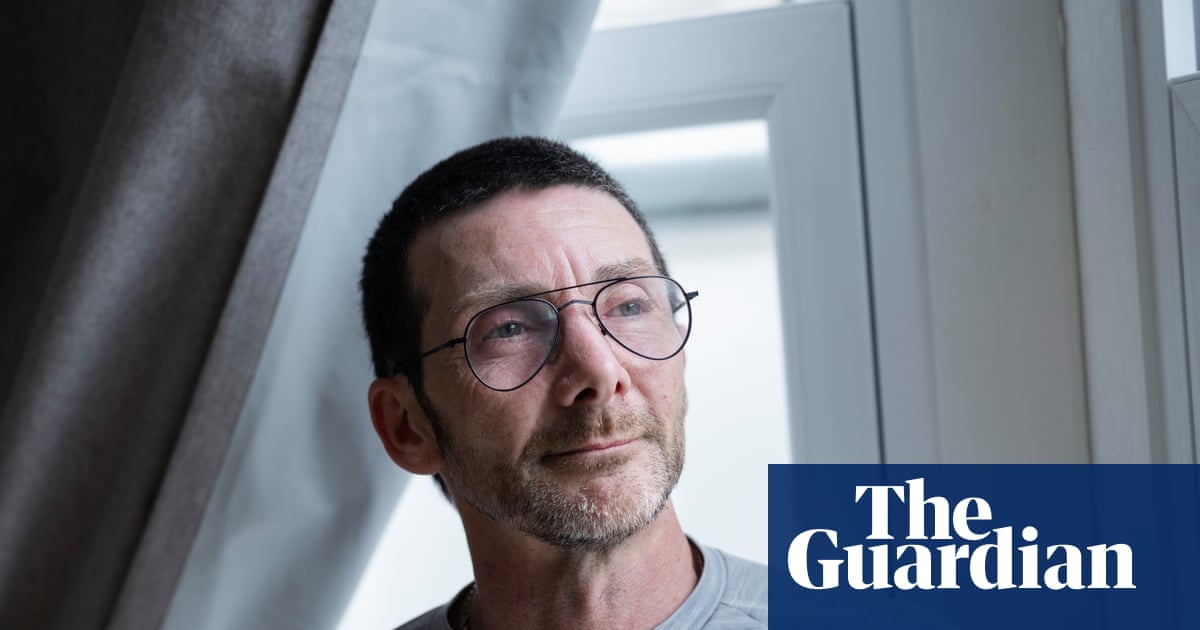
Taking a stand that many agree with, Walker Smith has now lost his job after trying to stop a shoplifter. Photograph: Linda Nylind/The GuardianView image in fullscreenTaking a stand that many agree with, Walker Smith has now lost his job after trying to stop a shoplifter. Photograph: Linda Nylind/The GuardianWednesday briefing: Has the sacking of a shop worker highlighted our unease around how crime is tackled?In today’s newsletter: A Waitrose worker’s dismissal after confronting a shoplifter has become a flashpoint in a wider debate over rising retail crime
Good morning. Overnight, the US and Iran agreed to a two-week conditional ceasefire, which included a temporary reopening of the strait of Hormuz. It followed a last-minute diplomatic intervention led by Pakistan, but the Israeli government have said the deal does not include Lebanon.
You can read our main report here and our live blog will be tracking news throughout the day. My colleague Martin Belam will have more details on what the pause in the fighting means in tomorrow’s First Edition. Today, we are covering the scourge of shoplifting in the UK.
It has become a common sight across Britain: someone helping themselves to items in a supermarket without paying, knowing they are operating in a culture of near impunity.
Many staff and shoppers are sick of standing by. When a Waitrose shop employee of 17 years, Walker Smith, was alerted to a shoplifter filling a bag with Lindt Gold Bunny Easter eggs, he decided to step in – contrary to his employer’s policy. There was a tussle over the bag before the shoplifter ran for the exit, sending the Easter eggs crashing to the floor. Smith paid for his decision with his job, later telling his story exclusively to the Guardian.
His sacking has sparked national outcry. I spoke with reporter Sammy Gecsoyler, who broke the news, to explore why the case has become a rallying point for concerns about shoplifting. But first, the headlines.
Middle East | Donald Trump said he had agreed to a Pakistani-brokered two-week ceasefire, shortly before a deadline at which he had threatened to end the “whole civilisation” of Iran. Iran’s foreign minister, Abbas Araghchi, issued a statement saying: “For a period of two weeks, safe passage through the Strait of Hormuz will be possible via coordinating with Iran’s armed forces.”
UK news | Millions of graduates will have the interest on their student loans capped at 6% from September as a temporary measure to protect them from the risk of rising inflation driven by war in the Middle East.
Entertainment | The Wireless music festival has been cancelled after the artist formerly known as Kanye West was banned from entering the UK amid a deepening political row over his previous antisemitic statements.
Politics | Reform UK would stop issuing visas to people from any country that continues to demand compensation from the UK for its role in the transatlantic trade in enslaved people, the party has said.
World news | Australia’s most decorated soldier, Ben Roberts-Smith, has not applied for bail and will remain in custody after being charged with war crimes. The former SAS soldier and Victoria Cross-recipient is charged with five counts of “war crime – murder” in relation to alleged offences in Afghanistan between April 2009 and October 2012.
View image in fullscreenHigh street stores have reported increasing numbers of shoplifting incidents. Photograph: Andy Rain/EPAShoplifting is near record levels. In England and Wales there were 519,381 offences in the year to September 2025, according to the Office for National Statistics, narrowly below the record levels seen in the 12 months to March 2025, when a total of 530,643 offences were recorded.
Industry figures say the true numbers are much higher, detecting 5.5m incidents last year costing retailers an estimated £400m. They warn that most crimes go unrecorded and retail staff are facing a wave of violence and abuse. Many want to see more done about the problem, says Sammy, which drove Smith’s decision to intervene.
“He was seeing shoplifting repeatedly. When you see people take stuff day in day out, I got the impression from Walker that he had had enough. He wanted to do something. What he did was not that aggressive or confrontational. He took a bag back. There wasn’t a physical altercation, he didn’t tackle the shoplifter to the ground,” says Sammy. “I think he wanted to step in on an issue that’s been long-running in his shop and in many shops across the country.”
After the incident, Smith said that he picked a piece of a broken Lindt bunny and “threw it out of frustration” towards some shopping trolleys, not aiming it at the shoplifter. He later apologised to his manager for the incident, but it did not save his job.
Waitrose has, so far, resisted public pressure to reinstate Smith. It has strict rules about intervening with shoplifters to protect its own staff, and a company spokesperson said that the reporting of the incident does not cover the full facts of the situation.
Staff have been hospitalised when challenging shoplifters, the company added. “As a responsible employer, we never want to be in a position where we are notifying families of a tragedy because someone tried to stop a theft. Nothing we sell is worth risking lives for.”
If retailers did allow staff to intervene, companies would probably open themselves up to a significant litigation risk, especially if incidents became physical. Both shoplifters and staff could, in theory, sue the companies if they were harmed or if there were questions about appropriate force.
The incident has been seized upon by politicians. Nigel Farage said in a post on his X account: “We are now a country that favours criminals over law enforcers”; while the shadow home secretary, Chris Philp, said Waitrose had acted “disgracefully”, urging the supermarket to reinstate Smith. Even Keir Starmer’s cost of living tsar, Richard Walker, chair of Iceland, has got involved, offering Smith a job.
Many in the retail industry are demanding more protection from the government, and say that assaulting a retail worker should become a specific offence. This is now part of the government’s crime and policing bill. In the days before news of the Waitrose incident broke, Marks & Spencer called on the government and London’s mayor to crack down on retail crime, warning it had become “more brazen, more organised and more aggressive.” It came after two days of social media driven disorder in Clapham, south-west London.
“In the past week alone we have had gangs forcing open locked cabinets and stripping shelves, two men brazenly emptying the shelves of steak and walking out, a large group of young people ransacking a store before assaulting a security guard, a colleague headbutted trying to defuse a situation and another hospitalised after having ammonia thrown in their face,” the company’s retail director said in an open letter.
A large portion of the public appear to share the industry’s frustration which has driven the reaction to the story, says Sammy. Much of the reaction has argued that Smith should be celebrated instead of dismissed. The sacking has also left Smith in a complicated personal situation. He had just moved into his own flat for the first time in 25 years and is worried about becoming homeless now he does not have a job. A fundraiser for Smith to help him with his bills surpassed £9,000 on Tuesday.
“I think this story shows that there’s a lot of frustration in the public about shoplifting,” says Sammy. “There are obviously legitimate reasons why retailers might want staff to back off, such as risk of injury. But the massive reaction from the public shows it is at the forefront of people’s minds. Fairly or unfairly, it feeds into this perception that things aren’t working properly in the country.”
There are big questions that remain unanswered about why there has been such a big surge in shoplifting and related violence. Some point to poverty, others to the lack of consequence for theft. But the incidents point to a growing concern in the public that something has fundamentally shifted in the social contract in Britain. The past felt simpler: stealing was wrong and would be punished when caught. Now, on an industrial scale, that is no longer happening.
View image in fullscreen Composite: Guardian Design; Posed by models;LordHenriVoton/Getty Images All I know is that I am much better at pool after two pints, and much worse at pool after four pints. But why does alcohol make us both happy and miserable? Martin
Andy Welch has an excellent investigative feature on the surge in tool theft in Britain and how it is impacting tradespeople. Patrick
Matt Mills interviews various heavy metal bands to find out why so many in the genre have decided in recent years to adopt wearing masks on stage. Martin
Zoe Williams is funny on her dislike for space travel amid all of the excitement around the Artemis II mission. Patrick
Labour MP for Milton Keynes North, Chris Curtis, has written a piece arguing in favour of building tram networks in order to unlock economic productivity across British cities. Martin
View image in fullscreenKai Havertz slots home the late winner for Arsenal in Portugal Photograph: Pedro Nunes/ReutersFootball | Kai Havertz scored in the 91st minute to give Arsenal a 1-0 victory at Sporting in the first leg of their Champions League quarter-final.
Rugby union | Former England captain Courtney Lawes is returning to the Prem to join Sale at the end of the season, making him eligible again for international duty.
Football | Bay FC forward Keira Barry has received her first senior England call-up, being added to Sarina Wiegman’s squad for World Cup qualifiers against Spain and Iceland.
View image in fullscreenThe Guardian print team rushed Iran developments into the late edition: “Trump pulls back from brink as he agrees two-week pause in war”. Following are the lead stories in other papers’ editions that we were able to get our hands on at time of writing.
The Telegraph has “Trump: Iran’s whole civilisation will die”. The Daily Mail settles for “Night the world held its breath and prayed” finding itself in company with the Mirror: “World holds its breath”. Like the Mirror, the Metro ties together a picture of Earth from the Artemis mission rounding the moon with the Middle East crisis: “Humanity’s historic new view … of a world in deep trouble”. “UK makes plea for peace after Trump threat to wipe out ‘whole civilisation’” – that’s the i paper. The Times’ headline feels bizarre: “US: We won’t use nuclear bombs”. The Financial Times has this angle all to itself: “Hedge funds ramp up wagers against European stocks as war casts shadow”. While the Express has its mind on something else entirely: “‘UK a laughing stock’ for not stopping the boats”.
View image in fullscreen Photograph: KCNA/EPANorth Korea’s ‘most beloved daughter’
Journalist Jean H Lee on Kim Ju-ae, daughter of Kim Jong-un, and the future of North Korea
View image in fullscreen Illustration: Martin Rowson/The GuardianThe UpsideA bit of good news to remind you that the world’s not all bad
View image in fullscreenNo scrolling here … a selection of Riso Club postcards. Photograph: Courtesy of RISOTTO StudioA humble Japanese office machine from the 1980s is quietly uniting a global creative community. The risograph – which prints with soy inks and a handmade feel – has inspired designers like Gabriella Marcella, who says “the process, the immediacy … resonated” with her. Her Riso Club connects artists from cities including Kyiv and Damascus, sharing work as tactile postcards because they have “a weight, texture and intimacy that digital communication doesn’t”. In a world of endless scrolling, it is a reminder that print can still be “generous, accessible and social” – and that creativity that travels slowly can still be beautiful and surprising.
Sign up here for a weekly roundup of The Upside, sent to you every Sunday
And finally, the Guardian’s puzzles are here to keep you entertained throughout the day. Until tomorrow.