Los Angeles is caught up in Olympic fever, with the first tickets going on sale to winners of a special lottery earlier this month.
But once the Olympics are over, and the fever breaks, LA could be in a deep financial hole.
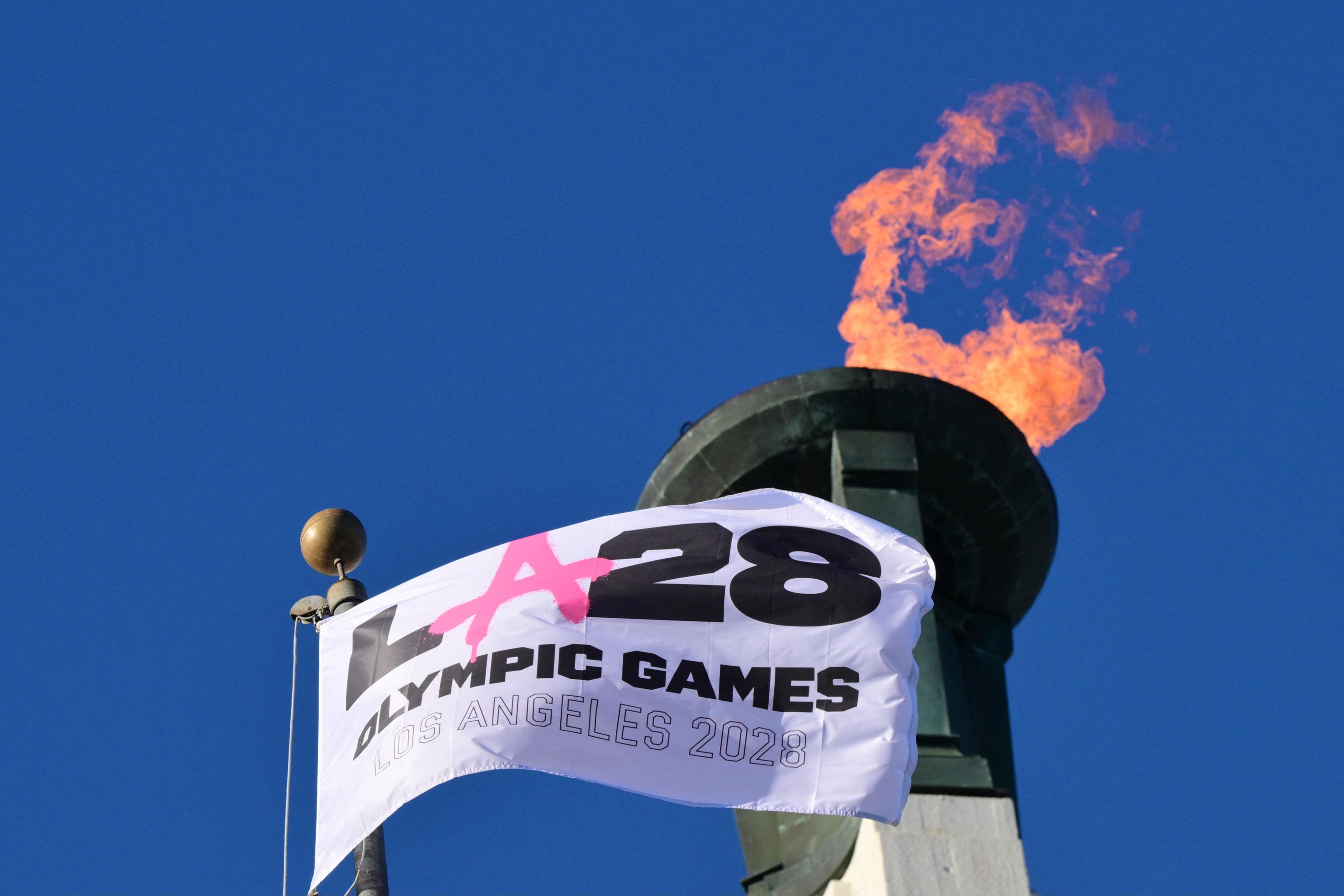
The LA28 Olympic cauldron is lit during a ceremonial lighting at the Memorial Coliseum in Los Angeles on January 13, 2026. AFP via Getty Images The city of Los Angeles is the financial guarantor in the event of cost overruns. If expenses exceed revenue, the city is responsible for the first $270 million, the state for the next $270 million — and, if costs grow even higher, the city owes the balance.
The 1984 Olympics were run very differently. I should know — I was there.
I was a top aide to two LA City Council members, Zev Yaroslavsky and Bob Ronka. And I was Ronka’s chief of staff when he and I drafted the LA City Charter amendment, which guaranteed the city would avoid financial liability for the ’84 Olympics.
The process began with a Ronka-Yaroslavsky council motion, and voters adopted the amendment by a 74% to 26% margin.
Performers spell out Welcome on the stadium infield as balloons are released above them during the opening ceremony for the XXIII Olympic Games on July 28, 1984 at the Los Angeles Memorial Coliseum. Getty Images There is no such safeguard for the 2028 Games.
The 2028 LA Organizing Committee is a private entity that operates the Games. To date, the LA ’28 Committee and its chairman, Casey Wasserman, have skillfully handled this inherently complex task.
The budget for the ’28 Games is $7.15 billion. The Games can flourish without a deficit, but with billions at stake, and no legal restraint, there are major risks for city and state taxpayers.
The 2024 Paris Olympics’ expenses exceeded their budget by 115%; the 2016 Rio Games by 350%, and London’s 2012 Games by 76%.
When concerns over costs arose before the 1976 Games in Montreal, the city’s mayor, Jean Drapeau, dismissed them: “The Olympics can no more have a deficit than a man can have a baby.”
A Montreal Miracle Birth occurred. The city of Montreal incurred a $1 billion deficit from the Games. The debt took 30 years to pay off.
LA has no legal authority over the private LA ’28 Committee.
This duty-without-power originated from a 2015 agreement between the local private committee and the United States Olympic Committee.
California Post News: Facebook, Instagram, TikTok, X, YouTube, WhatsApp, LinkedInCalifornia Post Sports Facebook, Instagram, TikTok, YouTube, XCalifornia Post Opinion California Post Newsletters: Sign up here!California Post App: Download here!Home delivery: Sign up here!Page Six Hollywood: Sign up here!
That agreement required the books and records to be disclosed publicly and subject to audit during the bid phase, but not throughout the entire Games.
In 2015, then-Mayor Eric Garcetti and the council signed off on this dubious arrangement. One former council member wrote to his colleagues that the city had not assumed financial liability in 1984 and asked, “Why would it assume that responsibility now?”
The city has a controller, a chief administrative officer (i.e., a budget office), a city attorney, and a council Budget and Finance Committee with a skilled chairperson, all of whom can dig into the financial picture — but not unless the private committee allows it.
For the ’84 Games, the city had no need to scrutinize the financial records, since it was protected by the charter amendment that prohibited deficits.
It’s not time to panic, yet: The ’28 Committee is on track to avoid a financial calamity. But pitfalls loom, and anything can go wrong.
The 1972 Munich Games saw Israeli athletes murdered; the Atlanta 1996 Games had a pipe bomb attack; and London suffered a terrorist attack after it was awarded the 2012 Olympics.
Trump’s “One, Big, Beautiful” bill provided $1 billion for security at the Olympics, but costs can easily spike.
LA allocated $35 million to security for the ’84 Games, while London spent $1.6 billion for the 2012 Games.
Yes, the ’84 Games generated a $230 million surplus. The spirit of Los Angeles was revitalized.
And yes, it can be done again, under strong leadership.
But taxpayers need better protection. Now, before it is too late.
Wayne Avrashow is an attorney and former Los Angeles resident who now resides in Rancho Mirage, Calif.