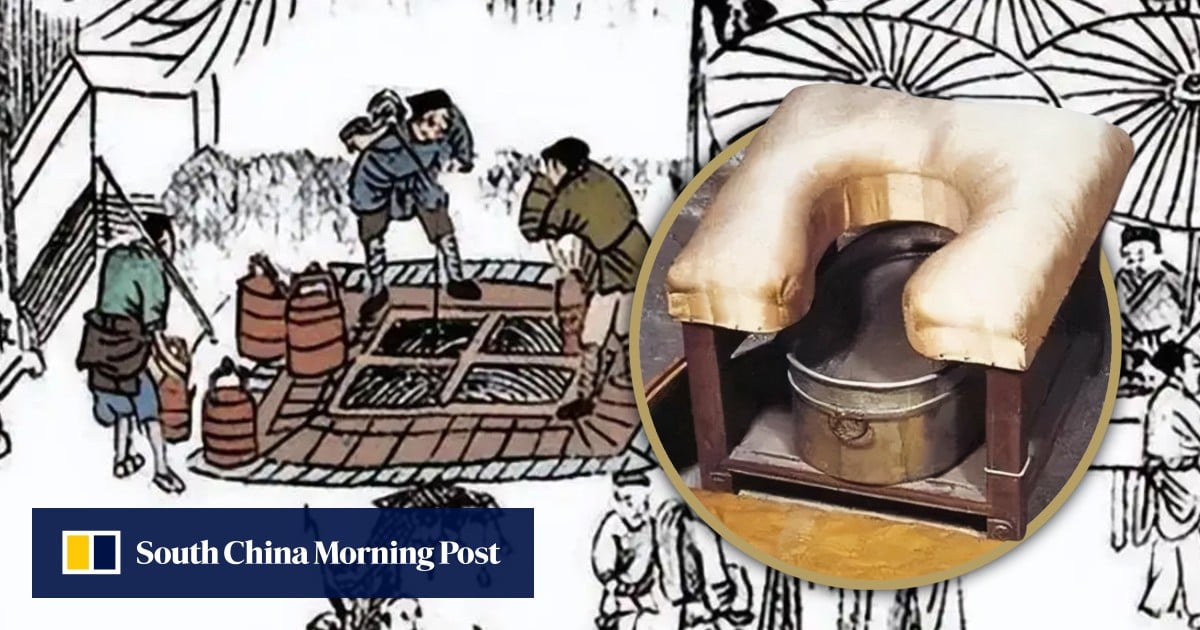
During the Qing dynasty (1644–1912), public toilets charged usage fees, and some even featured novels and advertisements to attract patrons
In the imperial court, however, even the most private act became a carefully staged display of status and ritual.
Papermaking, one of China’s Four Great Inventions, had emerged by the Han dynasty (206 BC–220), yet paper remained too precious for daily use.
Instead of toilet paper, commoners relied on leaves, pebbles, or tiles for personal cleaning, while the elite used silk or cloth. They also employed slender wooden or bamboo strips called ce chou, some of which were lavishly crafted from gold or jade and were washed and dried after each use.
However, their hardness made careless handling painful, even dangerous, and limited their effectiveness in cleaning.
According to the Book of Southern Tang, Emperor Li Yu personally prepared ce chou for monks, testing its smoothness against his own cheek.