play Live Sign upShow navigation menuplay Live Click here to searchsearchSign upNews|US-Israel war on IranIranians brace for possible devastation as Trump’s deadline loomsAnxiety grips Iran with looming threats of US-led strikes targeting civilian sites, in violation of international law.
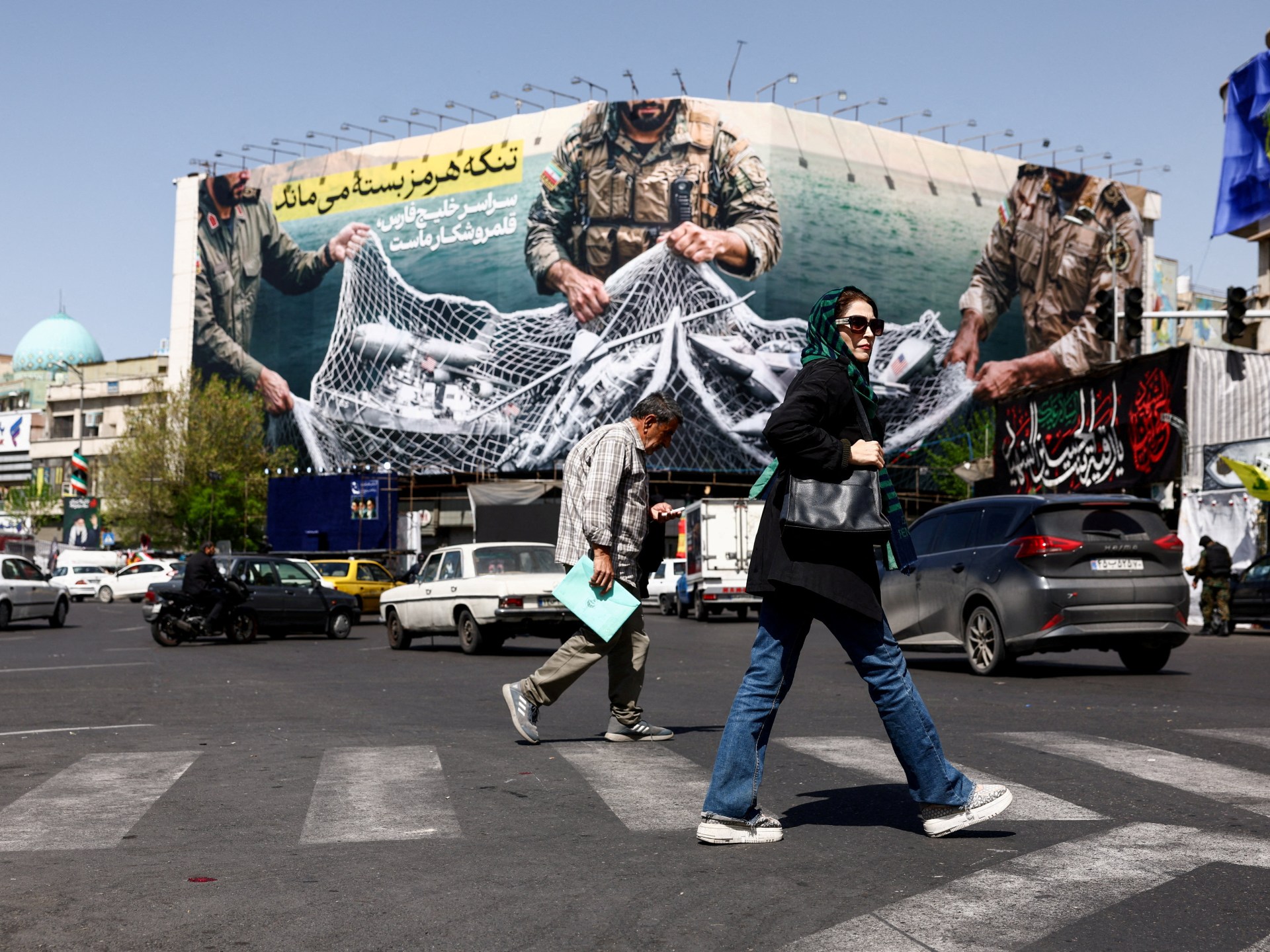
twitterwhatsappcopylinkgoogleAdd Al Jazeera on GoogleinfoPeople walk on a street near an anti-US billboard, amid the US-Israel war on Iran, in Tehran, Iran, April 5, 2026 [Majid Asgaripour/WANA (West Asia News Agency) via Reuters]By Maziar MotamediPublished On 7 Apr 20267 Apr 2026Tehran, Iran – United States President Donald Trump says daily life could be different on Wednesday for more than 90 million Iranians, after his deadline for Iran to back down and agree to a deal expires. Trump says that Iran’s electricity, bridges, and other critical infrastructure will be bombed, despite the deliberate targeting of civilian infrastructure being a violation of international law.
As the last few hours before the 8pm US Eastern Time (23:00 GMT) deadline approach, Iranians are left to worry about the consequences of an attack Trump has threatened could lead to the death of “a whole civilisation”.
“We all know he’s crazy enough to do it, he doesn’t care as long as he believes it serves his interest,” said a resident of Tehran, about Trump, who has been making apocalyptic threats as the war – which began with US-Israeli strikes on Iran at the end of February – expands.
“I’ve been smoking more and haven’t been sleeping well over the past few nights,” he told Al Jazeera, asking to remain anonymous due to security concerns. He added he has been preparing for potential blackouts over the coming days through what limited action that can be taken with hours left on the deadline.
That includes charging up phones, laptops and power banks, using household appliances like washing machines, and buying essentials like bread and flour in preparation for a few potentially difficult days.
Water pumps would also stop if power goes out, so some Iranians have been filling up water drums and buying bottled water, which has increased considerably in price since the start of the war as the country battles chronic inflation that predated the conflict.
Long-lasting power cuts will also lead to suffering for the sick and disabled, including people who need refrigeration for vital medicines, or those who need electricity to charge vital medical equipment.
Over the past weeks, prices have also shot up for all electrical devices, particularly electricity generators, ranging from smaller and more silent ones that can power a few gadgets and appliances to larger and noisier fuel-hungry alternatives that may be able to sustain a small home for short periods of time.
A resident of a city in the northern province of Gilan told Al Jazeera that he bought an electricity generator with a 25-litre (6.6-gallon) capacity in order to power up a water pump and a few other essentials for a hotel-apartment run by his family.
“It works to alleviate some concern but I had to spend virtually everything we earned over the Nowruz holidays on it,” he said, adding that the devices have become hard to find as goods can no longer be imported from foreign countries due to the war.
Milad Alavi, a journalist based in Karaj, said the past few days have already been difficult. The major city, which lies close to Tehran, was the location of a major US-Israeli strike on the B1 bridge on April 2, which killed at least 13 people and wounded more than 90 others.
“People are buying bread, flour, canned food, and water storage containers. The candle market has also heated up, and prices have tripled. No one knows what fate awaits us. We just hope that tomorrow, we’ll still be alive,” he wrote on social media.
There were long queues at petrol stations in Tehran and other cities on Tuesday night, even as Israel bombed bridges and railway networks, days after it put critical steel plants and petrochemical companies out of commission.
Some Iranians have moved to other cities to be with family or stay at second homes. A woman who spoke with Al Jazeera said her cousin and his family were forced to move away from the city of Mahshahr in western Iran to one of Iran’s northern provinces on Sunday after the Israeli military extensively bombed the major petrochemical hub.
Iranians hope that more critical civilian infrastructure does not come under attack. There is some optimism that Iran’s relatively decentralised power distribution system will be able to mitigate some of the potential damages of an attack, and prevent widespread or extended blackouts.
Iran’s Ministry of Energy said in a statement on Tuesday night that it was “fully prepared for the worst scenarios” and asked people to remain calm and ignore rumours of long blackouts.
The Fars news agency, affiliated with the Islamic Revolutionary Guard Corps (IRGC), said many personnel in power plants have expressed readiness to stay beyond their shifts on Tuesday night and over the coming days in order to respond to any emergencies. A number of people who have retired electrical workers have also volunteered to return to work if necessary, it said.
Tehran’s emergency service released a list of alternative phone numbers for people to call if the city’s main emergency centre is unresponsive. It said services and consultations were available at all hours of the day.
State media also released footage of Iranians demonstrating in front of power plants and on major bridges across the country in order to protest the existential threats levied against them. Two vocalists released separate videos, one on a train track and another on a bridge in Tehran, to sing national songs.
Another musician, Ali Ghamsari, said he would keep demonstrating in front of the Damavand power plant feeding the capital.
On the streets of Tehran, state-backed motorcades continued to roam, playing revolutionary songs from loudspeakers mounted on the back of pickup trucks. Armed checkpoints continue to control main highways, streets and squares.
The IRGC said it would expand its targets beyond the region and also attack critical infrastructure in neighbouring countries in order to retaliate against the threatened US and Israeli attacks.
Some politicians took aim at Trump for claiming Iran’s “whole civilisation will die tonight” if it does not reopen the Strait of Hormuz.
“Iranian civilisation – grounded in knowledge, art, and literature, and above all in faith, wisdom, and self-sacrifice – has prevailed over all those who have opposed civilisation and sought to destroy the homeland,” wrote former moderate President Hassan Rouhani in a statement.