Jeremy Bowman, The Motley Fool Thu, October 15, 2026 at 10:50 PM EDT 5 min read TSM -1.80% NVDA -1.84% SMH -1.04% Explore stocks on Coinbase Trading disclosure Trading disclosure The above button links to Coinbase. Yahoo Finance is not a broker-dealer or investment adviser and does not offer securities or cryptocurrencies for sale or facilitate trading. Coinbase pays us for certain activity generated through this link. Prices displayed are informational.
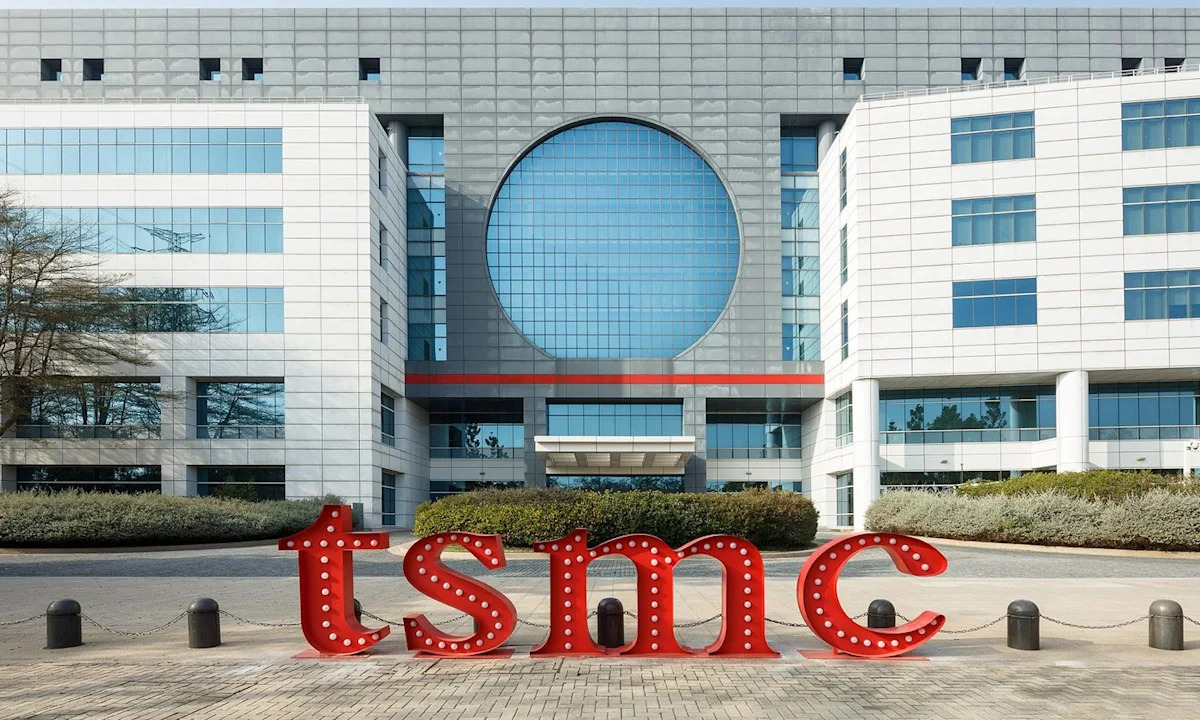
Taiwan Semiconductor Manufacturing Corporation (NYSE:TSM) is one of the biggest companies in the world today and a linchpin in the global economy.
It's also a bellwether for the semiconductor sector, as the world's biggest chip manufacturer with a differentiated model as a pure-play contract manufacturer.
Missed Nvidia in 2009? This Rare Signal Is Flashing Again. In 2009, a "Double Down" signal flashed for a little-known chipmaker called Nvidia. For the first time in years, that same "Total Conviction" signal is flashing for a company 1/100th the size of Nvidia. Continue »
On Thursday, TSMC reported third-quarter earnings during a testy moment for the AI trade. AI stocks have tumbled this week amid concerns about rising interest rates, circular financing deals, and competition from China, among other concerns.
The VanEck Semiconductor ETF was down 8.2% through the week as of Thursday afternoon, and neocloud stocks, arguably the riskiest group in the AI sector, have gotten hit especially hard. CoreWeave was down 17.6% at the same time on concerns about rising bond yields, and peers like Nebius, IREN, and Oracle had fallen for similar reasons.
TSMC stepped up and delivered strong third-quarter earnings on Thursday morning, but it wasn't enough to stanch the bleeding in the AI sector.
Taiwan Semiconductor delivered a round of strong results with revenue up 50.9% to $46.7 billion, well ahead of the consensus at $45.7 billion. Margins also expanded significantly, showing the company flexing its pricing power.
Gross margin rose from 59.5% to 66.4%, and operating margin increased from 50.6% to 58.7%. On the bottom line, adjusted earnings per share jumped from $2.92 to $4.60, topping estimates at $4.46.
For the first time, 3nm chips made up its biggest source of revenue, driving 33% of sales, and advanced technologies, which the company considers to be 7nm chips and below, accounted for 79% of its revenue. High-performance computing (HPC), which is mostly AI, continues to gain share, making 68% of its revenue.
Management noted that demand for AI accelerators was driving HPC revenue. CEO C.C. Wei said that the agentic AI market was beginning to drive AI-related demand, and sounded overwhelmingly positive on it, noting, "The AI market continues to be very strong. Recent developments are very positive to AI's long-term demand outlook. We observe increasing AI demand fueled by the rising adoption of agentic AI as we transition from chatbot to AI assistance."
TSMC was trading down 2.2% as of Thursday afternoon, and was down more than 5% at one point.
Following the sell-off earlier in the week, investors seem to be adopting a skeptical position toward AI stocks, and even a strong earnings report from a bellwether like TSMC isn't enough to overcome that.
What also seemed to weigh on the stock was C.C. Wei's warning that "consumer and price-sensitive end market segments are being challenged due to the impact of rising component prices and macroeconomic uncertainties."
Wei seems to be referring to the surge in memory prices, as well as weakness in smartphone and PC demand, which seem to be related to higher costs, persistent inflation, and discretionary spending weakness. However, the AI market is insulated from those headwinds, and Wei called demand for AI chips "extremely robust."
The sell-off in TSMC stock also seems to reflect some investor fatigue with the AI trade as investors rotate into market laggards and other sectors, but TSMC stands out from other AI stocks.
While AI demand is clearly supporting its growth, the company's wide economic moat as the dominant third-party manufacturer supports its long-term growth and pricing power, and chip demand is likely to continue to grow as new products like robotics come on the market.
Currently, the stock trades at a price-to-earnings ratio of just 32, which is only modestly more expensive than the S&P 500, and its strong growth rate seems likely to persist at least through the rest of the decade, given the plans of customers like Nvidia, AMD, and Broadcom.
The stock's sell-off today might be discouraging, but it shouldn't dissuade long-term investors from owning the stock. TSMC remains a buy and is a must-own stock for AI investors.
Before you buy stock in Taiwan Semiconductor Manufacturing, consider this:
The Motley Fool Stock Advisor analyst team just identified what they believe are the 10 best stocks for investors to buy now… and Taiwan Semiconductor Manufacturing wasn't one of them. The 10 stocks that made the cut could produce monster returns in the coming years.
Consider when Netflix made this list on December 17, 2004... if you invested $1,000 at the time of our recommendation, you'd have $380,579!* Or when Nvidia made this list on April 15, 2005... if you invested $1,000 at the time of our recommendation, you'd have $1,359,789!*
Now, it's worth noting Stock Advisor's total average return is 931% — a market-crushing outperformance compared to 212% for the S&P 500. Don't miss the latest top 10 list, available with Stock Advisor, and join an investing community built by individual investors for individual investors.
*Stock Advisor returns as of October 15, 2026.
Jeremy Bowman has positions in Advanced Micro Devices, Broadcom, CoreWeave, Nvidia, Taiwan Semiconductor Manufacturing, and VanEck ETF Trust - VanEck Semiconductor ETF. The Motley Fool has positions in and recommends Advanced Micro Devices, Broadcom, Nvidia, Oracle, and Taiwan Semiconductor Manufacturing. The Motley Fool has a disclosure policy.
TSMC Just Posted Record Profit for the Sixth Straight Quarter. Why Did the Stock Fall? was originally published by The Motley Fool