ShareSaveAdd as preferred on GoogleMatt Murphy,Thomas Spencer,BBC VerifyandGhoncheh Habibiazad,BBC Persian BBCPresident Donald Trump has pledged to target infrastructure across Iran unless the country reaches an "acceptable" deal to end the war with the US and Israel by Tuesday night.
Promising to bomb the country "back to the Stone Ages", Trump said US forces would target bridges and power plants across Iran. He also posted to social media on Tuesday that a "whole civilization will die tonight" if an agreement is not struck.
There has been a spate of attacks on infrastructure critical to ordinary Iranians since the conflict began, with schools and hospitals damaged.
BBC Verify has confirmed that US and Israeli strikes have targeted at least two steel plants, three bridges and a pharmaceutical plant over the past two weeks.
Some senior Democrats in the US Congress and UN officials have warned that strikes like these could amount to war crimes. But in a news conference on Monday Trump dismissed those concerns.
On Thursday, US aircraft attacked a bridge which had been under construction in the central city of Karaj. Local officials said the attack killed at least 13 people.
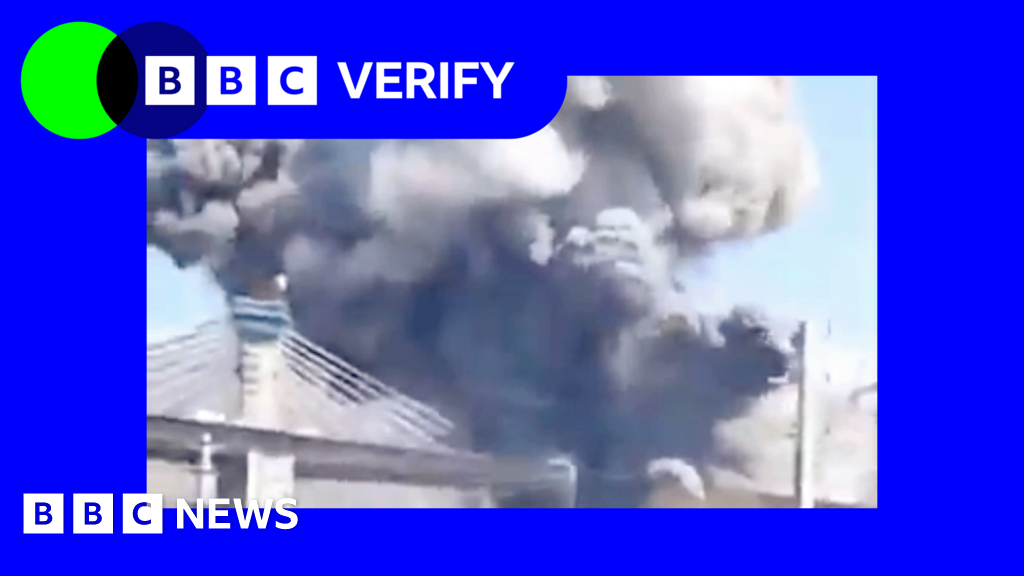
Footage confirmed by BBC Verify showed at least two strikes on the bridge. A large gap in the bridge can be seen in the aftermath of the attack, with construction cranes visible either side of it.
Trump later shared footage on the strike online, writing that the "biggest bridge in Iran comes tumbling down, never to be used again," adding: "Much more to follow."
Footage shows attack on B1 bridge in Karaj, IranA number of steel facilities have also been targeted. On 27 March, verified footage showed smoke billowing from the Isfahan Mobarakeh Steel company, forcing workers to suspend operations. The plant - which is Iran's largest steel manufacturer - exported around $860m (£649m) between March 2025 and January 2026, according to company linked-reporting.
Satellite images also showed damage at the Khuzestan Steel Company - the country's second largest manufacturer. Local officials said that it could take up to a year to repair the damage caused to the plant by the attacks.
Israeli Prime Minister Benjamin Netanyahu has claimed that the strikes have disrupted up to 70% of Iran's steel manufacturing capability. Arman Mahmoudian, research fellow at the University of South Florida's Global and National Security Institute, said the damage could seriously impact the Iranian economy.
"Steel is a cornerstone of Iran's non-oil economic capacity," he said. "If Israeli strikes have indeed dismantled around 70% of Iran's steel production capacity, this would place nearly 20 million tons of output at risk, potentially affecting around 3–3.5% of Iran's GDP."
Mahmoudian also noted that attacks on Iran's pharmaceutical industry could pose major issues for the healthcare system. On 31 March, an Israel Defense Forces (IDF) spokesperson said it had carried out a strike on the Tofigh Daru Research & Engineering Company - one of Iran's largest pharmaceutical companies which produces anaesthetic and cancer drugs.
The IDF said in a statement that it had carried out the strike and alleged that the company had transferred "chemical substances, including fentanyl, that were used for research and development of chemical weapons". The BBC cannot independently verify that claim.
While pharmaceutical goods represent only a small part of Iran's economy, Mahmoudian noted that strikes against the sector could impact access to medicine at a time of need and undermine Tehran's "medical independence". Iranian media has previously claimed that over 90% of pharmaceuticals are produced domestically, but BBC Verify cannot confirm that.
Educational facilities have been heavily damaged in recent strikes, verified footage and photos suggest. On Saturday, images showed debris around the exterior of Shahid Beheshti University in Tehran and parts of the building were destroyed after a reported attack.
Images also showed damage at the Sharif University of Technology in Tehran on Monday after strikes on the capital.
Religious buildings have also been hit. In the central city of Zanjan an attack levelled parts of the Husseinya Mosque, photos showed. Local officials said two people were killed in the strike, which destroyed a clinic and a library within the complex.
The IDF also said on Tuesday that it had bombed 10 "key" parts of the Iranian railway. Verified footage from Aminabad village in central Iran showed a collapsed railway bridge said to be caused by the attacks.
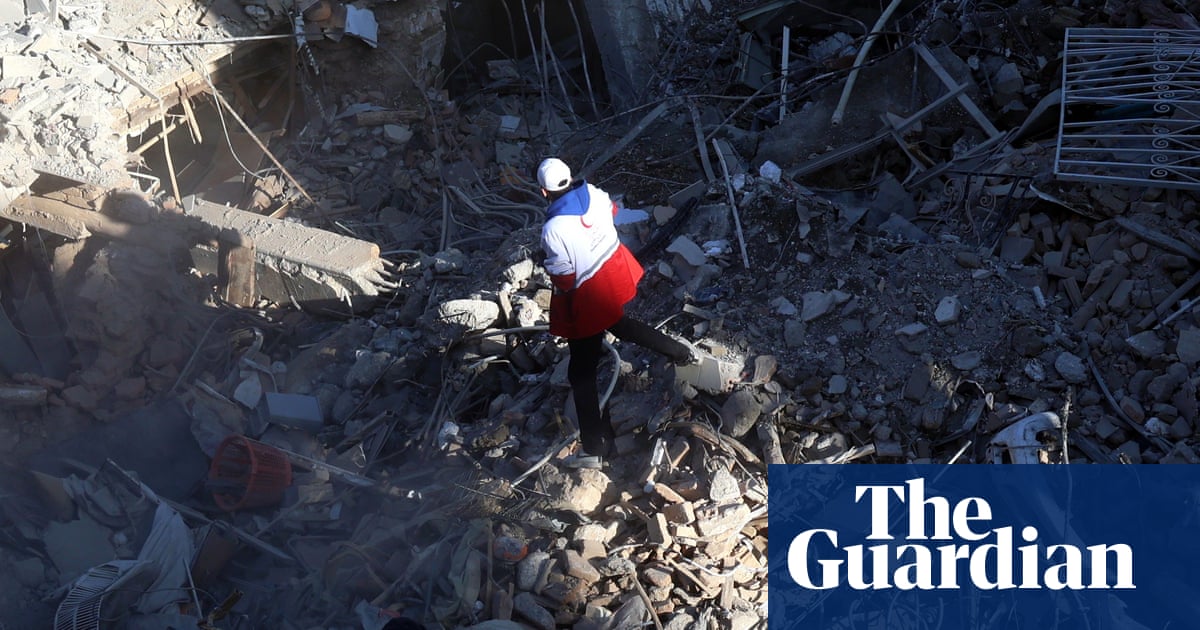
Another video posted by the Iranian Red Crescent and which we verified showed paramedics carrying an injured man away from a railway line near Karaj. It's unclear what caused his injuries.
One railway worker in Tehran who spoke to the BBC expressed frustration at the attacks on the lines. "I'm really angry," the worker said. "Everything is falling apart."
The strikes came after IDF warned Iranians early on Tuesday against travelling. Writing in Farsi in a post to social media, it warned civilians that their "presence on trains and near railway lines endangers your life".
The recent strikes are just the latest in a wave of attacks which have damaged civilian infrastructure.
Last month BBC Verify revealed that a UNESCO world heritage site, schools and a hospital were among the sites damaged in bombing runs.
Legal experts and some senior US and UN officials have questioned whether the US-Israel attacks could amount to war crimes.
Under international law, strikes on civilian sites are permitted in certain limited circumstances where they are being used for a definite military advantage, Professor Rachel VanLandingham, a former US military lawyer, told BBC Verify. But she emphasised that any actions taken cannot cause "excessive" harm to civilians.
Acled - an independent organisation which monitors the impact of conflicts - said on Thursday that data indicated that "civilian harm has largely remained clustered around US-Israeli strikes on military, security, and state-linked sites, rather than indiscriminate bombardment across urban neighbourhoods".
It said its analysis suggested that 40 dual use sites - facilities which produce both civilian and military products - have been hit since US-Israeli strikes began on 28 February.
But UN spokesperson Stephane Dujarric said on Monday attacks would be prohibited where they caused "excessive incidental civilian harm". The UN's human rights chief Volker Turk said on Tuesday that "deliberately attacking civilians and civilian infrastructure is a war crime" and that those responsible would be held responsible.
Sir Geoffrey Nice - a former prosecutor at the Hague - told the BBC's World at One programme that attacks on infrastructure like power plants and water facilities would likely be disproportionate under international law.
"The civilian population in any war is entitled to be properly protected and if you interfere with the basic means of life… you are at grave risk of causing completely disproportionate damage, ultimately including by starvation and disease," he said.
In a news conference on Monday, Trump dismissed concerns about the attacks, saying he was "not worried about it" when asked whether his threats to strike energy facilities could amount to war crimes.
"You know the war crime? The war crime is allowing Iran to have a nuclear weapon," he added.
Additional reporting Emma Pengelly, Peter Mwai, Luke Unger.
What claims do you want BBC Verify to investigate?