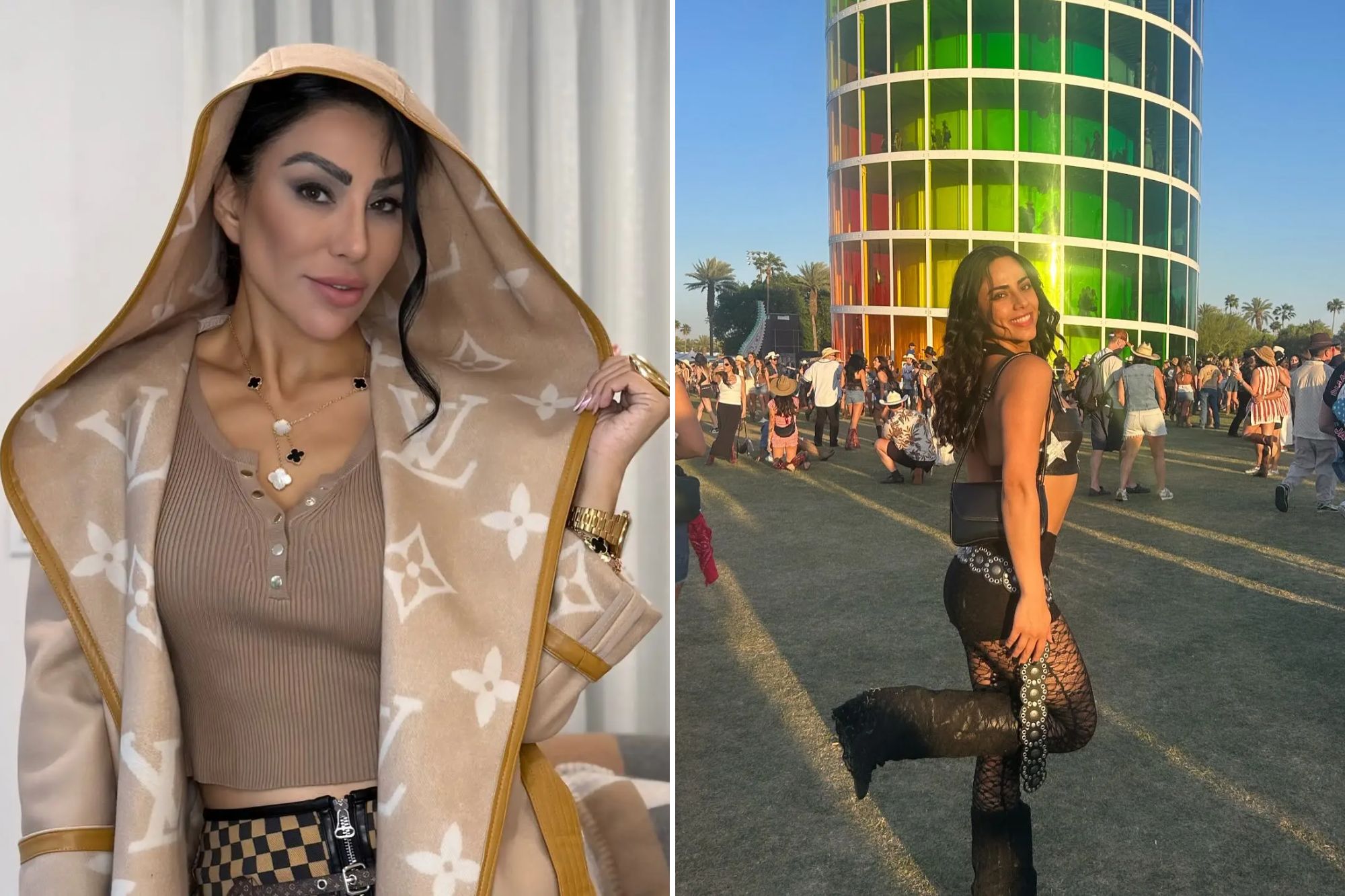
Hamideh Soleimani Afshar (left) and her daughter Sarina Sadat Hosseiny, were arrested by US immigration officials in Los Angeles. hamideafshar/Instagram; Sarinasadat Hosseiny/ Instagram “The only thing worse than a liar is a liar who is also a hypocrite,” wrote American playwright Tennessee Williams.
I thought of Williams’ scathing quote when news broke this weekend that two Iranian women, 47-year-old Hamideh Soleimani Afshar and her daughter Sarina Sadat Hosseiny, 25, had been arrested by US immigration officials in Los Angeles.
The niece and grand-niece of the notorious Major Qassem Soleimani, slain head of the Quds Force, had been living luxe lives in Los Angeles.
While the Islamic Republic is killing its women for the “sin” of showing a strand of hair, Afshar and Hosseiny have used their social-media accounts, stocked with lavishly staged photos of themselves in barely-there outfits, to heap praise on Supreme Leader Mojtaba Khamenei and the regime’s terror activities.
“The Trump administration will not allow our country to become a home for foreign nationals who support anti-American terrorist regimes,” Secretary of State Marco Rubio said as he revoked their permanent-resident status.
But it’s not the first time the Islamic regime — which demands piety and strict observance of antiquated Islamic values from Iranians — has been caught allowing the children of its elite unfettered display of skin and “sin.”
And Iranians who have been paying the price of this duplicity for almost five decades are at the breaking point.
Just this past October, the regime had to manage another uproar when videos surfaced of a bride in plunging gown and flowing hair being escorted by her father through throngs of unveiled guests in a luxury hotel in Tehran.
The bride was the daughter of Ali Shamkhani, senior advisor to the Supreme Leader Ayatollah Khamenei — a man who had a key role in crushing the Woman, Life, Freedom movement and who amassed a fortune smuggling sanctioned goods into Iran.
Iranians have sought revenge by providing expatriate activists like Masih Alinejad with information on regime supporters who live and work in the United States but pledge allegiance to the Islamic regime.
“The time is now. I want America to continue exposing their hypocrisy,” said Alinejad, who told me she had forwarded those tips to senior members of President Joe Biden’s administration, to no avail.
“They can’t blind the women of Iran for showing a strand of hair, but turn a blind eye to the suggestive and ‘sinful’ excesses of their relatives in this country,” she exulted.
Shiva Amini, a former soccer player who left Iran’s women’s team in 2017 to seek political asylum in the United States, agrees.
“Iranian women are considered a mortal threat to the regime,” Amini said last month at the United Nations.
“After winning a tough match against Japan, our jubilant team was escorted to meet with a senior cleric who chastised us for running — that our moves on the soccer field can arouse men and we should stop. That is when I decided that I can no longer live in Iran.”
The revolution that toppled the Shah of Iran and welcomed Ayatollah Khomeini has been in many ways a call to arms against the women of Iran.
One of Khomeini’s first decrees, a mere four weeks after his return to Iran from exile in 1979, mandated the Islamic hijab for all women in public spaces.
When hundreds of thousands of women took to the streets to protest that and other edicts, Khomeini called them “naked prostitutes” and threatened their arrest for spreading “corruption on Earth.”
The veil thus became a signifier of the regime’s absolute power over Iranian women, relegating them to the fringes of a society that they had helped advance.
“There are three ideological pillars left of the Islamic Republic,” writes Karim Sadjadpour, senior fellow at the Carnegie Endowment for International Peace: “Death to America, death to Israel, and the hijab . . . [It] has become the Islamic Republic’s national flag.”
The sad irony of the arrest of Afshar and Hosseiny is not that they posted pictures of themselves living the good life in America sans that flag.
It’s that they took advantage of America’s abundant freedoms to boost a regime that seeks to destroy them.
Iranians are still reeling from the massacres in January, when up to 40,000 protesters were detained or killed by the regime security personnel.
If innocence is measured in the number of visible hair strands or the display of skin, the most flagrant violators are those who continue to support the Islamic Republic while sidestepping its brutal strictures.
Nazee Moinian is an adjunct fellow at the Middle East Institute.