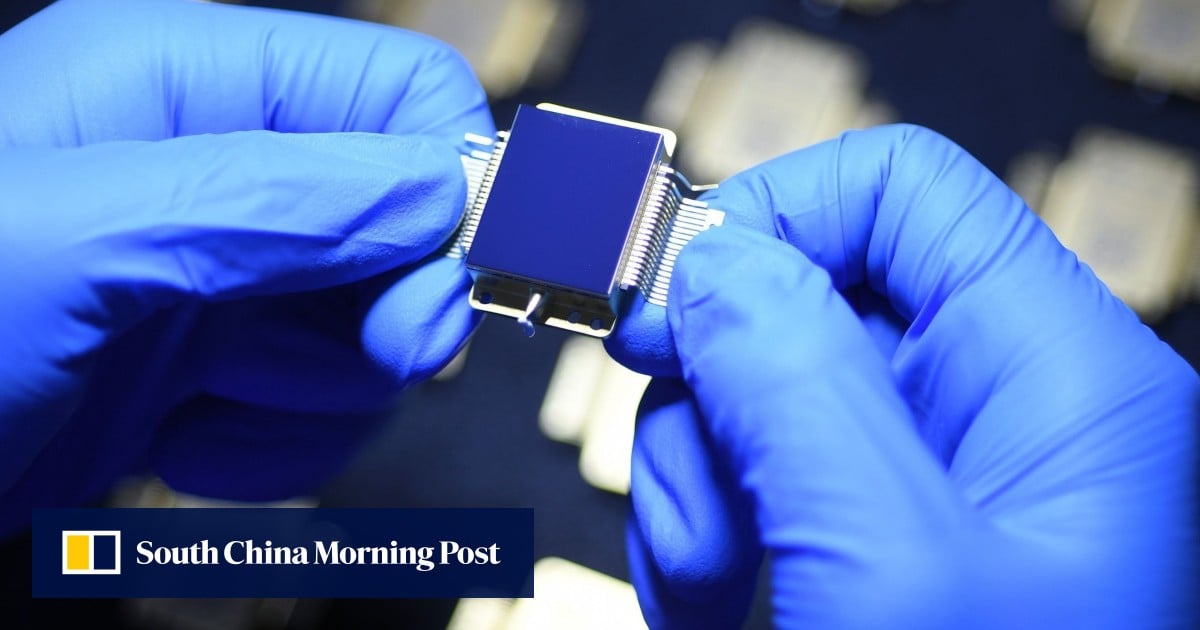
Researchers have developed a new way to make high-end infrared chips that could slash their cost and boost smartphone cameras, self-driving cars
2-MIN READ2-MIN ListenZhang Tongin BeijingPublished: 10:05am, 7 Apr 2026Updated: 10:09am, 7 Apr 2026A research team at a Chinese university has developed a new way to make high-end infrared chips that could slash their cost dramatically and improve the performance of smartphone cameras and self-driving cars.
The key breakthrough was finding a way to make the chips using conventional manufacturing techniques, rather than the exotic, costly materials that were relied on before.
Mass production is set to begin by the end of the year, according to a press release from Xidian University.
The chips detect short-wave infrared (SWIR), which is invisible to the human eye and can penetrate fog, haze and smoke. Cameras capable of detecting SWIR can take pictures in total darkness and even see through some materials.
This can allow self-driving cars to see through dense fog, let factory scanners spot faulty products through their packaging and stop humanoid robots from bumping into things in the dark.
But this technology carries a prohibitive price tag, which has limited its use to military applications and high-end scientific research – satellite reconnaissance, drone surveillance and missile guidance.
A single chip can cost anywhere from several hundred to several thousand US dollars.