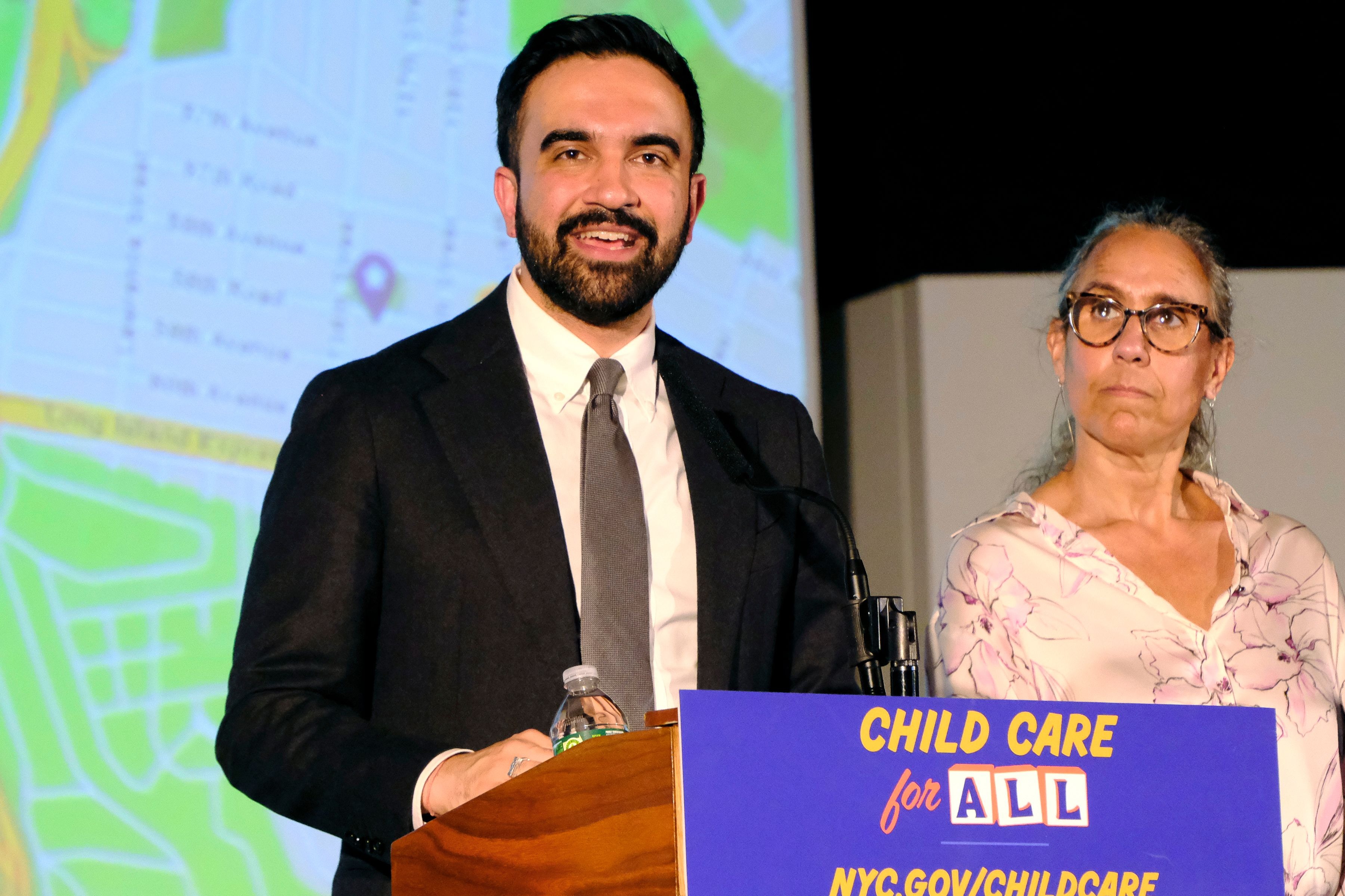
Mamdani's budget sets aside $38 billion for DOE's operations -- $3 billion, or 8%, more than the current fiscal year. Katie Godowski/MediaPunch/Shutterstock As Mayor Zohran Mamdani seeks to fill his $5.4 billion to $7.1 billion budget hole, he has so far shown little willingness to cut Department of Education spending.
But he’ll never balance the books if he keeps throwing good money after bad in the city’s public schools.
Mamdani’s budget sets aside $38 billion for DOE’s operations — $3 billion, or 8%, more than the current fiscal year.
Education already accounts for about a third of the city’s budget, and the Citizens Budget Commission estimates that per-pupil spending now exceeds $42,000, the most expensive among large urban districts.
Yet while enrollment has fallen 12% since 2020 — even with the addition of some 50,000 migrant students — and city births have dropped 20% since 2000, the DOE’s budget keeps on growing.
Families across the income spectrum, from working-class households to the wealthy, want out of a poorly performing system.
Only 28% of NYC’s fourth graders are proficient in reading and 33% in math, according to the latest national assessment scores.
New Yorkers simply don’t get good education value for their tax dollars, mostly because the public schools too often put the interests of teachers first, families second.
Look no further than the city’s plan to spend $1.6 billion next year to hire more teachers under Albany’s mandate for smaller class sizes — a jobs program for the United Federation of Teachers.
At the same time, a growing number of city public schools enroll fewer than 150 students: 112 such schools are expected this year, up from 80 in 2024-25.
These schools are not financially viable, but under DOE’s nonsensical “hold harmless” policy, every school in the system receives at least as much funding as it did the year before, regardless of enrollment — costing at least $250 million per year.
Mayor Eric Adams tried to cut funding for schools whose enrollment had declined, but parents and teachers immediately protested and even sued; he gave up.
To close the budget gap, Mamdani should start reforming DOE.
The first and easiest step would be to take up state Sen. John Liu’s offer to pause the remaining implementation of the class-size mandate.
About 64% of classes are already compliant; most schools that are not on board lack the space to implement the law.
City Council Speaker Julie Menin’s budget plan rightly demands that Albany cover the costs of the mandate state lawmakers chose to pass.
Mamdani should next revamp procedures related to “Carter cases,” city reimbursements covering private-school tuition for students with disabilities.
Spending on Carter cases zoomed from $47 million in 2005 to $1.3 billion in 2025, to $1.55 billion in Mamdani’s budget, Manhattan Institute fellow Jennifer Weber recently found.
Families that sue to receive these reimbursements — at an average of $101,757 each — are disproportionately well-off, able to afford attorneys and to front six-figure tuition outlays before they’re reimbursed.
Currently, under a policy of Mayor Bill de Blasio, these families sue once and then get automatic annual renewals.
If they had to reapply and make a case for reimbursement each year, the city would likely save.
Third, the mayor should adopt Menin’s sensible call to audit and competitively rebid the DOE’s contracts with outside vendors, which she expects could save $175 million over two years.
That’s basic good government, and in NYC it doesn’t happen nearly often enough.
Finally, DOE should consolidate schools and districts that are too small to be financially sustainable.
Fixed overhead costs can’t scale down with enrollment, so these schools spend thousands more per pupil than better-enrolled counterparts.
Yet the School Construction Authority is still building new schools, while simultaneously squandering $1.4 billion through 2029 to electrify school buildings under Local Law 97, the city’s decarbonization law.
In a time of belt-tightening, school spending that does nothing to address student outcomes is irresponsible.
City schools’ organization plan, too, is out of whack.
Mayor Mike Bloomberg divided the schools into 10 geographic regions to streamline leadership and administration, but de Blasio reverted to a system of 32 separate school districts, a structure that remains.
District sizes vary wildly, from fewer than 4,000 students in Brooklyn’s District 16 to over 38,000 in Staten Island’s District 31.
Larger, more evenly sized districts would allow for layoffs of redundant non-teaching roles — including unnecessary administrative positions.
Even as enrollment has fallen, these positions have grown from 12,717 in fiscal 2022 to 13,636 today.
With per-pupil spending rivaling tuition costs at elite private schools, New York’s public-school system should be strong enough to make Americans want to move here.
Instead, it’s a money pit that chases families away.
No affordability agenda can succeed when a city’s school system delivers so little for so much.
Danyela Souza Egorov and John Ketcham are fellows at the Manhattan Institute.