The swearing-in of Markwayne Mullin as the Secretary of Homeland Security marks a fresh start for a critically important department that impacts the daily lives of the American public in ways often unseen.
While much of the immediate political oxygen will be consumed by border enforcement and immigration policy, the Secretary has a generational opportunity to redefine the mission of the Department of Homeland Security (DHS) for a new era to also include economic security.
To truly secure the American way of life, Secretary Mullin must look beyond the physical perimeter and focus on the department’s most potent, yet often overlooked, lever of national power: its role in governing the global flow of trade.
For too long, the American public — and often DHS itself — has viewed the border as a static line. But through the lens of a modern, interconnected world, the border is less a physical wall and more a high-frequency filter. It is the point of entry for the $3 trillion in goods that fuel our economy, but it is also the primary friction point where the “unseen” threats of the 21st century — forced labor, fentanyl precursors, security breaches in the supply chain and adversarial economic coercion — breach our defenses.
We are currently transitioning from “Globalization 1.0” — a model built on the fragile altars of lowest cost and highest speed — to “Globalization 2.0,” a paradigm where trust, resilience and transparency are the primary currencies. In this new era, economic security is no longer a byproduct of national security; it is national security.
Secretary Mullin understands this more than most. As a former business owner who has managed balance sheets and supply chains, he knows that commerce is the lifeblood of American strength.
He knows that when a shipment is delayed at a port of entry due to Byzantine compliance processes or antiquated screening, it isn’t just a bureaucratic hiccup; it’s a tax on American competitiveness. Conversely, he understands that a “blind” border is a vulnerable one.
The traditional “whack-a-mole” approach to enforcement — inspecting a crate here or a vessel there — is no longer sufficient. Our adversaries, nation-state and other, have become adept at hiding their activities within the massive, multi-tiered complexity of global value chains.
A shipment of solar panels might appear legitimate on its face, but the silicon may have been sourced through forced labor three tiers deep in a prohibited region. A chemical shipment might look like industrial detergent, but it’s actually a precursor chemical for illicit fentanyl destined for a cartel lab.
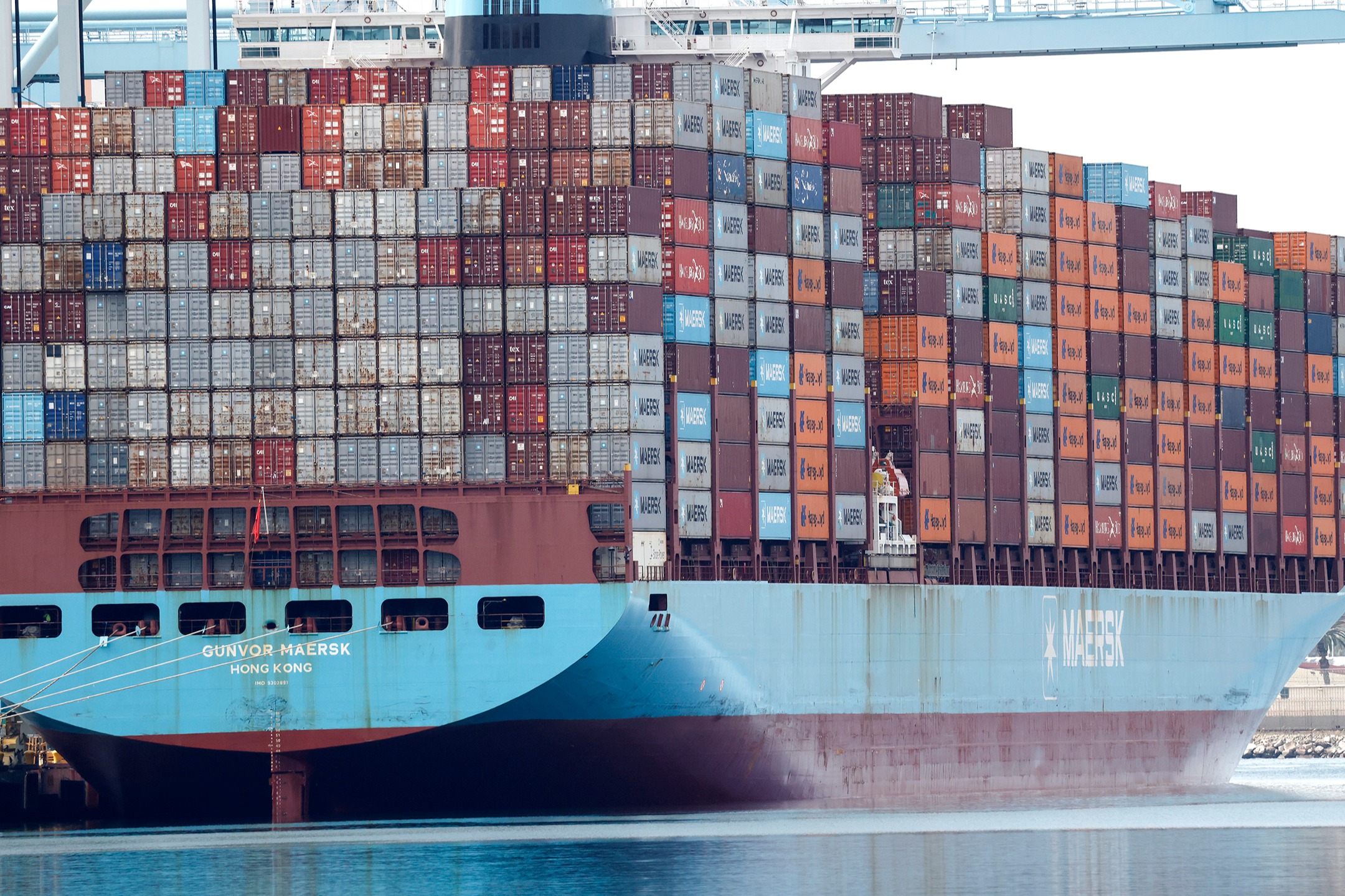
To counter this, Secretary Mullin must champion the modernization of the Customs and Border Protection (CBP) trade functions. This means moving toward a “system of record” for global trade — a shared, AI-powered understanding of the world’s supply chains that allows DHS to see not just the ship at the dock, but the entire genealogy of the product it carries.
By leveraging advanced analytics and a network-based view of global commerce, DHS can move from a posture of reactive “interdiction” to one of proactive “validation,” continuously monitoring the global supply chains of the goods that move into and out of US borders.
Focusing on the trade mission does not mean softening the border; it means making it smarter.
When we can distinguish “trusted trade” from “high-risk trade” with surgical precision, we achieve two critical goals simultaneously. First, we accelerate the flow of legitimate commerce, providing a massive tailwind to the American economy. Second, we can focus our enforcement resources on the fraction of networks that actually pose a threat, whether that be illicit narcotics or evasion of tariffs.
This approach also offers a path through the partisan gridlock that has recently paralyzed the department. While immigration remains a flashpoint of ideological conflict, the mandate to protect American workers from unfair competition and to secure our critical supply chains from foreign interference is a rare point of bipartisan consensus.
By leaning into the trade and economic security mission, Secretary Mullin can build a “coalition of the willing” in Congress that prioritizes the funding and modernization the department desperately needs. Trade in the 21st century is an interconnected network of value chains, and DHS is the primary guardian of the US node in that network.
If we treat the department merely as a police force, we miss the larger strategic picture. If we treat it as a sophisticated manager of global flows, we can secure our prosperity and our safety in tandem.
As Secretary Mullin takes the helm, the temptation will be to stay focused on the “front page” issues of the day. But the lasting legacy of his tenure will be determined by whether he can transform DHS into a 21st-century agency that views every shipping container as a data point, every product as a global value chain network and every trade route as a security corridor.
In the arena of global trade, that strategy starts with moving customs away from processing shipments to managing global supply networks. The US can no longer afford to compete with one hand tied behind its back.
Evan Smith is the CEO and Co-Founder of Altana.