Video Polling shows most Americans oppose military action in Iran Rep. Nancy Mace, R-S.C., discusses the search for the missing U.S. F-15E airman in Iran, Trump's stance on negotiations and more on 'Fox News Live.'
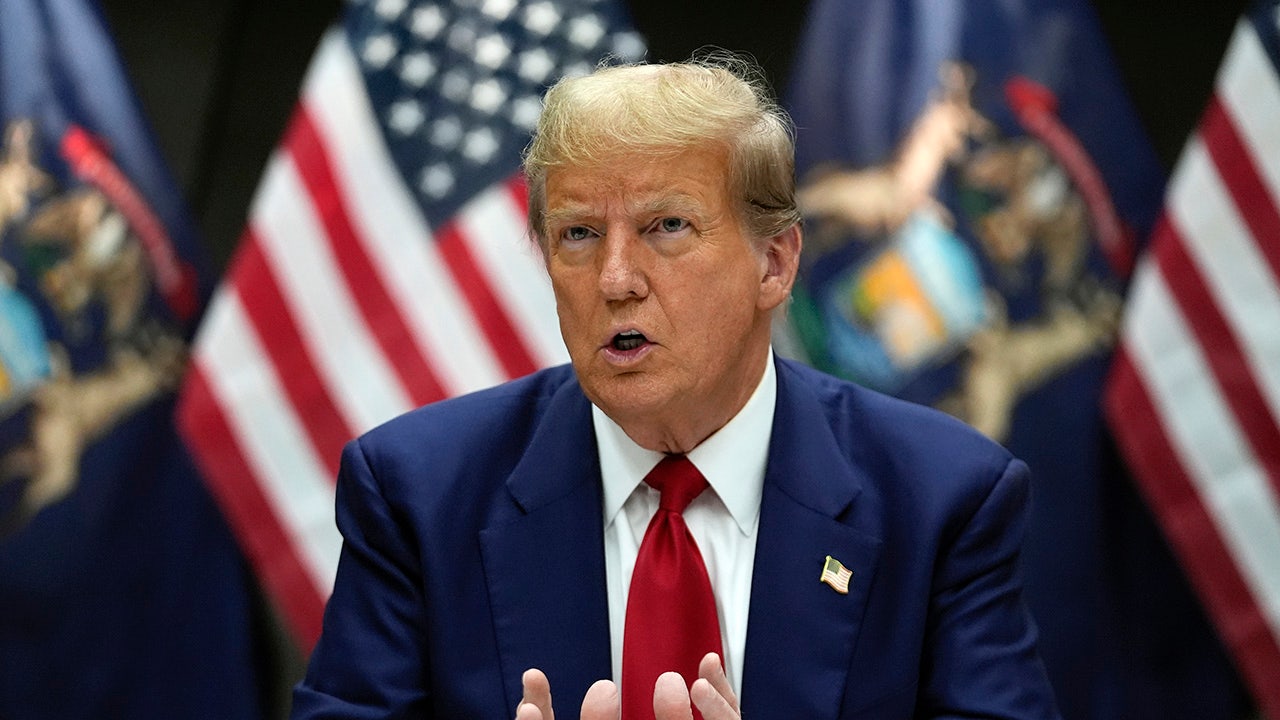
America’s war with the mullahs of Tehran is into its second month and it has already changed Donald Trump’s presidency in important ways. As the president considers how to navigate these new dynamics, it’s worth considering the experience of some previous presidents who entered office not expecting to be wartime presidents.
Woodrow Wilson ended a four-cycle Republican winning streak by winning the three-way election of 1912. He did so because his two opponents, former president Teddy Roosevelt and incumbent president William Howard Taft, split the Republican vote. As president, Wilson embarked on an aggressive progressive domestic policy agenda. Things changed when World War One broke out in Europe midway through Wilson’s first term. Wilson then ran for reelection in 1916 promising to keep America out of the conflict, even using the slogan "He kept us out of war." He did not keep that promise, though, as America entered the war in 1917, during the first year of his second term.
Woodrow Wilson's portrait during his campaign for New Jersey Governor in 1910. (Circa Images/GHI/Universal History Archive/Universal Images Group via Getty Images)
Franklin Roosevelt was elected in 1932 to rescue the economy from the Great Depression. In his third term, he gained a new mission: fighting the Axis Powers and presiding over the largest military mobilization in American history. Roosevelt addressed this shift at a 1943 press conference where he explained the transition from "Dr. New Deal" to "Dr. Win-the-War." FDR’s quip highlighted the way his administration had to reorder itself to face the new challenge.
Lyndon Johnson came to office unexpectedly after the tragic assassination of John F. Kennedy. He took over in peacetime and began pursuing his dream of a Great Society — a sweeping domestic agenda to rival Roosevelt's New Deal.
WHY TRUMP, IRAN SEEM LIGHT-YEARS APART ON ANY POSSIBLE DEAL TO END THE WAR
As he managed to pass his ambitious — and costly — domestic agenda, he soon found himself and his administration consumed by the conflict in Vietnam. The experience was so draining that by 1968, Johnson, who had spent his whole life pursuing the presidency, shocked the world by refusing to seek re-election.
In 2000, George W. Bush explicitly campaigned on pursuing a humble foreign policy, rejecting the nation-building missions of the Bill Clinton era. His ambition was to be the "Education President." Then, 19 militant jihadis from Al Qaeda struck America on September 11. In response, Bush ordered the invasions of terror-supporting countries Afghanistan and then Iraq. As someone who served in that administration, the shift I saw was palpable. Bush had entered office with one kind of vision for his presidency, but history had a different idea entirely.
U.S. President George W. Bush (R) speaks about the recent flooding in the mid-west that has displaced thousands, during a briefing about the floods as Vice President Dick Cheney (L) listens June 17, 2008 in Washington DC (Mark Wilson/Getty Images))
War reshapes more than just the man sitting behind the Resolute Desk. It changes the teams around the president. We saw this with the resignation of Trump’s counterterrorism director, Joe Kent. As the Kent episode showed, advisors who were in alignment before the shooting starts are not necessarily in alignment once fighting begins.
DESTROY THE REGIME’S POWER WITHOUT OCCUPYING IRAN: A SMARTER WAR PLAN
This sort of thing has also happened in previous presidencies. In the early years of Wilson’s administration, Wilson was reliant on the advice of Texan political operative Colonel Edward House, who was so close to the president that he even lived in the White House. Things changed during the war, however, as internal critics in the State Department and the White House pushed back against House’s broad mandate managing the war. Wilson and House also clashed over the Versailles Treaty, which led to a permanent end to their once close relationship.
As for Johnson, he was famously intolerant of internal dissent, and he drove away or silenced advisors who questioned his Vietnam strategy. Johnson pushed aside his defense secretary Robert McNamara — initially the face of the Vietnam War—after Johnson noticed and didn’t appreciate McNamara’s increasing skepticism of Johnson’s Vietnam policy. Johnson wanted — and got — an echo chamber, to his administration and to our nation’s detriment.
Daylight Saving Time first went into effect under the Johnson administration, following the passage of the Uniform Time Act of 1966. (Bettmann/Contributor via Getty Images)
In the Bush administration, the Iraq war set off a bureaucratic civil war inside Bush’s national security team. This internal struggle led to the Valerie Plame affair, which brought about the indictment of Vice President Cheney’s top aide Scooter Libby after the exposure of the name of a covert CIA operative. Libby, however, had not leaked her name; his bureaucratic nemesis Dick Armitage was the leaker, and Armitage shamefully stayed silent about his role during the investigation. The episode showed the degree to which the higher stakes brought about by war can roil an administration, not to mention innocent lives.
WHY TRUMP FACES AN AGONIZING DECISION ON OBLITERATING IRAN’S OIL SUPPLY IF HE CAN’T GET A DEAL
War also takes a personal toll on presidents. Sometimes it leads to behavioral changes. In 2003, Bush gave up playing golf, one of his few outlets for escaping the pressures of the presidency. He said years later that he was unwilling to be seen on the links while American soldiers were dying in Iraq. As he explained in 2008, "I don’t want some mom whose son may have recently died to see the commander-in-chief playing golf." It was a quietly devastating admission about the weight a wartime president carries every day.
In other cases, the toll of being president in wartime has been even heavier. Wilson suffered a stroke while in Europe and was incapacitated for much of the rest of the administration; his team kept the American people in the dark as his wife Edith secretly managed things in the White House. Roosevelt died during his fourth term at 63. Those who saw him in his final days found him to be pale and depleted beyond his years. A visibly thinned Johnson, who left office at 60, died less than four years after exiting the White House.
While these examples may seem harrowing, there is one also instructive counterexample.
CLICK HERE TO DOWNLOAD THE FOX NEWS APP
George H.W. Bush entered the Gulf War with a limited objective, built a broad international coalition for expelling Saddam Hussein from Kuwait, achieved that objective, and got out. Bush’s national security team was extraordinarily disciplined and cohesive. The war did not appear to fundamentally damage Bush’s presidency or his person. Yet even Bush could not escape the political gravity of wartime leadership — he was perceived as so focused on foreign affairs that he lost touch with a domestic economy in recession, leading to what many believed was highly improbable when Bush had a 91% approval rating on the way: His defeat at the hands of Bill Clinton in 1992.
The lesson here is not that presidents should shrink from the use of force. President Trump has shown courage in taking on one of the most murderous and predatory regimes in the past half century. The decision to go to war is the most difficult decision a president must make. It costs lives and changes the world in unpredictable ways. And even before the end is reached, it changes the president, his staff, and his agenda, testing his character and taxing his body and soul in ways that cannot be fully anticipated.
CLICK HERE TO READ MORE FROM TEVI TROY
Tevi Troy is a senior fellow at the Ronald Reagan Institute and a former senior White House aide. He is the author of five books on the presidency, including "The Power and the Money: The Epic Clashes Between Commanders in Chief and Titans of Industry."