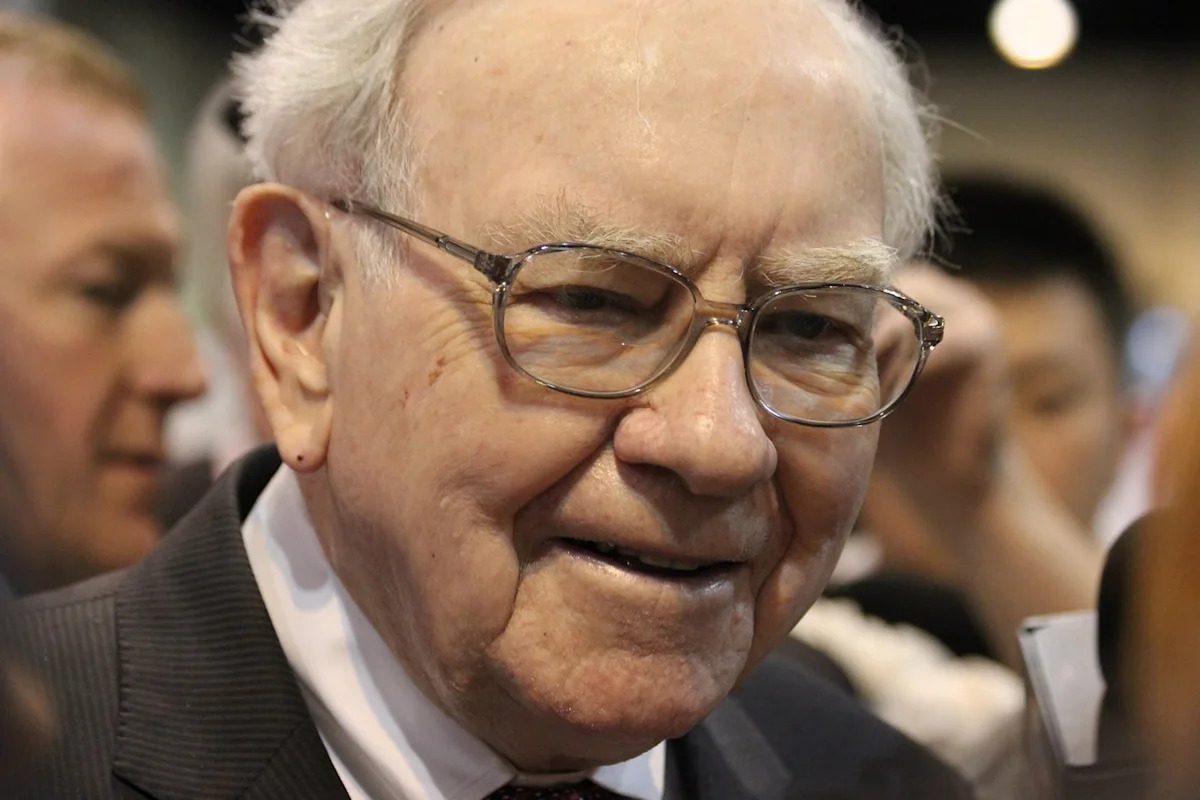
Last month, investing legend Warren Buffett stepped down from his position as CEO of Berkshire Hathaway. This legendary holding company has significantly outperformed the S&P 500 (SNPINDEX: ^GSPC) in the roughly six decades that he has been in charge, delivering an average annual return of over 19% compared to the market's average of 10%.
But while Buffett is no longer in charge of Berkshire (shifting to a more advisory role as chairman emeritus), investors still look to his wisdom when deciding how to navigate difficult situations. Let's discuss some reasons why the current stock market boom may be on shaky footing and see what lessons Buffett can give to help investors stay ahead.
Missed AI's "Act 1"? Act 2 Could Be 14x Bigger. Most investors think they missed the AI boat because they didn't buy Nvidia in 2005. But according to our analysts, we're only at the end of "Act 1"—the R&D phase. "Act 2" is the global rollout. Continue »
After a brief dip during the COVID-19 pandemic, stocks have been on a tear, with the S&P 500 delivering an average annual return of 23% between 2022 and 2025. This is mainly due to optimism about a new technology called generative artificial intelligence (AI), which has led to a scramble for expensive data center equipment, resulting in booming growth for the tech giants that design and manufacture it.
The recent performance of AI infrastructure stocks has been nothing short of breathtaking, with top performers like Sandisk up over 1,000% in the last 12 months because of soaring demand for their products. AI-focused data center providers like the recently IPO'd Space Exploration Technologies (aka SpaceX) have also captivated Wall Street's attention.
That said, with a price-to-sales (P/S) multiple of 68 (compared to the S&P 500's average of 3.85), SpaceX shares are extremely expensive, and this might be a sign that excitement is overshadowing reality. The situation seems similar to the dot-com bubble in the late 1990s, when the emergence of the internet led to a similar boom in tech valuations.
Right now, the cyclically adjusted price-to-earnings (P/E) multiple of the S&P 500 stands at 41.8. This number is well above its average of 17.4. And the only time it has been higher is in late 1999, when it peaked at 44 shortly before the dot-com bubble turned into a market crash.
In a May interview with CNBC, Buffett criticized the current mood in the stock market, stating, "It's tough to find values when everybody is preferring gambling." Famously cautious, Buffett tends to prefer buying stable and low-priced businesses with easy-to-understand business models. A speculative industry like generative AI isn't his usual cup of tea.
That said, Buffett has limited exposure to the megatrend through diversified, consumer-focused tech giants like Alphabet, Apple, and Amazon rather than pure-play chipmakers. Buffett has also indirectly bet on the "boring" side of the opportunity through investments in utility providers such as MidAmerican Energy and NV Energy, which operate massive power grids across the Midwest and Nevada. These companies help serve the massive energy demands of AI data centers built in these areas.
Some might credit Buffett's AI strategy to luck instead of skill (many of these investments were made long before the release of ChatGPT). But either way, these picks show how investors can gain exposure to a growth opportunity while minimizing downside risk.
The most interesting thing about Buffett's investing strategy might not be the stocks he buys. Instead, it is what he is not buying. Under his leadership, Berkshire Hathaway has stuck with its stable, profitable technology leaders rather than chasing the biggest returns in less diversified AI stocks that have the furthest to fall if things go south.
Berkshire Hathaway is also sitting on a $365.5 billion cash pile, which will allow it to pursue deals in the event of a market downturn. It might pay to follow Buffett's lead.
Before you buy stock in S&P 500 Index, consider this:
The Motley Fool Stock Advisor analyst team just identified what they believe are the 10 best stocks for investors to buy now… and S&P 500 Index wasn't one of them. The 10 stocks that made the cut could produce monster returns in the coming years.
Consider when Netflix made this list on December 17, 2004... if you invested $1,000 at the time of our recommendation, you'd have $379,986!* Or when Nvidia made this list on April 15, 2005... if you invested $1,000 at the time of our recommendation, you'd have $1,404,152!*
Now, it's worth noting Stock Advisor's total average return is 948% — a market-crushing outperformance compared to 215% for the S&P 500. Don't miss the latest top 10 list, available with Stock Advisor, and join an investing community built by individual investors for individual investors.
*Stock Advisor returns as of October 14, 2026.
Will Ebiefung has no position in any of the stocks mentioned. The Motley Fool has positions in and recommends Alphabet, Amazon, Apple, and Berkshire Hathaway. The Motley Fool has a disclosure policy.
If a Stock Market Crash Is Coming, Here's What Warren Buffett Would Do to Stay Ahead was originally published by The Motley Fool