Every time a new city council or group of politicians rallies behind a massive minimum wage hike, you can practically script the rollout in advance.
“It’s about helping workers in a tough economy.”
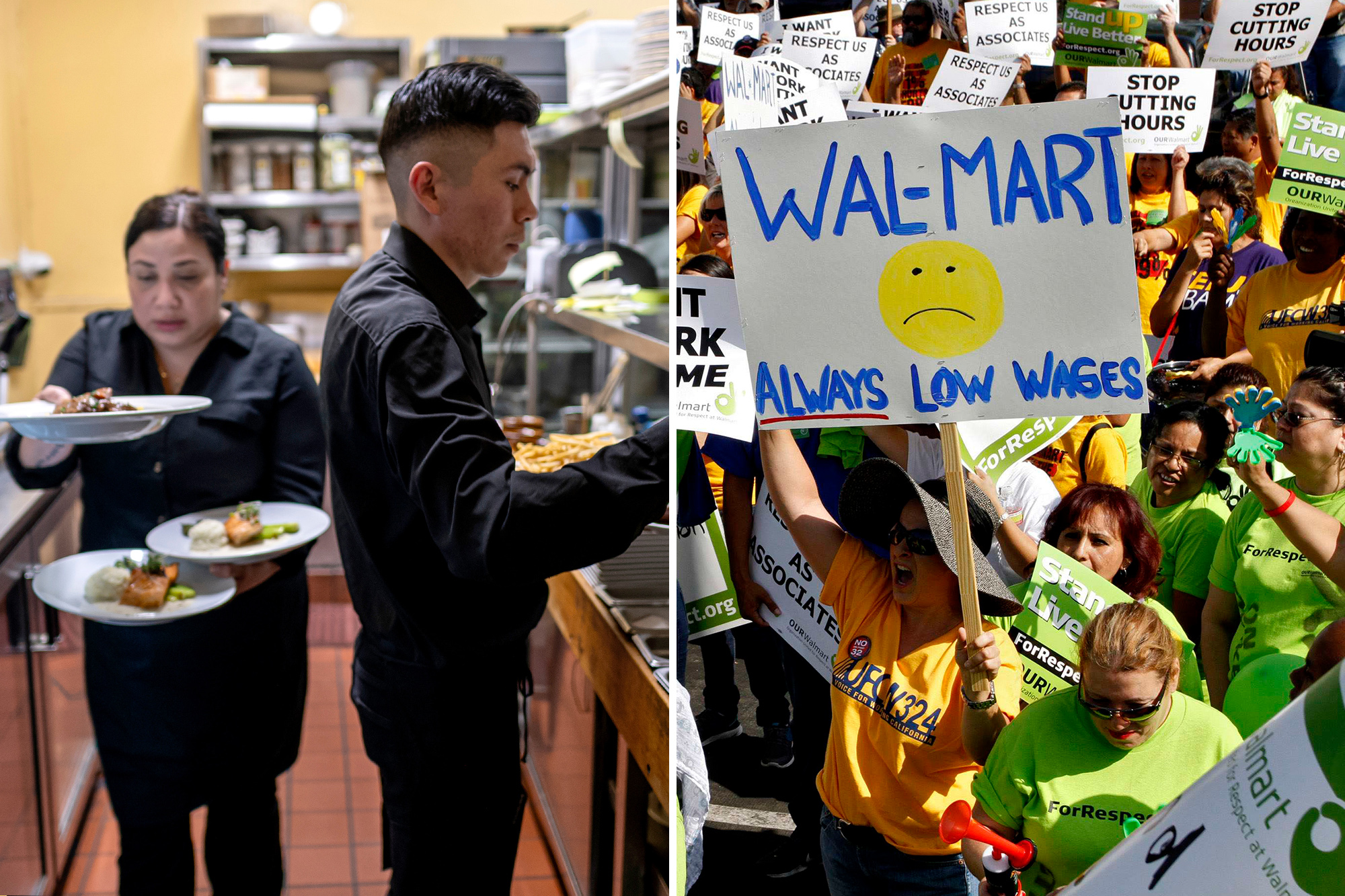
That’s always the headline and the implication is just as predictable: Workers are struggling while greedy business owners, especially in the restaurant industry, are raking in profits. It’s an emotionally compelling narrative, but it’s also deeply misleading.
Here’s the reality: Most restaurants want to pay their employees more. The issue isn’t willingness; it’s basic math.
When policymakers force sharp wage increases on businesses without addressing the underlying cost structure, they force operators into a corner with only three options: cutting hours, raising prices, or shutting down entirely.
Minimum wage hikes aren’t just about wages. They are all about taxes.
Most restaurants want to pay their employees more. The issue isn’t willingness; it’s basic math. Bloomberg via Getty Images When wages go up, payroll tax collections rise automatically. Social Security, Medicare, state disability insurance, and unemployment insurance — every one of these scales with wages.
In California, already one of the highest payroll-tax environments in the country, those increases compound quickly.
If the true goal were to help workers, the simplest and most effective solution would be obvious: to cut payroll taxes.
Cutting payroll taxes would put more money directly into workers’ pockets, reduce pressure on small businesses, and avoid forcing price hikes on consumers — many of whom are the same workers that live in that local community.
But that approach doesn’t generate new revenue for the state, so it’s rarely discussed.
Restaurants operate on razor-thin margins, typically around 3% to 5%.
When labor costs jump beyond that range, the difference has to go somewhere.
It typically distills into higher menu prices, reduced employee hours and fewer total jobs.
Workers understand this better than anyone. Ask servers and line cooks what would actually help them financially.
You won’t hear “raise the minimum wage.”
You’ll hear: “Give me more shifts.” “Keep the restaurant busy.” “Let me keep more of my tips.” That’s where their income really comes from.
In California, tipped workers already face a double squeeze. Their tips are fully taxable and the state has refused to conform to federal efforts to reduce or eliminate taxes on tips.
Remember “no tax on tips” (which was also supported by Califronia’s own Kamala Harris)?
If California wants to support workers, it should cut payroll taxes. REUTERS At the federal level, there have been attempts to ease that burden, and execute the promise.
California declined to follow. The result? Thousands of dollars per year that could stay in workers’ pockets instead go to the state.
If policymakers wanted to help service workers immediately, they could.
And we don’t have to guess what happens when the minimum wage rises sharply. California has already run the experiment multiple times.
When labor costs are inflated, the ripple effects are always predictable: Employers cut hours to stay afloat, and entry-level jobs start disappearing altogether.
Inevitably prices then go up, because those costs have to land somewhere, and more businesses turn to kiosks and automation instead of hiring.
For smaller, independent operators, it can be the final straw that pushes them to close.
These outcomes disproportionately hurt the very workers the policies claim to help.
If higher taxes are the tradeoff, the public deserves to see clear results.
Instead, Californians see repeated examples of waste and mismanagement:
Most residents, workers, and business owners alike would accept higher taxes if they trusted the money was being used effectively.
If the goal is actually to help workers, the focus should be on lowering payroll taxes, giving incentives to businesses that pay higher wages, and cutting or eliminating taxes on tips.
Policies should encourage more hiring and more hours, not the opposite. That’s how you align incentives rather than distort them.
The bottom line is that the “greedy business owner vs. struggling worker” narrative is politically convenient, but economically hollow.
Workers aren’t being helped at all; they’re being used.
Minimum wage hikes, as currently structured, function less as worker relief and more as a mechanism to increase tax revenue without saying so directly.
In the process, small businesses become the scapegoats. If California wants to support workers, it should cut payroll taxes.
Andrew Gruel is a chef, television host, and member of the Huntington Beach City Council.
California Post News: Facebook, Instagram, TikTok, X, YouTube, WhatsApp, LinkedInCalifornia Post Sports Facebook, Instagram, TikTok, YouTube, XCalifornia Post Opinion California Post Newsletters: Sign up here!California Post App: Download here!Home delivery: Sign up here!Page Six Hollywood: Sign up here!