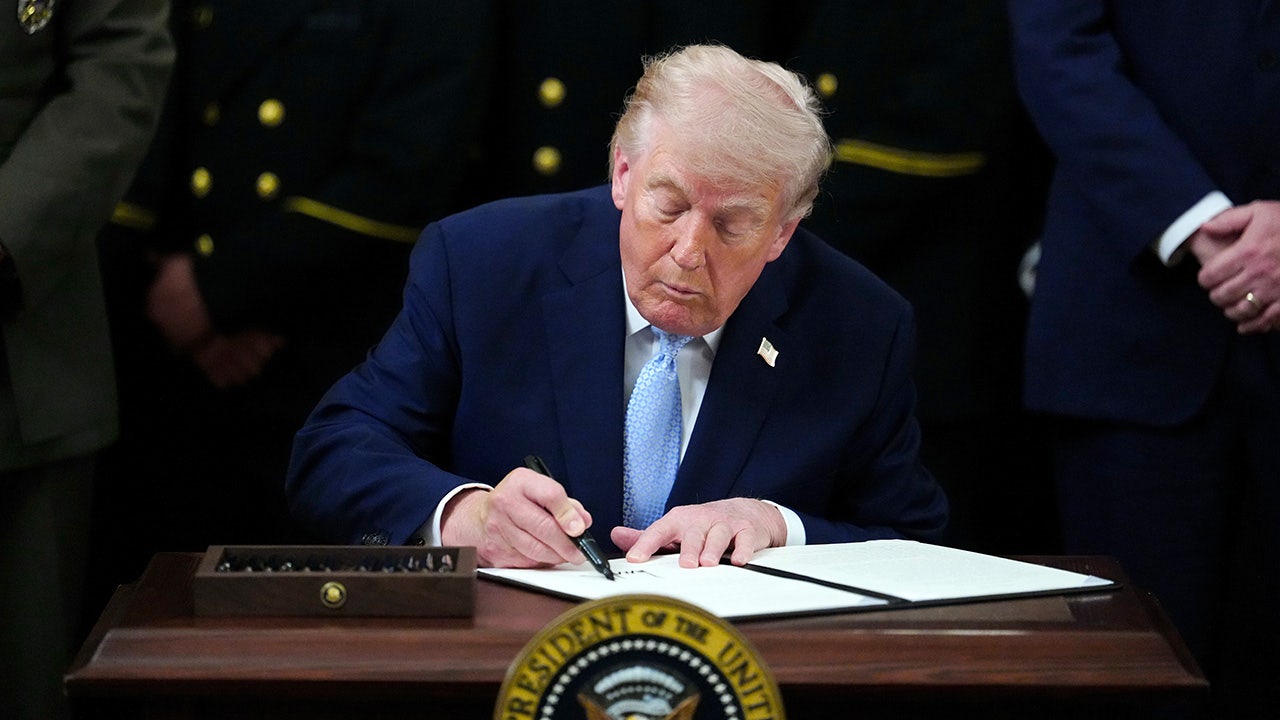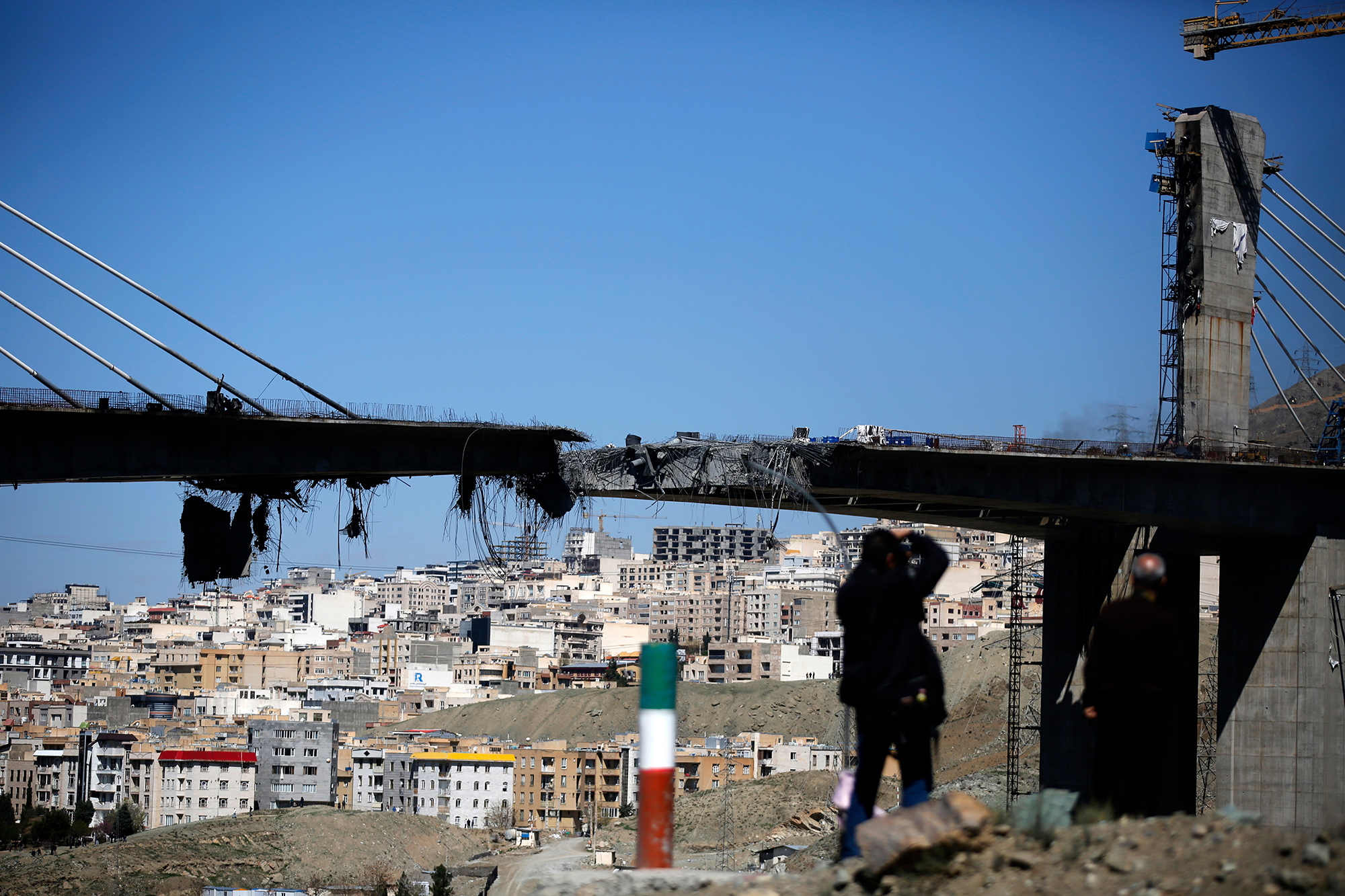
This photo taken on April 3, 2026 shows the damaged B1 bridge after U.S.-Israeli attacks in Karaj, Iran. Xinhua/Shutterstock “I think we’ve had regime change” in Iran, President Donald Trump declared Sunday.
In his prime-time address Wednesday night, he repeated it: “Regime change has occurred.”
They’re wrong — because they’re measuring regime change by the wrong standard.
“Regime change” doesn’t necessarily mean an invasion, a decapitation strike, a new flag over the capital.
That was Iraq and Afghanistan, where American power underwrote both the military campaign and the political reconstruction that followed.
Iran is a different problem, and Trump is running a different playbook.
Start with a basic fact: Iran is a revolutionary state.
Its survival depends on three pillars — an ideology, a patronage network and a coercive apparatus drawing legitimacy from a founding idea.
To bring such a system down, all three must fail simultaneously.
And Iran was already decomposing when Operation Epic Fury began.
Regionally, the regime had been losing grip for two years, from the humiliating Hezbollah pager attack in 2024 to the 12-day war that exposed its hollow air defenses.
The deterrent Tehran spent decades building turned out to be largely performative.
At home, the economy had already collapsed after Trump-era sanctions effectively cut Iran off from the global financial system.
When the government announced plans for a steep tax increase, widely understood to fund the repressive and growing Islamic Revolutionary Guard Corps, Iranians erupted.
The January 2026 protests marked the second major uprising in four years.
Each crackdown grew more brutal, and people flooded the streets anyway.
Revolutionary systems survive by continuously reproducing their founding idea across generations, and the Islamic Republic has lost that capacity.
Even during wartime, young Iranians are not joining.
The coercive apparatus was weakening because the ideology had failed.
So the US and Israel struck a regime already coming apart.
The bombs didn’t start the collapse, but accelerated two crises that are now beyond recovery.
The first is legitimacy: When the IRGC selected Mojtaba Khamenei to succeed his father, it violated the Islamic Republic’s own founding principles, which bar hereditary succession.
A regime built on rejecting dynastic rule reached for a dynasty the moment it came under real pressure.
The second crisis is regional isolation: The “Arab Street” mobilization Iran long counted on never materialized — and in fact, Arab states that once tolerated Tehran’s reach are now coordinating with Trump to eliminate the threat.
Trump does not need a deal to persuade the IRGC that its regional ambitions have been amputated.
He is making that a reality before their eyes — without American boots on the ground, while keeping that option visibly on the table.
An IRGC confronting a president unafraid of escalation is an IRGC that cannot dictate the terms of its own survival.
It has chosen, for now, to fight back, but its strikes, however damaging to Gulf infrastructure, have not made Trump reconsider his calculus.
And as long as Tehran’s leaders conduct themselves as heads of a terror state, the threat of targeted elimination remains.
Meanwhile, the regime has waged an aggressive information warfare campaign, seeking to project resilience and shape perceptions of the damage.
It’s succeeded in pushing its narrative in Western mainstream media, but the targeting record tells a different story.
American and Israeli strikes have reached the core of the IRGC’s command and control structure, and no volume of social-media output changes what those commanders can no longer do.
And a third front may prove the most consequential: The Iranian people.
The regime has maintained a full internet shutdown, showing that its leaders understand information travels faster than bombs.
Both Benjamin Netanyahu and Trump have addressed the Iranian people directly, telling them to stay home — but once the regime signals defeat, a population that rejected the Islamic Republic across successive waves of protest will become an accelerant.
Encouraging that spark requires more than military pressure: The United Sates must close every remaining corridor of IRGC survival.
Financial pressure is the most effective instrument, and Washington should directly press the United Arab Emirates to shut down the shadow banking infrastructure in Dubai that has long allowed the IRGC to circumvent sanctions.
The work is not finished, and the operation is still underway, but the IRGC that emerges from Operation Epic Fury will bear little resemblance to what it once was.
Its command structure has been shattered, its missile arsenal degraded, its regional network dismantled.
It can still retaliate, but it can no longer dominate.
Yechiel Leiter, Israel’s US ambassador, captured with precision what must come next: “We need boots on the ground, but they have got to be Iranian boots, and I think they’re coming.”
The pressure and precision that brought Iran to this point must now be sustained long enough to make the coming popular uprising irreversible.
Zineb Riboua is a research fellow with Hudson Institute’s Center for Peace and Security in the Middle East.