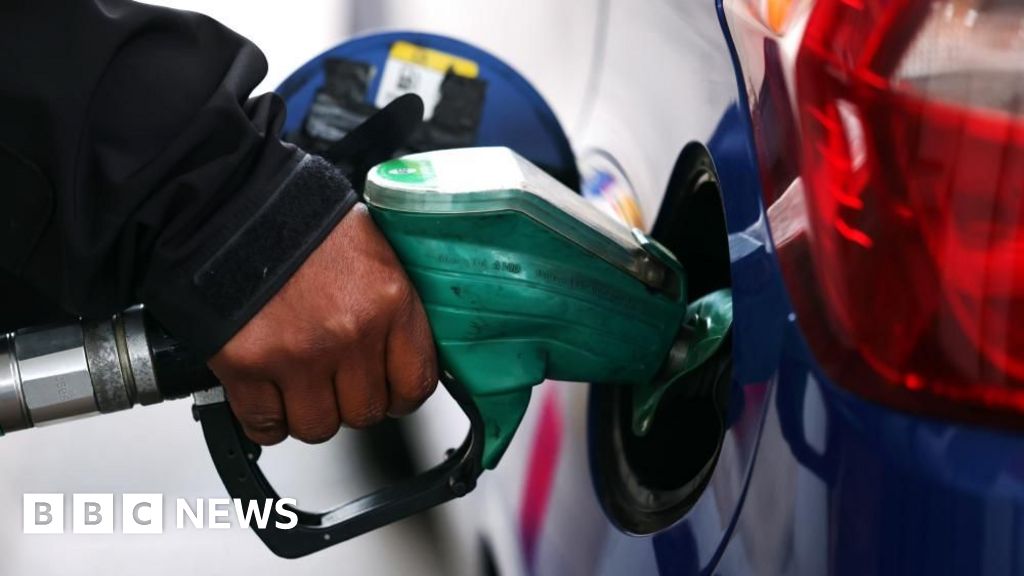
ShareSaveAdd as preferred on GoogleIan AikmanEPAThe prime minister's cost-of-living adviser has said the government should consider extending the fuel duty cut, after a rise in petrol prices caused by the US and Israel's war with Iran.
Lord Walker joined calls for Sir Keir Starmer to keep the 5p cut in place past September, when it is scheduled to expire after more than four years.
"I think given where we are, we do need to be thinking and talking about extending it or enlarging it," the Labour peer told BBC Radio 4's Today programme on Friday.
Sir Keir has previously said the planned rise would be kept "under review in light of what is happening in Iran".
The reduced tax rate for petrol and diesel was introduced by the previous Conservative government after Russia's full-scale invasion of Ukraine pushed prices up in 2022.
Fuel costs have spiked again after Iran effectively blocked the Strait of Hormuz in response to attacks from the US and Israel. About one fifth of the world's oil and gas passes through the vital shipping lane.
Lord Walker, who is also the executive chairman of Iceland supermarkets, noted that the Australian government had recently "taken a 14p per litre cut to their fuel tax".
He also suggested there might be a case to be made for bringing down the rate of fuel tax in the UK to reduce costs for businesses and consumers.
Countries are responding to the energy crisis caused by war in the Middle East in a variety of ways.
Ireland has cut taxes on petrol and diesel, Australia has halved fuel duty for three months and Slovenia has become the first EU member state to introduce fuel rationing.
Meanwhile, Egypt has told shops, restaurants and cafes to cut energy use by closing early.
On Wednesday, Sir Keir said that dealing with the economic consequences of the Iran war would "not be easy".
So far, the Labour government has announced extra money to help people who use heating oil.
A new energy cap - the highest a provider can charge customers for each unit of gas and electricity - also took effect on 1 April.
But bills are forecast to rise sharply when the next energy cap takes effect in July due to the jump in oil prices since the beginning of Middle East conflict.
Chancellor Rachel Reeves said any additional support would be targeted at "those who need it most".
A Treasury spokesperson said: "We have the right economic plan for a more volatile world, taking a responsible approach to supporting working people in the national interest.
"Fuel duty is frozen until September and we're enabling targeted support for those facing higher heating oil costs. We're also acting to protect people from unfair price rises if they occur and to bring down food prices at the till."
Lord Walker is the latest politician to suggest the fuel duty cut should remain past September.
Some Labour MPs have privately questioned why Sir Keir has not committed to ditching the increase, and opposition parties have called for further cost-of-living support to offset the spike in oil prices.
The Conservatives, Reform UK and the Lib Dems have all argued that the war in Iran means the chancellor should keep the cut in place.
Conservative leader Kemi Badenoch has said she is predicting Sir Keir will be forced to announce "another humiliating U-turn". She has also called for cuts to taxes on energy bills.
Instead of waiting until September, Liberal Democrat leader Sir Ed Davey said the government should introduce an emergency 10p cut to fuel duty immediately.
Reform's Treasury spokesman Robert Jenrick has also urged the government to halve VAT on petrol for three months.
The Green Party of England and Wales said the government should make plans to cover potential energy bill rises of up to £300 per household.
The SNP wants energy policy to be devolved to the Scottish Parliament in Holyrood, and has argued that Scottish independence would help reduce bills.
Plaid Cymru has said long-term investment in renewable energy would help protect people from price hikes.