Apple's new hardware strategy capitalizes on trust — just in time for the AI era Hamza Shaban · Senior Reporter Wed, October 14, 2026 at 6:00 AM EDT 3 min read AAPL +0.09% Trade Apple on Coinbase Trading disclosure Trading disclosure The above button links to Coinbase. Yahoo Finance is not a broker-dealer or investment adviser and does not offer securities or cryptocurrencies for sale or facilitate trading. Coinbase pays us for certain activity generated through this link. Prices displayed are informational.
The Apple household just got a new lineup. On Tuesday, the company unveiled several new smart home devices, including the HomeView hub, the HomePod Mini 2, and Apple TV 4K.
The company's new releases are a clear pivot in its corporate strategy. Not only is it trying its hand at smart home products once again after its HomePod failure, but Apple and its accelerating hardware releases show new CEO John Ternus's ambitious strategy as a company meeting the AI era head-on.
Tim Cook was Mr. Services, growing that business massively. But Ternus is clearly saying, why not both?
Go deeper with AlphaSpace 341.27 +0.30 (+0.09%) At close: October 13 at 4:00:01 PM EDT 342.61 +1.34 (+0.39%) Pre-Market: 7:24:30 AM EDT Finally, it seems, Apple has figured out a new way to take its "walled garden" design philosophy — a closed, safe ecosystem that favors trust, its signature design language, and vetted partners — and apply it to the home, putting its customers literally inside it.
You can see how this is low-hanging fruit for the company. Securing your home and your physical safety is already a big business that involves iPhones and Apple Watches. Why not directly capitalize on it, further monetizing its seamlessness and trust?
After all, its privacy record looks very different than, say, the Amazon Ring privacy record. One can only imagine Apple has thought of that, even if trumpeting the contrast would be too low a blow for the company's advertising style.
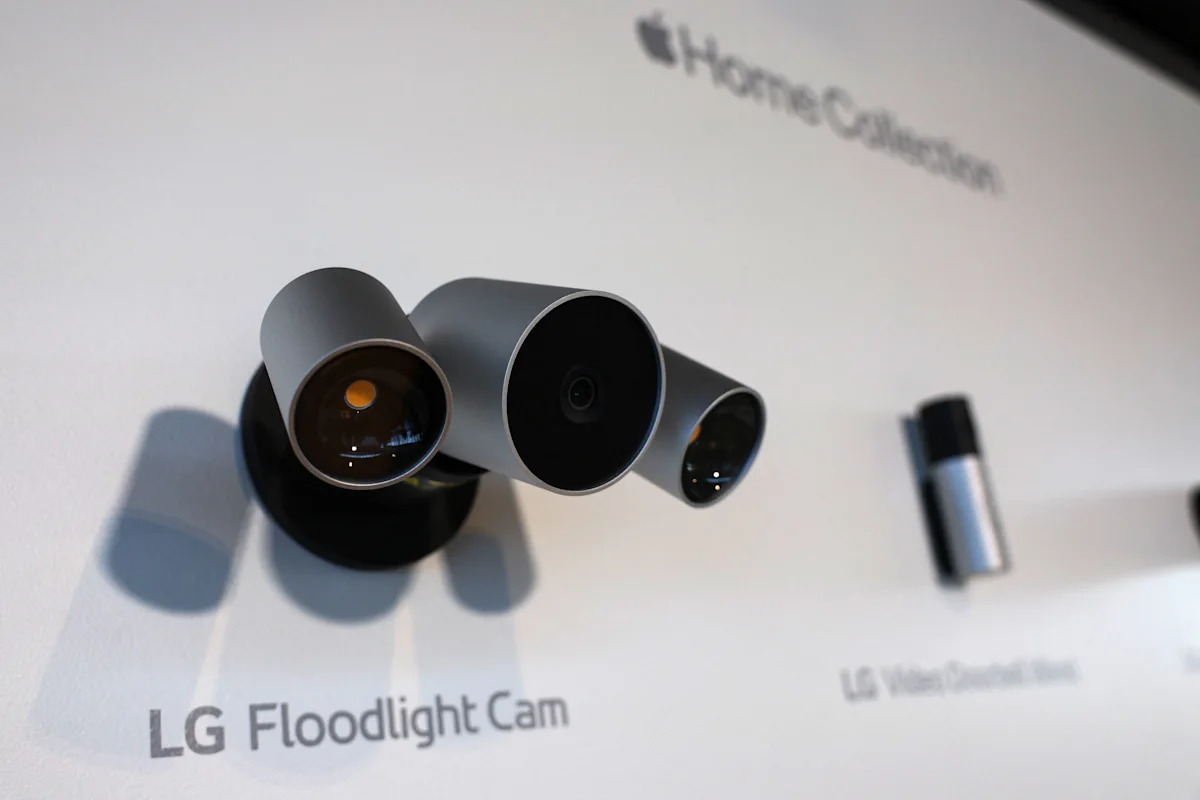
It's clear also that Apple's smart home strategy echoes its approach to AI, which we argued recently positions its brand of trust front and center. At the heart of both experiences is your iPhone, the quarterback for your AI-enabled smart assistant, but also all your domestic gadgets: the new indoor and outdoor cameras, thermostats, temperature sensors, the video doorbell, and the door lock.
The new lineup gives people more reasons to put Apple's hardware in their home and their routines. The other side of this is more subtle: For every app integration and product purchase, customers might find it harder to leave the pleasures of Apple's garden. There isn't any AI-first alternative to an iPhone just yet. But if one emerges, it'll have to pry Apple's consumers out of a deeper hole — which could buy time for Cupertino to come up with an answer.
All this shows that while other tech companies are busy expounding on their LLMs, Apple is clearly in a totally different conversation. Superintelligence and everything else in the AI debate might as well be unfolding on another planet. The company's vision, in its marketing of new hardware and its design ethos, is selling relief from home-based chaos and is ready to harness whatever AI capabilities emerge to tame and smooth our lives.
Apple isn't strictly selling AI hardware, but rather touting its ecosystem, its walled garden. Won't you step inside?
Hamza Shaban is a reporter for Yahoo Finance covering markets and the economy. Follow Hamza on X @hshaban.
Click here for the latest technology news that will impact the stock market
Read the latest financial and business news from Yahoo Finance