NVDA +0.97% Trade NVIDIA on Coinbase Trading disclosure Trading disclosure The above button links to Coinbase. Yahoo Finance is not a broker-dealer or investment adviser and does not offer securities or cryptocurrencies for sale or facilitate trading. Coinbase pays us for certain activity generated through this link. Prices displayed are informational.
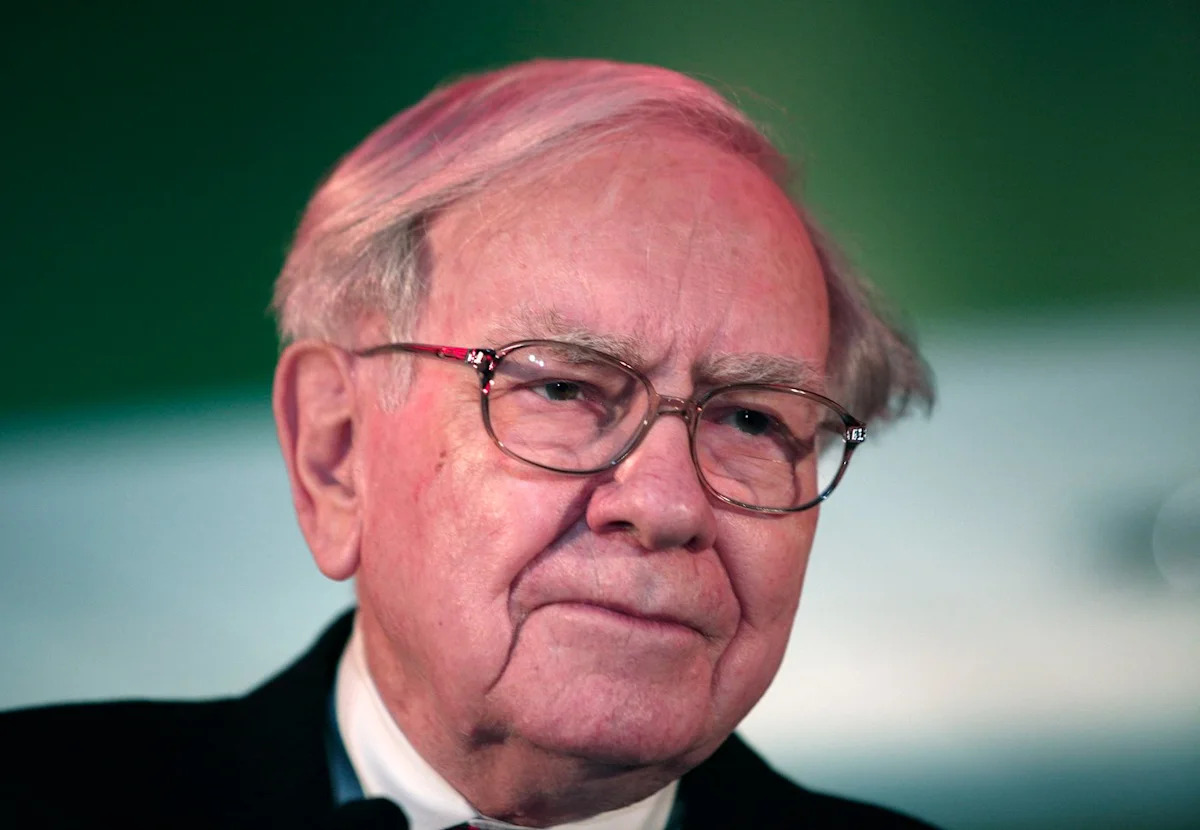
Warren Buffett isn't the kind of person who likes to say, "See, I told you so." However, he has had ample opportunity to do so through the years. Buffett didn't earn the nickname of "the Oracle of Omaha" for nothing.
The legendary investor could soon be tempted to use those five words. The stock market is doing something that Buffett has specifically warned about in the past. And history is quite clear on what's likely to happen next.
Missed AI's "Act 1"? Act 2 Could Be 14x Bigger. Most investors think they missed the AI boat because they didn't buy Nvidia in 2005. But according to our analysts, we're only at the end of "Act 1"—the R&D phase. "Act 2" is the global rollout. Continue »
In July 2001, Buffett spoke at Allen & Co.'s annual meeting of corporate executives in Sun Valley, Idaho. Later that year, Fortune magazine published an essay based on that speech. Buffett provided one of his most stark warnings ever in that essay.
He skillfully explained the historical relationship between U.S. economic output and stock market valuations. Buffett introduced a valuation metric that many investors at the time might not have been familiar with -- the ratio of total market capitalization to U.S. gross national product (GNP). This metric became known as the Buffett indicator, with gross domestic product (GDP) eventually replacing GNP.
Buffett summed up his discussion with a prediction, "If the percentage relationship [i.e., the ratio of total market cap to GNP] falls to the 70% or 80% area, buying stocks is likely to work very well for you. If the ratio approaches 200% -- as it did in 1999 and a part of 2000 -- you are playing with fire."
Where does the Buffett indicator stand today? It isn't approaching 200%. Instead, Buffett's favorite market valuation metric recently topped 237%, the highest level ever recorded.
Buffett wasn't kidding in that 2001 Fortune article that investors are playing with fire when the total market cap to GNP (or GDP) ratio approaches 200%. It's happened only twice before, and the aftermath wasn't pleasant either time.
The "Oracle of Omaha" alluded to the first instance in his essay. The Buffett indicator peaked at 190% in March 2000. By late September of the following year, the S&P 500 (SNPINDEX: ^GSPC) was roughly 37% below its high. It took nearly six years for the market to fully recover.
The Buffett indicator again approached 200% in December 2021. In short order, the S&P 500 sank into a bear market. Fortunately, the downturn wasn't as prolonged this time. By early 2024, the S&P 500 had recaptured its previous highs and continued to soar afterward.
Importantly, though, the Buffett indicator isn't perfect for timing a market downturn. For example, the S&P 500 climbed for months after the valuation metric flashed warning signs in 2000. Also, the index has risen significantly since the Buffett indicator crossed 200% in July 2025.
Maybe this time is different than the past. Corporate earnings remain strong. Comparisons between the dot-com bubble and the so-called internet bubble seem stretched. A historic stock market crash isn't a foregone conclusion.
But what should investors do if Buffett's warning is just as relevant as ever? Perhaps the best approach for investors is to follow the lead of the master investor himself.
First and foremost, Buffett hasn't panicked. Both before and after he stepped down as CEO of Berkshire Hathaway (NYSE: BRKA) (NYSE: BRKB) at the end of 2025, the conglomerate hasn't dumped its holdings. Sure, Berkshire has trimmed some positions, but it's still heavily invested in equities.
Second, Buffett and his successor, Greg Abel, have been highly selective about which stocks they have bought. This isn't anything new, though. They would be just as selective if market valuations were much lower.
Third, Buffett built plenty of dry powder for Berkshire to use when stock prices eventually become more attractive. Having ample cash on hand isn't a bad idea when a reliable market valuation metric is above the level Buffett has called "playing with fire."
In 2009, a "Double Down" signal flashed for a little-known chipmaker called Nvidia. If you'd invested $5,000 then, you'd be sitting on $2,941,927 today.*
Now, for the first time in years, that same "Total Conviction" signal is flashing for a company 1/100th the size of Nvidia. It's a key player in the $1.8 trillion space race, and with the stock recently sitting 20% off its highs, the window to get in early is closing fast.
*Stock Advisor returns as of October 14, 2026.
Keith Speights has positions in Berkshire Hathaway. The Motley Fool has positions in and recommends Berkshire Hathaway. The Motley Fool has a disclosure policy.
The Stock Market Is Making a Move That Warren Buffett Has Warned About. Here's What History Says Comes Next. was originally published by The Motley Fool